

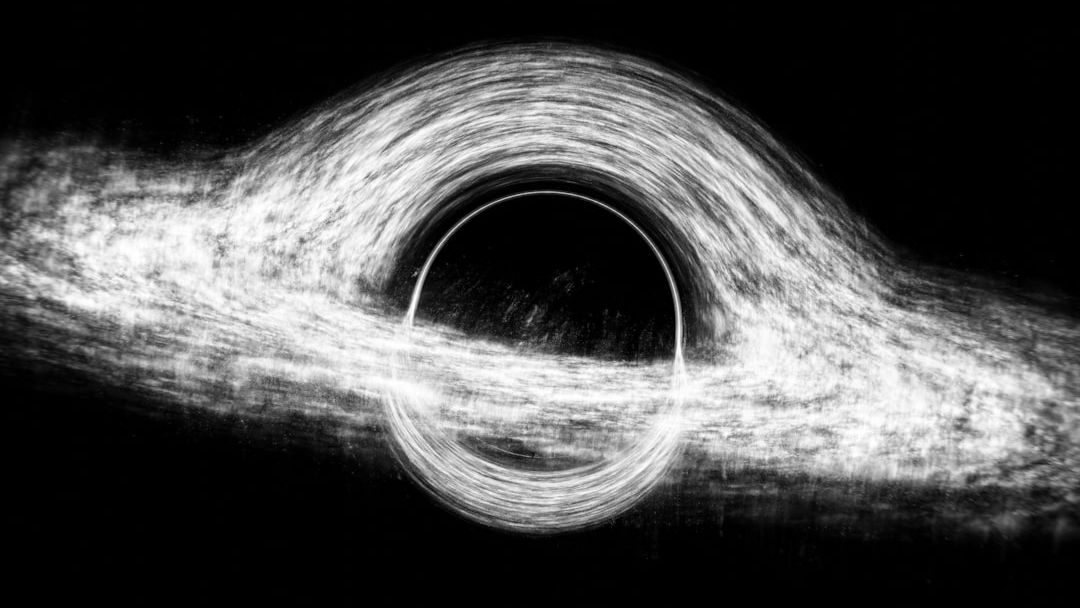
The Puzzling Presence of Early Giants (Image Credits: Unsplash)
Astronomers face a profound challenge in explaining how the universe’s most massive black holes formed mere hundreds of millions of years after the Big Bang. These behemoths, each weighing billions of times the sun’s mass, appear in observations at epochs when standard growth models predict they could not yet exist. The James Webb Space Telescope has amplified this riddle by detecting a substantial number of them, prompting researchers to rethink the infancy of the cosmos.
The Puzzling Presence of Early Giants
Supermassive black holes lurk at the hearts of most galaxies today, but their ancestors showed up far sooner than expected. Observations revealed these monsters in quasars from the universe’s first billion years, a period when matter was still spreading out from the Big Bang. Such early appearances strain the imagination, as these objects demand rapid assembly from scant primordial material.
Quasars, powered by material spiraling into these black holes, shine as the brightest beacons in the distant universe. Their light, stretched by expansion, reaches telescopes today as a faint whisper from infancy. Yet the masses inferred from these signals exceed what gradual accretion should allow in so little time.
Standard Models Fall Short
Conventional theories hold that black holes begin as stellar remnants, stars that collapsed under their own gravity. These seeds, roughly 10 to 100 times the sun’s mass, then grow by pulling in gas and merging with others. In the dense early universe, such processes faced limits; the available time simply did not suffice for billion-solar-mass scales.
Calculations based on these ideas set firm upper limits on growth rates, factoring in radiation feedback that halts excessive feeding. Still, telescopes spotted quasars with black holes at least a billion suns heavy when the universe was under 10 percent of its current age. This discrepancy has left cosmologists searching for overlooked mechanisms.
JWST Ushers in New Evidence
The James Webb Space Telescope transformed this debate by peering deeper into the cosmic dawn. Its infrared gaze pierced dust and distance to uncover a large population of these early supermassive black holes. Previous instruments hinted at outliers; JWST confirmed them as commonplace.
These findings multiplied across multiple surveys, painting a picture of an early universe teeming with oversized central engines. Researchers now catalog dozens of candidates, each demanding explanation. The telescope’s resolution also clarified quasar environments, revealing host galaxies that seemed too immature to harbor such titans.
Implications for Cosmic Evolution
This enigma touches the broader narrative of galaxy formation, as supermassive black holes shape their hosts through energetic outflows. Early monsters could have accelerated star birth or stifled it, altering the path to today’s structures. Understanding their origins clarifies how the universe transitioned from chaos to order.
While direct seeds of unprecedented size remain speculative, observations keep refining possibilities. Future surveys may pinpoint formation sites or trace growth histories.
- Enhanced modeling of primordial gas collapse.
- Deeper JWST campaigns targeting high-redshift quasars.
- Gravitational wave detections from early mergers.
The persistence of these early black holes underscores enduring gaps in our cosmic timeline. As telescopes advance, the story of the universe’s first heavyweights promises revelations that reshape humanity’s view of its origins.