

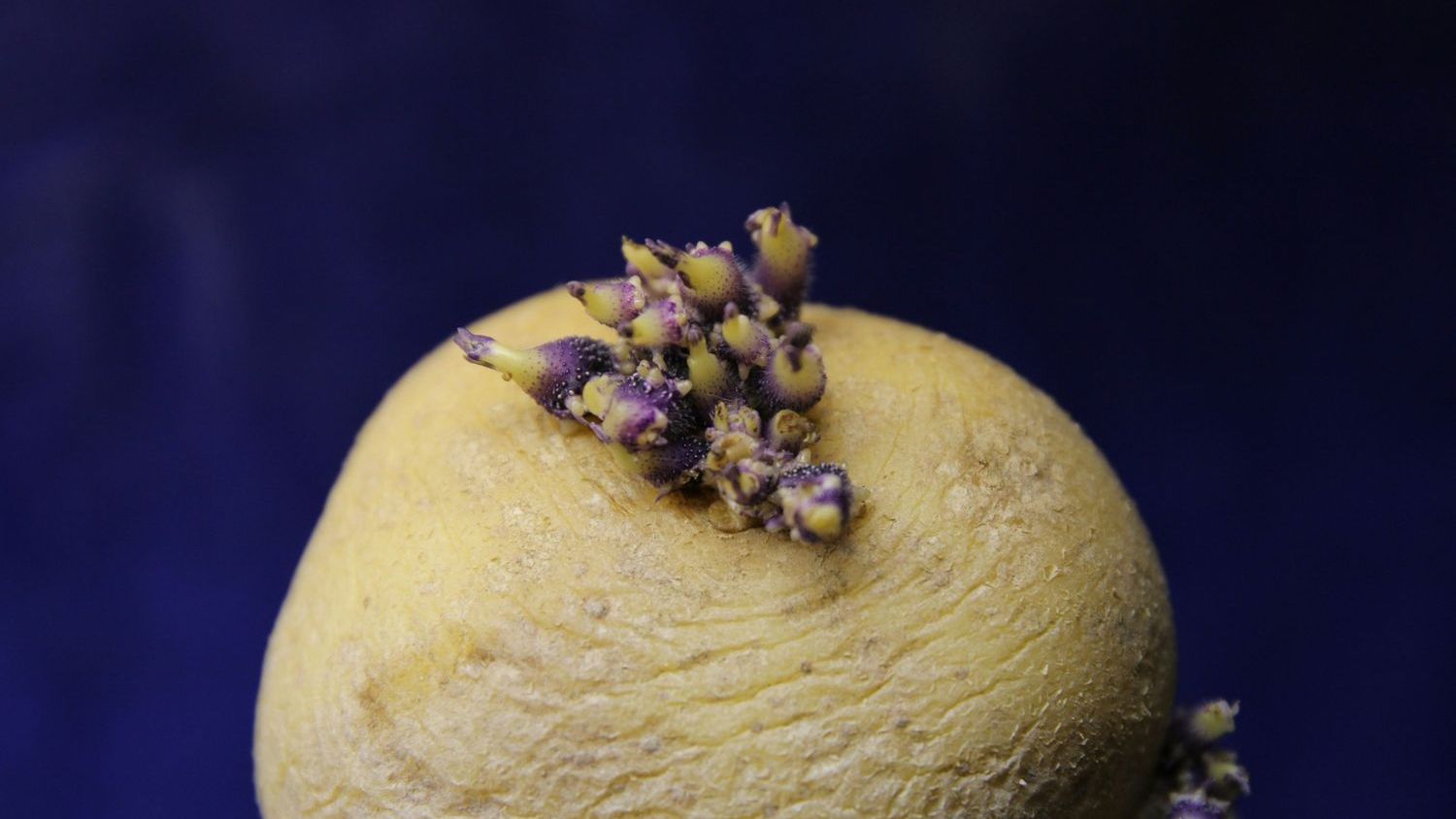
The Birth of a Space Spud (Image Credits: Unsplash)
A startling image from the International Space Station recently captivated social media users, showing a purple, egg-shaped object sprouting tentacle-like growths in microgravity. NASA astronaut Don Pettit quickly clarified the mystery: it was Spudnik-1, an early purple potato he cultivated during his off-duty hours.[1][2] This humble tuber, fuzzy with sprouts and anchored by Velcro, bridged the gap between Andy Weir’s novel The Martian and actual orbital agriculture.[3]
The Birth of a Space Spud
Don Pettit, NASA’s veteran astronaut with nearly 600 days in orbit across four missions, launched potatoes aboard the ISS for Expedition 72.[3] He tended them in a personal space garden, using an improvised terrarium equipped with grow lights. A patch of hook Velcro secured the potato against the weightless environment, preventing it from drifting amid the station’s experiments.
Pettit shared the results in a post that revealed Spudnik-1’s unique appearance. The early purple variety displayed its characteristic hue, rich in anthocyanins – antioxidants akin to those in blueberries. Sprouts extended in erratic, spindly patterns, unguided by gravity and drawn instead to light sources.[2]
“Spudnik-1, an orbiting potato on the International Space Station. I flew potatoes on Expedition 72 for my space garden, an activity I did in my off-duty time. This is an early purple potato, complete with spot of hook Velcro to anchor it in my improvised grow light terrarium.”
– NASA astronaut Don Pettit[3]
Inspiration From Fiction
The choice of potatoes drew directly from The Martian, where protagonist Mark Watney survives by farming them in a Martian habitat. Pettit echoed this vision, noting their efficiency as a nutrition source relative to plant mass. He wrote that potatoes, as recognized in Weir’s story, held promise for future space exploration.[3]
This nod to pop culture underscored a practical truth. Potatoes pack calories, vitamins, and carbohydrates into a compact form, ideal for missions where every kilogram launched from Earth costs dearly. Pettit’s experiment served as an informal test of that concept in orbit.
Growing Challenges in Microgravity
Hydroponics sustained Spudnik-1, delivering nutrients through water rather than soil. Yet microgravity posed hurdles: plants grew more slowly, roots struggled without downward pull, and excess water lingered without drainage.[3] Pettit observed no obvious radiation damage despite the ISS’s exposure to cosmic rays, a finding that hinted at potatoes’ resilience.
Comparisons to Earth counterparts revealed subtle differences. Firmness matched ground-grown samples, but overall development lagged. These insights aligned with NASA’s broader plant studies, which have yielded lettuce, kale, and peppers in the Veggie system.[1]
| Aspect | Earth-Grown Potatoes | ISS-Grown (Spudnik-1) |
|---|---|---|
| Growth Rate | Standard | Slower due to microgravity |
| Firmness | Normal | Comparable |
| Radiation Effects | N/A | None observed |
| Sprout Direction | Gravity-guided | Light-directed, erratic |
Public Reaction and Broader Implications
The photo sparked online frenzy, with viewers mistaking the sprouting potato for an alien egg or monstrous entity. Comments ranged from calls to “kill it with fire” to comparisons with sci-fi horrors.[1] Pettit’s reveal turned terror to amusement, highlighting how space’s unfamiliarity fuels imagination.
Beyond the buzz, Spudnik-1 advanced space farming goals. Anthocyanins in the purple flesh offered potential protection against radiation, positioning potatoes as more than food – they could act as “edible medicine.”[3] Gardening also boosted crew morale, fostering a sense of Earth connection in the station’s sterile confines.
Toward Martian Harvests
Pettit’s offhand project complemented official efforts like NASA’s Advanced Plant Habitat. As agencies eye Mars trips lasting years, self-sustaining crops will cut resupply needs and enable settlements. Hydroponics, bioreactors, and radiation-tolerant varieties form the toolkit.
Spudnik-1, fuzzy and purple yet fully edible, proved potatoes could thrive – or at least sprout – in orbit. It left a seed of possibility: what began as a hobby might one day feed explorers on distant worlds.