

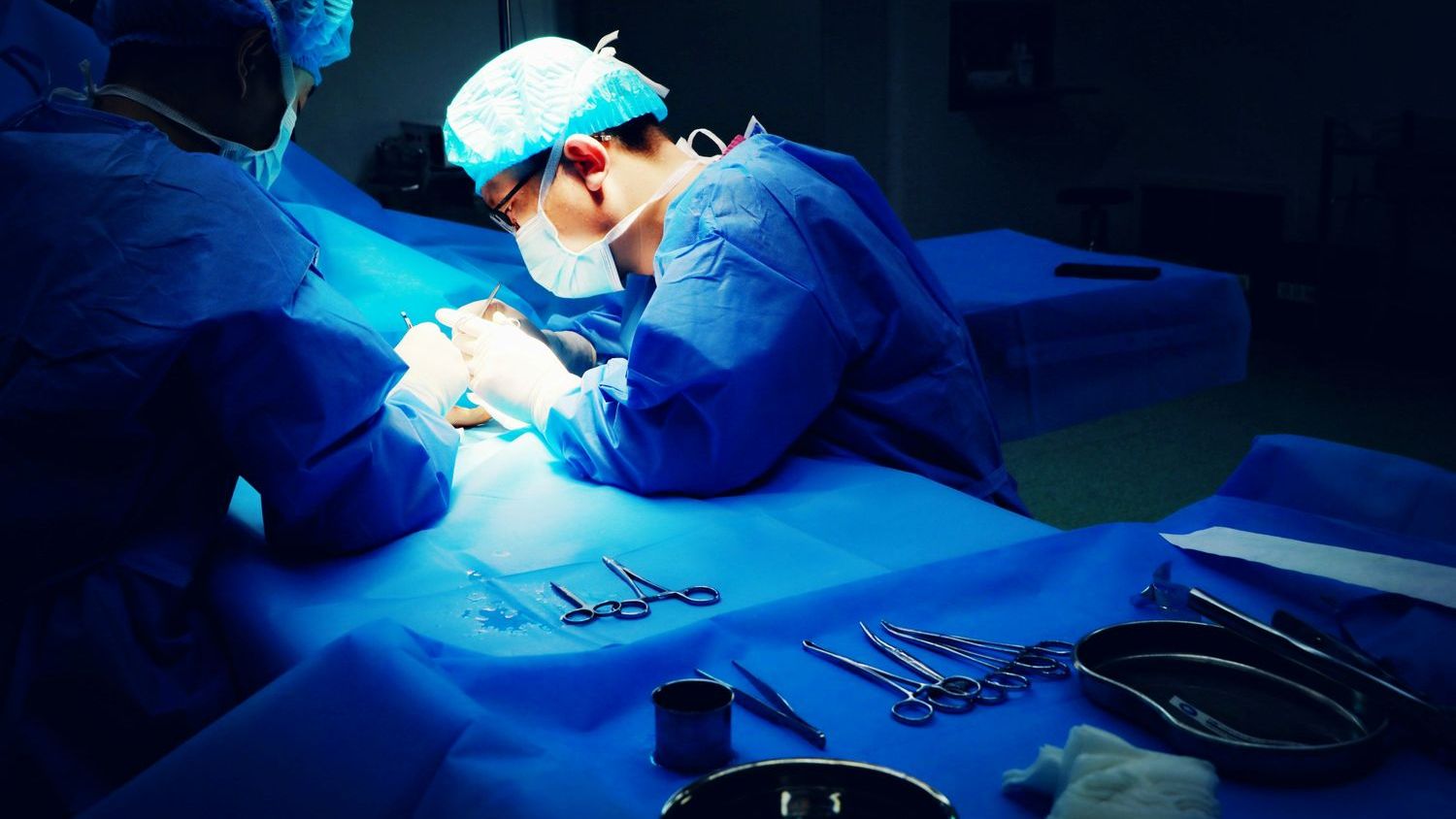
A Rare Diagnosis Emerges (Image Credits: Unsplash)
Orlando, Florida — Medical teams at Orlando Health Winnie Palmer Hospital for Women & Babies confronted a life-threatening crisis when a fetus developed a rare lung disorder during the second trimester. At just 25 weeks gestation, surgeons executed a groundbreaking procedure that exposed the baby’s head, neck, and shoulders outside the womb while keeping the lower body inside. This partial extraction allowed them to insert a critical drainage catheter, offering hope against a condition that often proves deadly.[1]
A Rare Diagnosis Emerges
The baby, named Cassian, faced congenital high airway obstruction syndrome, or CHAOS, detected during a routine ultrasound. This disorder features a blockage in the trachea — in Cassian’s case, a 5-millimeter-thick membrane — that traps fluid in the lungs. Overinflation compressed his heart, risking failure before the pregnancy advanced further. Fetuses do not breathe air in utero; instead, they receive oxygen through the placenta, but the accumulating fluid disrupted this delicate balance.[1]
Without intervention, experts estimated that one in four affected fetuses succumbed to heart failure. The membrane proved too substantial for less invasive options like a laser probe. Cassian’s parents, led by mother Kieshera, pressed the medical team relentlessly. They insisted on exploring every possibility, even experimental paths, to give their son a fighting chance.[1]
The Unprecedented Surgical Feat
At 25 weeks, far earlier than typical procedures, the team gained ethics committee approval for a modified ex-utero intrapartum treatment, or EXIT. Normally reserved for near-term deliveries around 37 to 39 weeks, this adaptation marked a bold departure. Under general anesthesia for both mother and fetus, surgeons performed a controlled C-section. They carefully lifted Cassian’s upper body from the amniotic sac, leaving his lower half connected via the placenta.[1]
Drs. Cole Greves and Emanuel Vlastos led the operation. They inserted a catheter through the neck into the windpipe, draining the trapped fluid and easing pressure on the heart. An inflated balloon secured the device, preventing premature breathing attempts that could alter circulation. The upper body then returned to the womb, and incisions closed seamlessly. The catheter stayed in place for the pregnancy’s remainder, buying critical time for lung and heart recovery.[1]
Key Procedure Milestones:
- C-section exposes head, neck, and shoulders.
- Catheter drains lung fluid via windpipe.
- Balloon anchors device; upper body reinserted.
- Uterus and abdomen sutured; monitoring continues.
Navigating Perilous Risks
The operation balanced two fragile lives amid profound uncertainties. For Cassian, general anesthesia posed potential risks to his developing brain, as studies suggest it might disrupt neural connections. The balloon required precise inflation: too loose, and it could shift, impeding airway growth; too tight, and it threatened head circulation. Any fetal breathing gasp risked closing the ductus arteriosus, a vessel bypassing immature lungs, complicating reinsertion.[1]
Kieshera faced uterine contraction threats that could trigger preterm labor or hemorrhage. Anesthesia mitigated this by relaxing muscles, but the procedure demanded hours of precision. Dr. Vlastos captured the tension: “It is a tightrope walk, sometimes for several hours, while two lives hang in the balance.”[1] Dr. Greves praised the parents’ resolve: “They never stopped asking the very important question, ‘What else could we try?'”
From Survival to Steady Progress
Cassian arrived at 31 weeks in August 2025 through a planned EXIT delivery, coordinated by a 30-person team at 3 a.m. Prematurity necessitated months in the neonatal intensive care unit, where he relied on a ventilator. Providers now wean him off support as he gains strength. A future operation will clear the tracheal blockage and remove the breathing tube.[1]
The case sparks optimism for CHAOS management. Dr. Diana Farmer, a fetal surgery expert at UC Davis Health, stressed post-birth tracheal fixes: “I like to say ‘there’s a lot we can do for a live patient.'” Surgeons advocate clinical trials and refined tools to replicate such successes. Cassian’s story underscores how parental advocacy and medical innovation can rewrite grim prognoses.