


In the spring of 1900, a group of Greek sponge divers sheltering from a storm near a small island in the Aegean stumbled onto one of the most disorienting archaeological discoveries in history. They weren’t looking for treasure. They were waiting for the weather to clear. What they found at the bottom of the sea would eventually challenge everything scholars thought they understood about the technological ceiling of the ancient world.
The most surprising discovery was an unassuming lump of bronze recovered during the first excavation that was later found to be a complex set of interlocking gears capable of predicting the movement of the sun, moon, and several planets, as well as the timing of solar and lunar eclipses years into the future. For decades, nobody quite knew what to make of it. Now, more than a century later, researchers are still unlocking its secrets.
A Storm, a Shipwreck, and a Corroded Bronze Lump

The wreck was discovered in the spring of 1900 by a group of Greek sponge divers on their way to Tunisia who took shelter from a storm near the island and decided to look for sponges while they waited for calmer conditions. One of the divers discovered the wreck at depths reported between 40 and 50 meters.
The Antikythera wreck is a Roman-era shipwreck dating from the second quarter of the first century BC. The cargo ship’s final voyage started in an Aegean port, speculated to be either Miletus, Pergamum or Delos, and was destined for Rome, but it sank en route sometime between 60 and 50 BCE.
By the middle of 1901, divers had recovered bronze statues, one named “The Philosopher,” the Youth of Antikythera of around 340 BC, and thirty-six marble sculptures including Hercules, Odysseus, Diomedes, Hermes, Apollo, and three marble statues of horses. Among all of it, the corroded bronze device was nearly overlooked entirely.
The Object That Confused Everyone for Decades
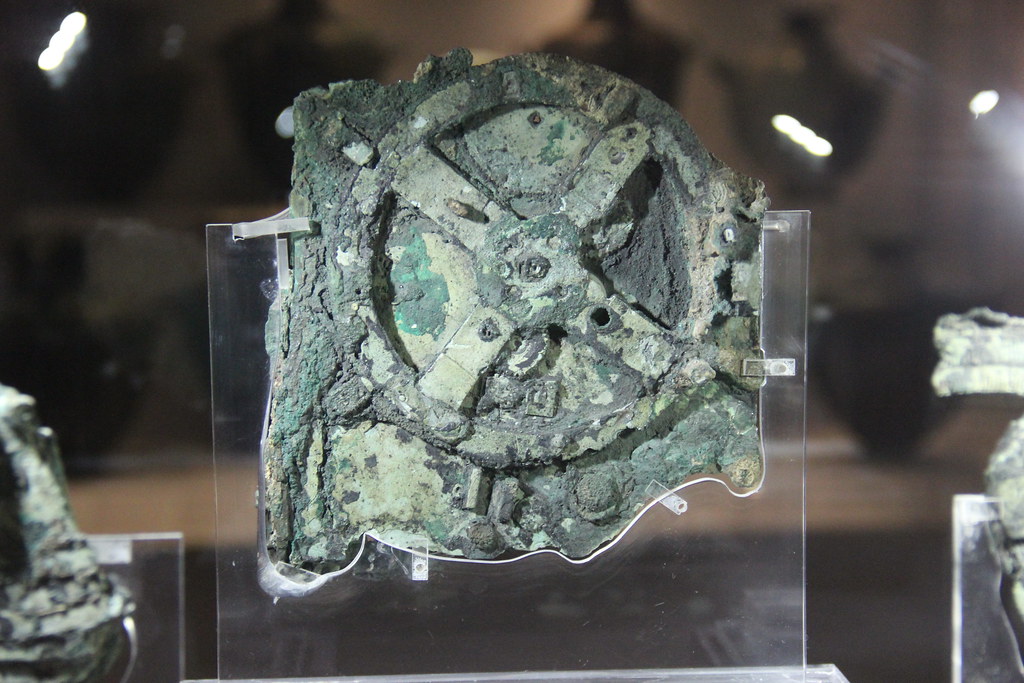
In 1901, sponge divers hauled a corroded lump of bronze and wood from a Roman shipwreck near the Greek island of Antikythera. The lump sat in an Athens museum for decades before anyone grasped what it was.
In 1902, during a visit to the National Archaeological Museum in Athens, a gear was noticed by Greek politician Spyridon Stais, prompting the first study of the fragment by his cousin, Valerios Stais, the museum director. He initially believed it was an astronomical clock, but most scholars considered the device prochronistic, too complex to have been constructed during the same period as the other pieces discovered.
Investigations into the object lapsed until British science historian and Yale University professor Derek J. de Solla Price became interested in 1951. In 1971, Price and Greek nuclear physicist Charalampos Karakalos made X-ray and gamma-ray images of the 82 fragments, and Price published a paper on their findings in 1974.
What Exactly Is the Antikythera Mechanism?

This shoebox-sized device, constructed of intricate bronze gears, was used to model the motions of the sun, moon, and planets. Over decades, researchers have determined that the mechanism functioned as a hand-operated mechanical computer, allowing users to predict eclipses and calculate astronomical positions with remarkable accuracy for its time.
The mechanism fits in a shoebox, its wooden case measuring roughly 34 × 18 × 9 cm, which is part of what makes it so astonishing. Inside that case, at least 37 interlocking bronze gears performed what we would now call a multi-variable simulation of the solar system.
Exterior dials connected to the internal gears allowed users to predict eclipses and calculate the astronomical positions of planets on any given date with an accuracy unparalleled by any other known contemporary device. It was, in the truest sense, a calculator built two thousand years before calculators were supposed to exist.
How Old Is It, Really?
The instrument is believed to have been designed and constructed by Hellenistic scientists and has been variously dated to about 87 BC, between 150 and 100 BC, or 205 BC. It must have been constructed before the shipwreck, which has been dated by multiple lines of evidence to approximately 70–60 BC.
The Antikythera Mechanism is dated to the second half of the 2nd century BCE. In 2022, researchers proposed its initial calibration date, not construction date, could have been 23 December 178 BC.
Machines with similar complexity did not appear again until the 14th century in western Europe. That gap, more than a thousand years between this device and anything remotely comparable, is what makes the story genuinely extraordinary.
The Internal Complexity That Still Stuns Engineers
The Antikythera Mechanism, an ancient Greek astronomical calculator, has challenged researchers since its discovery in 1901. Now split into 82 fragments, only a third of the original survives, including 30 corroded bronze gearwheels.
The largest gear is about 13 cm in diameter and originally had 223 teeth. The mechanism consists of approximately 40 cooperating gears. Each pair of gears makes a division according to the number of teeth of the meshing gears. This calculation is then fed to the next set until it reaches the final axis, and hence pointer, indicating an event read off a dial. It is a modular calculator with its complexity increasing with the number of gears.
Solving this complex 3D puzzle reveals a creation of genius, combining cycles from Babylonian astronomy, mathematics from Plato’s Academy, and ancient Greek astronomical theories.
The 2005 CT Scan That Changed Everything
Microfocus X-ray Computed Tomography in 2005 decoded the structure of the rear of the machine but the front remained largely unresolved. X-ray CT also revealed inscriptions describing the motions of the Sun, Moon and all five planets known in antiquity and how they were displayed at the front as an ancient Greek Cosmos.
The fragments are rich in evidence at the millimetre level, with fine details of mechanical components and thousands of tiny text characters, buried inside the fragments and unread for more than 2,000 years. Think about that for a moment. A manual, inscribed in ancient Greek, hidden inside corroded bronze, waiting quietly for two millennia to be read.
Before the 2005 imaging project, builders were working largely from the surface geometry of the corroded fragments. After it, they had detailed internal structure, including gear tooth counts, shaft positions, and layer thicknesses, along with thousands of inscribed text characters that functioned as the mechanism’s original user manual.
UCL’s Landmark 2021 Reconstruction
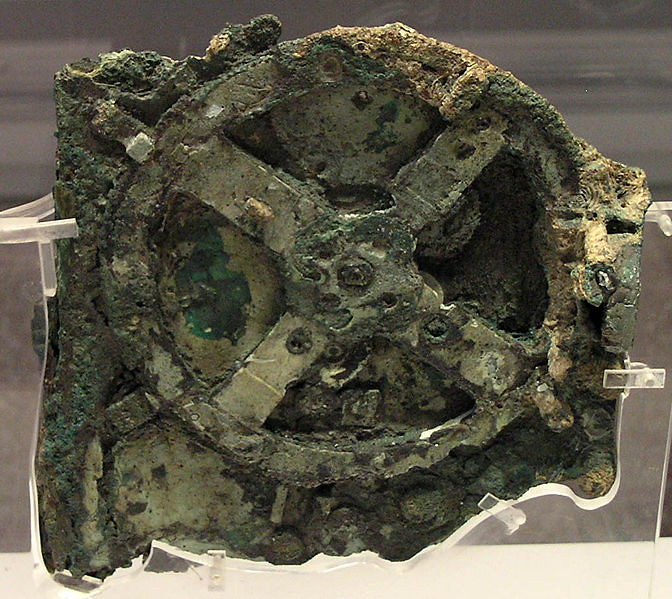
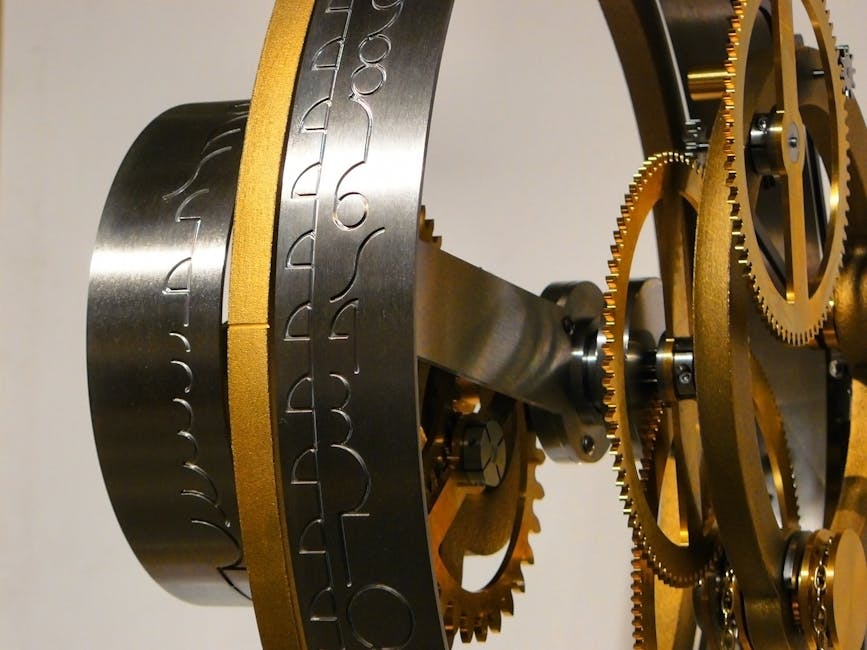
In March 2021, the Antikythera Research Team at University College London, led by Freeth, published a new proposed reconstruction of the entire Antikythera Mechanism. They were able to find gears that could be shared among the gear-trains for the different planets, by using rational approximations for the synodic cycles which have small prime factors, with the factors 7 and 17 being used for more than one planet.
The team showed how they created gearing and a display that respects the inscriptional evidence: a ring system with nine outputs, including Moon, Nodes, Mercury, Venus, Sun, Mars, Jupiter, Saturn, and Date, carried by nested tubes with arms supporting the rings.
Two critical numbers in the X-rays of the front cover, of 462 years and 442 years, accurately represent cycles of Venus and Saturn respectively. None of the previous models were at all compatible with all the currently known data. The UCL team’s work in Scientific Reports represented the most complete and evidence-grounded reconstruction to date.
The Calendar Ring Mystery and Gravitational Wave Science

Recent research unveiled that the Antikythera mechanism tracked the Greek lunar calendar, rather than the Egyptian solar calendar as previously thought. The calendar ring at the device’s core had been a long-running puzzle, partly because it survives only in fragments.
Astronomers from the University of Glasgow used statistical modeling techniques developed to analyze gravitational waves to establish the likely number of holes in one of the broken rings of the Antikythera mechanism. They showed that the ring is vastly more likely to have had 354 holes, corresponding to the lunar calendar, than 365 holes, which would have followed the Egyptian calendar. The analysis also shows that 354 holes is hundreds of times more probable than a 360-hole ring, which previous research had suggested as a possible count.
It also reveals that the holes were precisely positioned with extraordinary accuracy, with an average radial variation of just 0.028mm between each hole. That level of precision is striking even by modern craft standards.
The 2025 Question: Did It Actually Work?
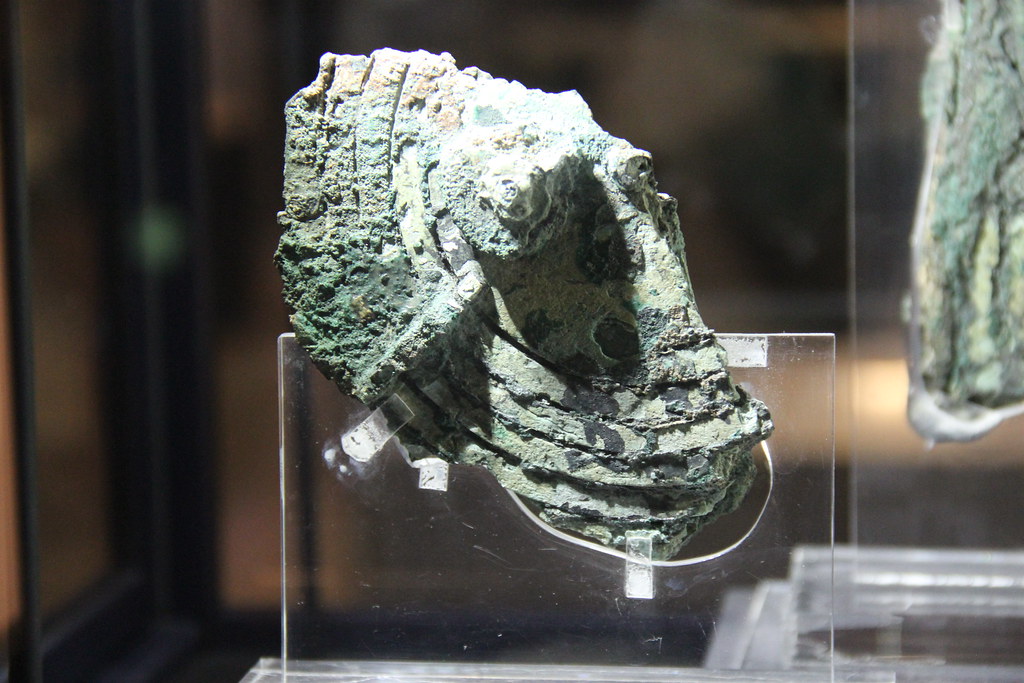
Comprised of a hand crank and series of interlocking bronze gears, archaeologists believed it could be used to predict astronomical phenomena such as eclipses and the movements of planets. However, a new study suggests it may not have worked very well. The issue may have been the mechanism’s triangular-shaped gear teeth. Computer simulation which reproduced the device’s current design suggested that the gear teeth may have routinely disengaged, causing the machine to jam.
It is estimated that it could only be cranked about four months into the future before the gears slipped and required the object to be reset.
However, the researchers do note that it is possible that current measurements of the gears and teeth are off and that two thousand years of corrosion may have warped or distorted the components far beyond their original state. In other words, the jury remains open. What we can measure now is not necessarily what existed then.
The Shipwreck Keeps Giving: New Finds in 2024 and 2025

From May 17 to June 20, 2024, an international team led by the Swiss School of Archaeology in Greece conducted an expedition to the Antikythera wreck. The favorable weather conditions during this period allowed the team to make significant discoveries, including a well-preserved portion of the ship’s hull. This structural part of the ancient vessel, complete with its original fasteners and external protective coating, provides valuable information about ancient shipbuilding techniques.
The expedition unearthed 21 marble fragments and over 200 ceramic shards, and also confirmed the presence of a second wooden vessel approximately 650 feet from the main wreck.
Recent recovery of fragments of the hull yielded new information about the vessel’s design and ancient shipbuilding. Archaeologists found three outer planks still joined to an internal frame, signaling that the ship had been built using the “shell-first” construction method, in which an outer shell is built before the internal structures. This was a popular technique in the Mediterranean between the fourth and first centuries BC. Analysis of the wood indicated that the ship was built using both elm and oak.
What It Tells Us About Forgotten Knowledge

The Antikythera Mechanism alone has changed our views of the limits of ancient technology, since it predates anything else approaching its level of sophistication by more than one thousand years. That single sentence carries considerable weight. It means an entire category of technological achievement appeared, flourished, and then vanished without leaving a continuous lineage.
The quality and complexity of the mechanism’s manufacture suggests it must have had undiscovered predecessors during the Hellenistic period. Its construction relied on theories of astronomy and mathematics developed by Greek astronomers during the second century BC. There were likely other devices. We just haven’t found them yet.
The scientists who have reconstructed the Antikythera mechanism also agree that it was too sophisticated to have been a unique device. The Antikythera Mechanism and other treasures already recovered from the site may be just the beginning of what the Antikythera Wreck can tell us about this important part of human history.
The Antikythera Mechanism is not a mystery that demands supernatural explanation. It is something more quietly humbling: proof that brilliant minds existed long before the institutions we built to celebrate them. A diver waiting out a storm found a lump of bronze, and two thousand years of forgotten genius came slowly back to the surface.