

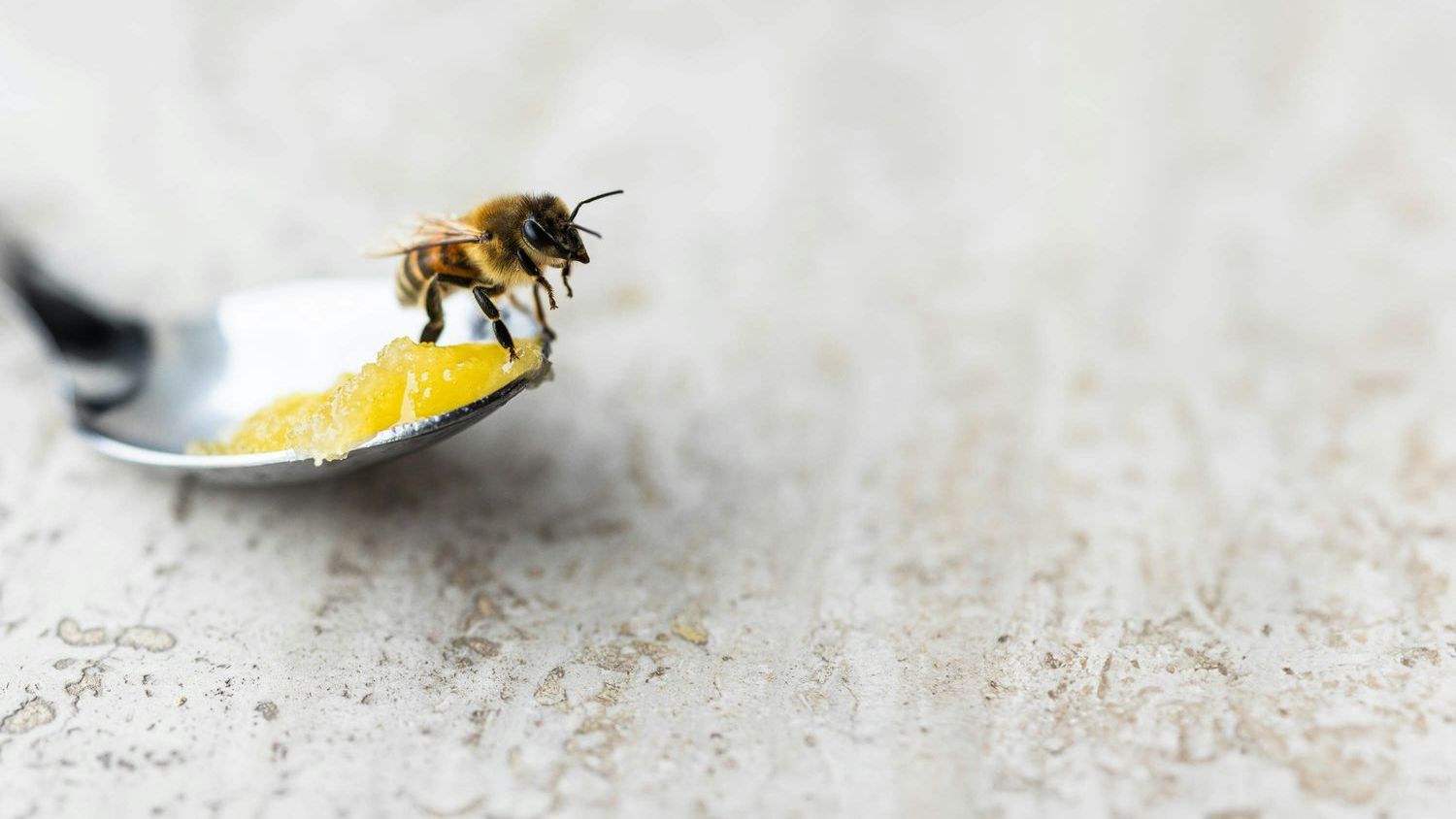
Bees can detect viruses in food sources, but don't necessarily avoid them – Image for illustrative purposes only (Image credits: Unsplash)
Honeybees possess a remarkable ability to sense viruses lurking in their food supplies, a skill that could theoretically shield them from infection. Researchers recently uncovered this detection capability through controlled experiments, only to observe a counterintuitive twist: the insects often gravitated toward the contaminated options rather than steering clear.[1][2] This behavior challenges long-held assumptions about how pollinators protect themselves and their colonies from pathogens like deformed wing virus, which plagues hives worldwide.
A Startling Preference Emerges in Field Tests
Forager bees, the colony’s dedicated nectar collectors, displayed a clear attraction to virus-spiked sugar solutions during outdoor experiments conducted in Baton Rouge, Louisiana. Stations offered choices between clean sucrose, water, low concentrations of deformed wing virus, and high concentrations. The foragers visited and consumed from the high-virus feeders far more than the others, a pattern that held steady across spring and fall trials.[1]
Joseph McCarthy, an extension associate at the LSU AgCenter, noted the unexpected outcome. “To our surprise, the bees were feeding from the virus-treated syrup significantly more than the virus-free food,” he said. This preference persisted regardless of season, suggesting that real-world foraging dynamics amplify the bees’ draw to potentially risky sources.[1]
Scientists trained the bees over weeks to visit these stations, ensuring the results reflected natural decision-making. The findings marked the first evidence that honeybees – or any insect – could directly detect viruses absent from a host organism, relying instead on cues within the contaminated nectar itself.
Cage Experiments Reveal Seasonal Shifts
In controlled indoor settings, young nurse bees faced similar two-feeder choices: plain sucrose versus solutions laced with deformed wing virus, black queen cell virus, or chronic bee paralysis virus. Responses varied sharply by time of year. During summer trials, the bees favored the unadulterated option, hinting at avoidance under certain conditions.[2]
Fall brought a reversal. Nurse bees consumed significantly more from the virus-spiked feeders, mirroring the foragers’ field behavior. Researchers ruled out simple explanations, such as trace proteins in the viral extracts, confirming the low levels posed no detectable nutritional pull. Paula Castillo Bravo, an LSU AgCenter entomology researcher, described the observation as “absolutely surprising.”[1]
These lab results underscored the complexity of bee responses. While detection occurred consistently, the decision to partake or pass appeared influenced by environmental factors, bee age, and context.
Viruses Tested and Their Effects
| Virus | Test Context | Bee Response |
|---|---|---|
| Deformed Wing Virus (DWV) | Cage (nurse bees), Field (foragers) | Preferred in fall cages and all field trials (high conc.) |
| Black Queen Cell Virus | Cage (nurse bees, fall) | Preferred spiked solution |
| Chronic Bee Paralysis Virus | Cage (nurse bees, fall) | Preferred spiked solution |
The table highlights patterns across the three viruses, all extracted from infected bees or pupae and added to sucrose solutions. Deformed wing virus, notorious for deforming bee wings and weakening colonies, drove the most robust preferences in outdoor settings. These pathogens represent common threats in managed hives, where infections often reach high levels by autumn.[1]
Unraveling the Mystery of Attraction
Why would bees seek out danger? The study leaves the detection mechanism elusive. Viruses typically lack strong odors or metabolites that bees’ keen senses might pick up easily. McCarthy speculated on parallels to “zombie” parasites that hijack host behavior for their own spread, though more experiments are needed to test this.[1]
Flower hotspots contaminated with these viruses could accelerate transmission as bees flock to them, exacerbating colony declines. Yet the bees’ social structure might offer buffers, such as grooming or isolation of the sick. The research, published in Biology Letters, calls for deeper probes into how viruses alter foraging and social immunity.[2]
Seasonal differences – stronger pull in fall – may tie to rising virus loads in hives, prompting bees to self-dose in ways that puzzle scientists. Future work could examine brain changes or prior exposure effects.
Broader Ramifications for Pollinators and Beyond
This discovery reshapes views on insect immunity. Honeybees’ ability to sense free-floating viruses opens doors to novel disease management, potentially training them away from tainted blooms or engineering safer floral cues. It also spotlights risks in pollinator communities, where shared flowers serve as viral bridges.[1]
Castillo Bravo and McCarthy emphasized ongoing questions. Their collaboration with the USDA Agricultural Research Service underscores the need for interdisciplinary efforts amid pollinator losses. As hives grapple with multiple stressors, understanding these quirky choices could prove vital for sustaining these essential insects.
Ultimately, the bees’ bold foraging invites reflection on nature’s intricate balances – where survival instincts meet unseen manipulations, and detection does not guarantee deterrence.