

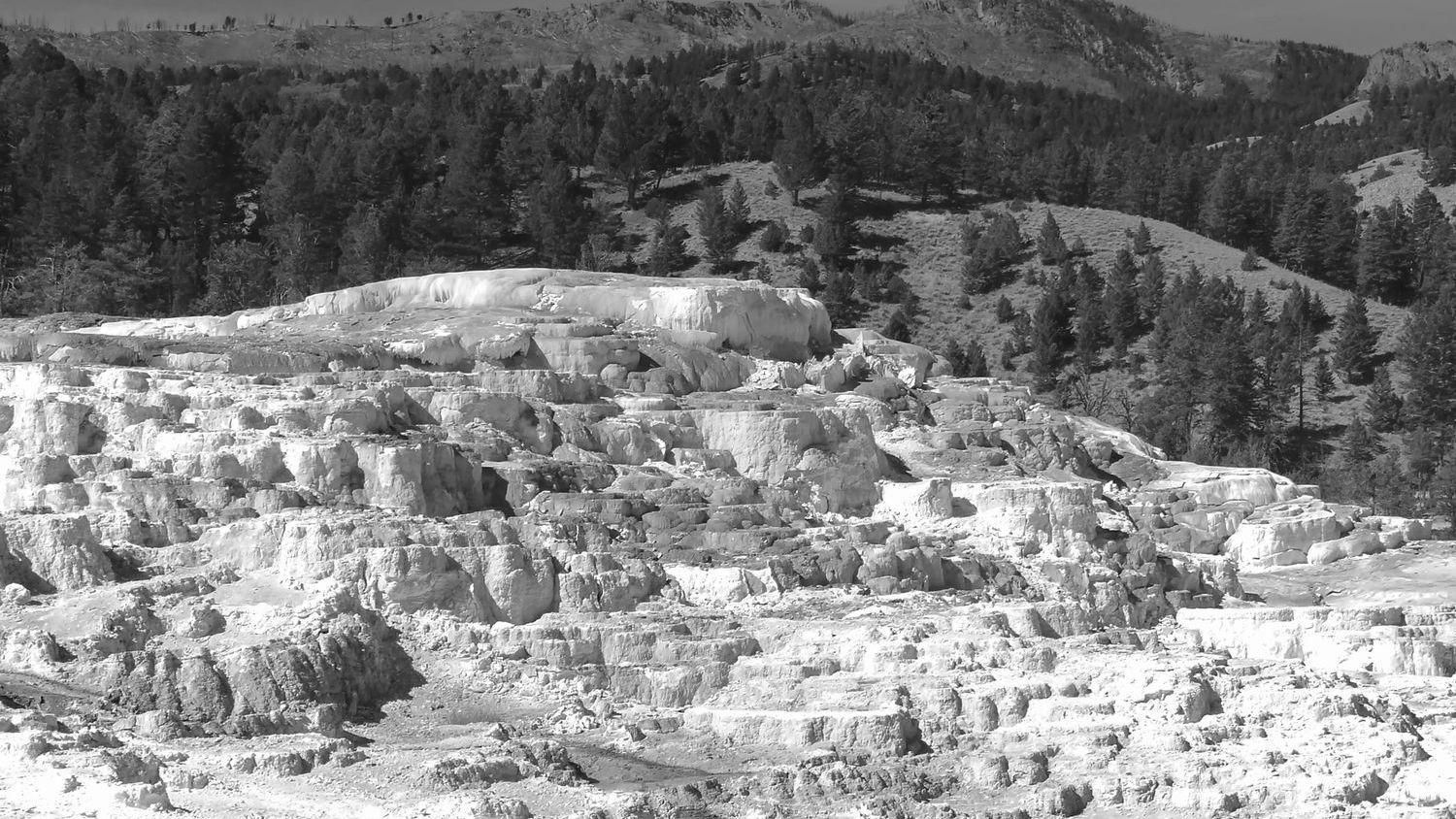
Yellowstone’s volcano may be fueled in a very different way than we thought – Image for illustrative purposes only (Image credits: Unsplash)
For the millions of visitors who flock to Yellowstone National Park each year, the geysers, hot springs, and vast landscapes offer a glimpse into one of Earth’s most dynamic forces. Beneath it all lies a supervolcano capable of world-altering eruptions. Researchers now propose that shifts in the Earth’s crust, driven by tectonic stresses, primarily fuel this system rather than a vast reservoir of deep-sourced magma. This finding, detailed in a recent study, could refine how scientists track potential hazards in the region.[1][2]
A Paradigm Shift in Supervolcano Dynamics
Scientists have long debated the engine behind Yellowstone’s volcanic activity. Traditional models pictured a deep mantle plume – a column of hot rock rising from near Earth’s core – pushing buoyant magma upward to form large chambers in the crust. This view explained the park’s three massive supereruptions over the past 2.1 million years, including one about 630,000 years ago that blanketed much of North America in ash.
The latest research upends that narrative. A team from China’s Institute of Geology and Geophysics developed a three-dimensional geodynamic model of western North America. Their simulations incorporated mantle convection, lithospheric stresses, and remnants of ancient plate subduction. The results indicated that tectonic forces dominate, generating magma through processes closer to the surface.[3]
How Tectonic ‘Mantle Wind’ Drives the System
At the heart of the new model lies an eastward-flowing “mantle wind” in the shallow asthenosphere, the hot, pliable layer beneath the rigid lithosphere. This flow stems from the long-ago subduction of the Farallon Plate, whose fragments still influence North American mantle dynamics. Hot, buoyant material rides this current toward Yellowstone, where it encounters the thick continental lithosphere to the east.
Forces from the mantle wind and lithospheric extension then pull this material downward. The stretching thins the crust and triggers decompression melting, where reduced pressure allows rock to melt into magma. This magma ascends through a southwest-dipping network of channels, forming extensive “magma mush” – partially molten zones mixed with crystals – rather than discrete liquid pools. The process aligns with geophysical data showing magma storage spanning the lithosphere.[1][2]
| Traditional Model | New Tectonic Model |
|---|---|
| Deep mantle plume rises buoyantly from core-mantle boundary | Shallow asthenospheric ‘mantle wind’ from plate subduction remnants |
| Single large liquid magma chamber builds in crust | Lithospheric extension causes decompression melting and magma mush |
| Vertical magma ascent dominates | Tectonic stresses shape slanted pathways through crust |
From Mush to Potential Eruptions
Yellowstone’s current setup features shallow reservoirs in the upper crust holding rhyolitic mush, fed by deeper basaltic melts. These systems remain stable for long periods, with liquid-rich bodies forming only briefly before supereruptions. The study explains why such events are rare yet cataclysmic, ejecting over 1,000 cubic kilometers of material each time.
Tectonic control means magma evolves incrementally: basaltic melts stall in the lower crust, heat surrounding rock, and produce the sticky rhyolite that defines Yellowstone’s explosive style. This mush sustains geothermal features like Old Faithful without constant large-scale melting.[3]
Implications for Safety and Future Research
This model carries practical weight for the U.S. Geological Survey’s monitoring efforts. Ground deformation, seismicity, and gas emissions at Yellowstone already signal ongoing activity, but understanding tectonic drivers could sharpen forecasts. Park managers and nearby communities – from Wyoming ranchers to Idaho farmers – stand to benefit from refined risk assessments.
- Focus on lithospheric stress indicators, like crustal extension rates.
- Track mantle flow patterns via seismic tomography.
- Model interactions between tectonics and short-term magma surges.
While no eruption looms on the horizon, the work extends to other supervolcanoes worldwide, from Campi Flegrei in Italy to Taupo in New Zealand. It underscores how plate tectonics quietly sculpts Earth’s most dangerous volcanoes.
As researchers refine these simulations with fresh data, the ground under Yellowstone reveals more of its secrets. For now, the supervolcano slumbers, its power drawn not from unfathomable depths but from the restless dance of crustal plates overhead.