Matthias tracks the bleeding edge of innovation — smart devices, robotics, and everything in between. He’s spent the last five years translating complex tech into everyday insights.
Sharing is caring!
Few intelligence operations in history have matched the sheer audacity of what the CIA quietly set in motion in the late 1960s. It involved building a custom ship the size of a city block, enlisting one of America’s most eccentric billionaires as a front man, and lowering a mechanical claw nearly three miles to the bottom of the Pacific Ocean. The whole thing was supposed to be invisible.
Project Azorian was a highly secret six-year effort to retrieve a sunken Soviet submarine from the Pacific Ocean floor during the Cold War. What makes it remarkable is not just what the CIA attempted, but how far it was willing to go to pull it off.
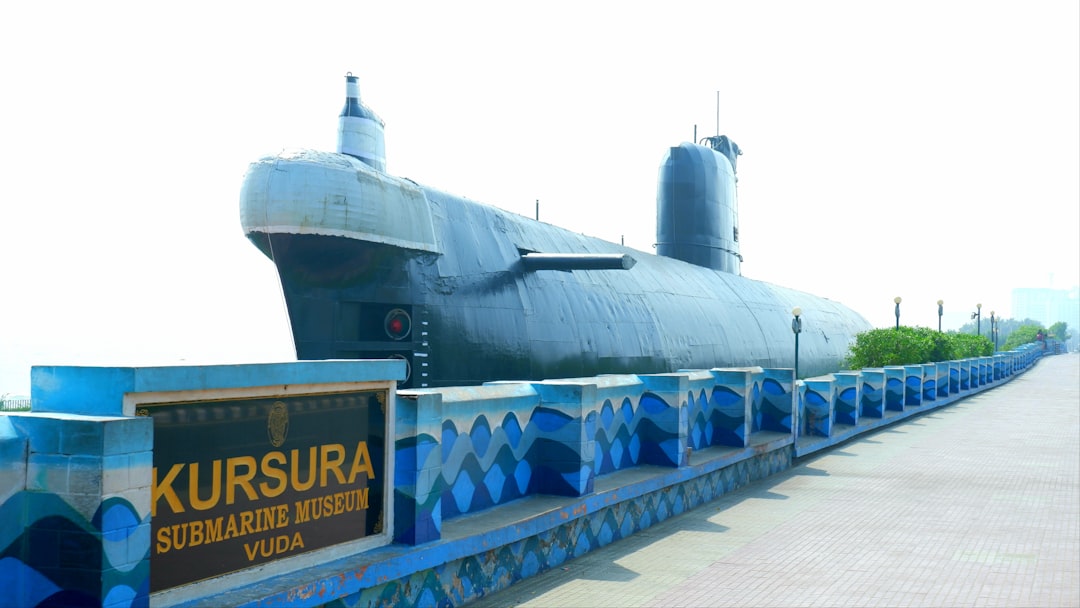
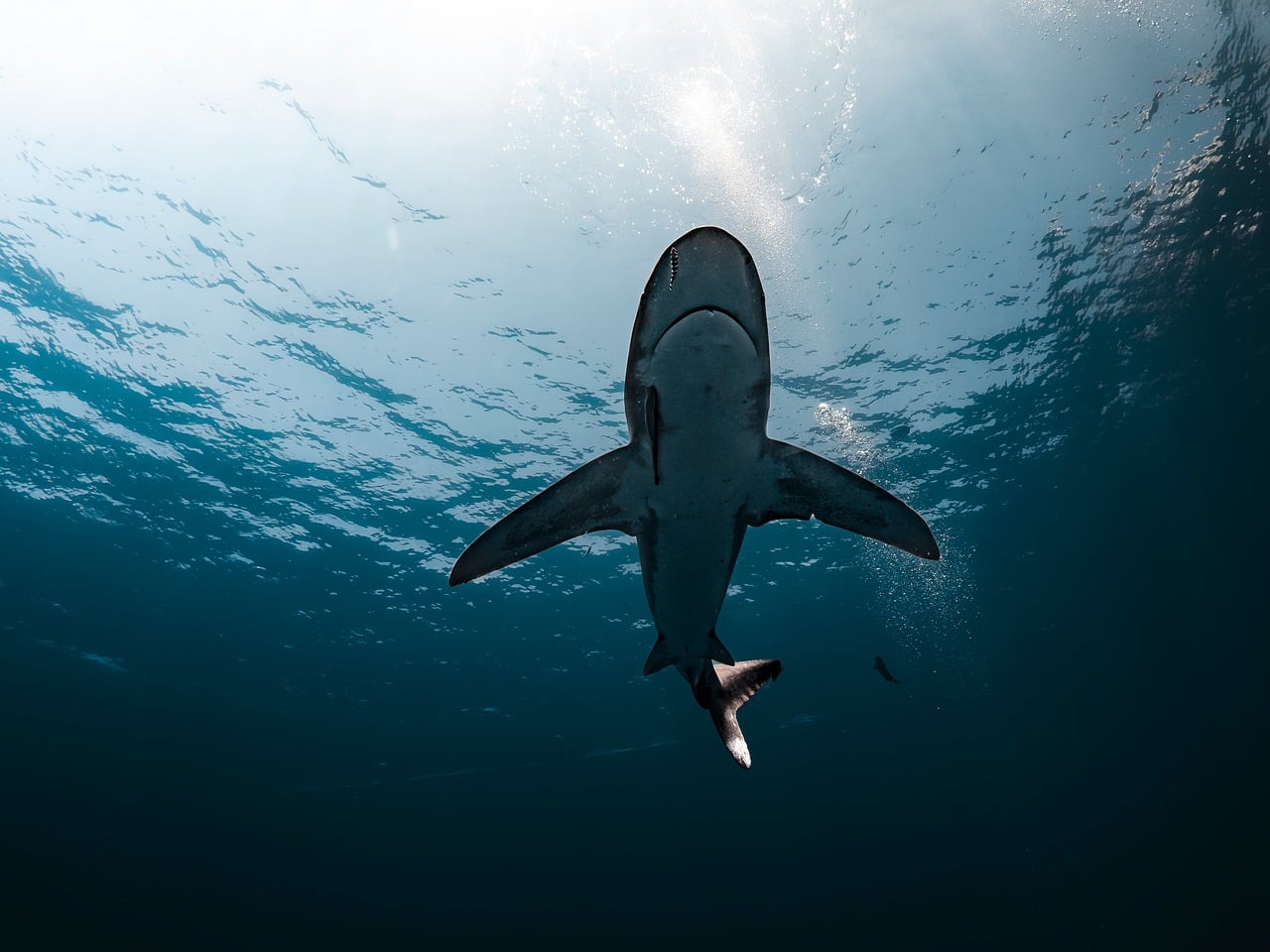
A Submarine Goes Silent in the Pacific
A Submarine Goes Silent in the Pacific (Image Credits: Unsplash)
The story of Project Azorian began on March 1, 1968, when a Soviet Golf-II submarine, the K-129, carrying three SS-N-4 Sark nuclear-armed ballistic missiles, sailed from the naval base at Petropavlovsk on the Kamchatka Peninsula to take up its peacetime patrol station northeast of Hawaii. It never came back. If war had broken out, the K-129 would have launched its three ballistic missiles, each carrying a one-megaton nuclear warhead, at targets along the west coast of the United States. Something went terribly wrong, and in mid-March 1968 the submarine suffered a catastrophic accident and sank with the loss of its entire crew. The Soviets searched frantically but could never locate the wreck.
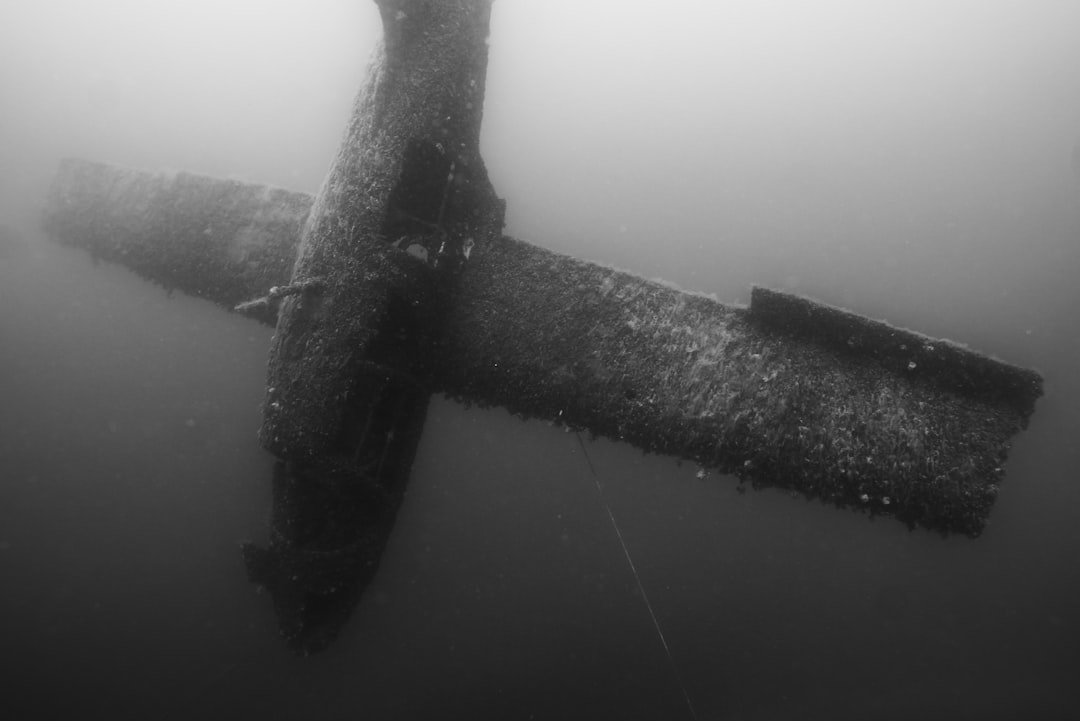
How the U.S. Navy Found It First
How the U.S. Navy Found It First (Image Credits: Unsplash)
The K-129 went down with all hands approximately 1,600 miles northwest of Hawaii on March 8, 1968, at a location that was unknown to the Soviets. Using underwater surveillance technology, the U.S. Navy was able to determine where the submarine sank within about six miles. Subsequently, the Navy submarine Halibut was able to find and photograph the K-129, more than three miles down on the ocean floor. The Navy located the wreck on August 20, 1968 and proceeded to take 20,000 photographs. That image archive would become the blueprint for everything that followed.
Nixon Gives the Green Light
Nixon Gives the Green Light (Image Credits: Unsplash)
Given a unique opportunity to recover a Soviet SS-N-5 nuclear missile without the knowledge of the Soviet Union, President Richard Nixon authorized a salvage attempt after consideration by the Secretary of Defense and the White House. To ensure the salvage attempt remained secret, the CIA, rather than the Navy, was asked to conduct the operation. In April 1969, after eight months of debates, infighting, and senior committee sessions, the White House gave the CIA the lead on efforts to raise the wreck. The CIA got to work on selecting an engineering system to carry out the operation and in July 1970 settled on Global Marine’s Heavy-Lift Ship System for the pending project. The idea seemed almost impossible on paper. Almost.
The Engineering Challenge of the Century
The Engineering Challenge of the Century (Image Credits: Pixabay)
CIA engineers faced a daunting task: lift a huge 1,750-ton, 132-foot-long portion of the wrecked submarine from an ocean abyss more than three miles below, under total secrecy. The ship would need to remain utterly stationary over the wreck to lower a crane to a depth of 16,000 feet, the deepest recovery operation ever attempted, and then have the mechanical ability to raise the submarine. By comparison, the Titanic was at a depth of 12,500 feet. In 1970, after careful study, a team of CIA engineers and contractors determined that the only technically feasible approach was to use a large mechanical claw to grasp the hull and a heavy-duty hydraulic system mounted on a surface ship to lift it. The scale of what they were proposing had no precedent in engineering history.
Enter Howard Hughes: The Perfect Cover Story
Enter Howard Hughes: The Perfect Cover Story (Image Credits: Pixabay)
Wanting to sidestep diplomatic tensions and keep whatever knowledge was to be gleaned from the mission secret, the CIA constructed an elaborate cover story with the help of enigmatic billionaire Howard Hughes. The aviation mogul lent his name to the construction of the 618-foot-long ship, to be named the Hughes Glomar Explorer, which was advertised as a deep-sea mining research vessel. Scientists and venture capitalists had long seen potential in ocean mining, but when Hughes appeared to take on the challenge, the world took notice. The well-publicized plan described harvesting manganese nodules from record depths with a custom-built ship that would push engineering technology to new limits, typical of Hughes’ style. It was a remarkably believable lie.
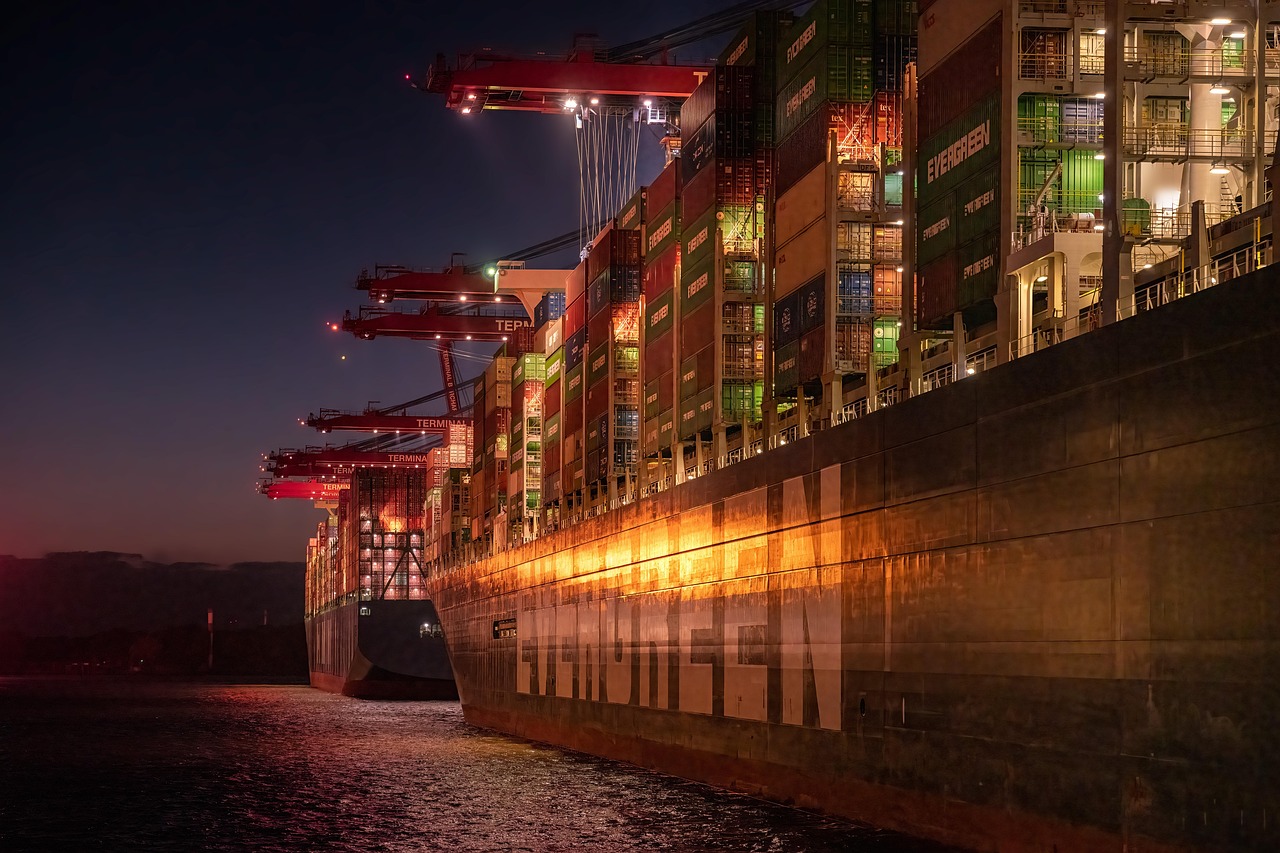
Building the Most Unusual Ship Ever Constructed
Building the Most Unusual Ship Ever Constructed (Image Credits: Pixabay)
In November 1971, Sun Shipbuilding in Chester, Pennsylvania, began construction of the Hughes Glomar Explorer, a one-of-a-kind ship with both an ostensible mission and an actual mission. The cover story was that she would be used by Howard Hughes to mine manganese nodules from the ocean floor. The real objective, of course, was to raise the K-129 from three miles down. The ship was built for more than $350 million in 1974 dollars, equivalent to roughly $1.7 billion today, at the direction of Howard Hughes for use by his company, Global Marine Development Inc. The CIA outfitted the ship with an array of instruments and tools to both recover and study the wreckage, including a photographic darkroom, ways to handle nuclear waste, and a giant steel claw for the heavy-lifting part of the operation.
The Mission Launches on the Fourth of July
The Mission Launches on the Fourth of July (Image Credits: Pixabay)
On July 4, 1974, the Hughes Glomar Explorer sailed from Long Beach, California to the recovery site and remained at the location for more than a month without anyone noticing, even as Soviet ships and aircraft monitored the scene the entire time. By this point the Cold War had reached a détente, but still two separate Soviet ships, likely loaded with intelligence operatives, closely monitored the supposed mining vessel as it worked. At one point, Glomar crew members even piled crates on their landing deck to prevent any attempts to land a helicopter. The Hughes Glomar Explorer began lifting the K-129 off the sea floor on August 1, 1974, more than three weeks after the ship arrived at the recovery site. It took eight days to slowly winch the remains of the Soviet submarine into the massive hold of the ship.
The Claw Breaks and the Mission Falls Short
The Claw Breaks and the Mission Falls Short (Hawich Museum, Flickr, CC BY-SA 2.0)
The intent was to recover the forward two-thirds, or 138 feet, of K-129, which had broken off from the rear section of the submarine. The capture vehicle successfully lifted this portion from the ocean floor, but a failure of part of the capture vehicle on the way up caused the loss of 100 feet of the target object, including the sail. The engineers who were on board the ship during the mission later confirmed that only 38 feet of the bow was eventually recovered. It was a significant mechanical failure at the worst possible moment, and the most strategically valuable sections of the submarine sank back into the abyss.
What Was Actually Recovered
What Was Actually Recovered (Chic Bee, Flickr, CC BY 2.0)
The recovered section included two nuclear torpedoes, and the bodies of six crewmen were also recovered and given a memorial service with military honors, buried at sea in a metal casket because of radioactivity concerns. Other crew members reported that codebooks and other materials of apparent interest to CIA employees aboard the vessel were recovered, and images of inventory printouts from a documentary suggest that various submarine components, including hatch covers, instruments, and sonar equipment, were also retrieved. The videotape of the burial ceremony was given to Russia by U.S. Director of Central Intelligence Robert Gates when he visited Moscow in October 1992. Quietly, with some dignity, the Cold War antagonists acknowledged the human cost of what had happened.
The Break-In That Blew the Cover
The Break-In That Blew the Cover (Image Credits: Unsplash)
In June 1974, just before the Glomar set sail, thieves had broken into one of the Hughes offices in Los Angeles and stolen secret documents, including one tying Howard Hughes to the CIA and the Glomar Explorer. Desperate to recover this document, the CIA called in the FBI, which in turn enlisted the Los Angeles Police Department. The search drew attention, and by the autumn of 1974 the media began to pick up rumors of a sensational story. The CIA declined to either confirm or deny the reports, a tactic that became known as the “Glomar response” and was subsequently used to confront all manner of journalistic and public inquiry, including Freedom of Information Act requests. That two-word legal posture, “neither confirm nor deny,” has since become one of the most durable phrases in intelligence history.
The Legacy of Project Azorian
The Legacy of Project Azorian (Image Credits: Unsplash)
Project Azorian was one of the most complex, expensive, and covert intelligence operations of the Cold War, at a cost of roughly $800 million, equivalent to $3.9 billion in 2024. The actual name, Project Azorian, became public only in 2010, decades after the operation concluded. Although Project Azorian failed to meet its full intelligence objectives, the CIA considered the operation to be one of the greatest intelligence coups of the Cold War, and it remains an engineering marvel that advanced the state of the art in deep-ocean mining and heavy-lift technology. The deep-sea mining industry exists in its current form largely because of the groundwork laid by Project Azorian.
What Project Azorian leaves behind is less a story of clear success or failure and more a study in what happens when a government decides that the impossible is merely expensive. The claw broke. Two-thirds of the submarine fell back into the dark. The whole operation was eventually exposed by a burglary. Yet the CIA still calls it one of the Cold War’s greatest coups, and engineers still point to it as a turning point in deep-ocean technology. Whether that verdict holds up depends on what you think espionage is ultimately for.
About the author
Matthias Binder
Matthias tracks the bleeding edge of innovation — smart devices, robotics, and everything in between. He’s spent the last five years translating complex tech into everyday insights.