

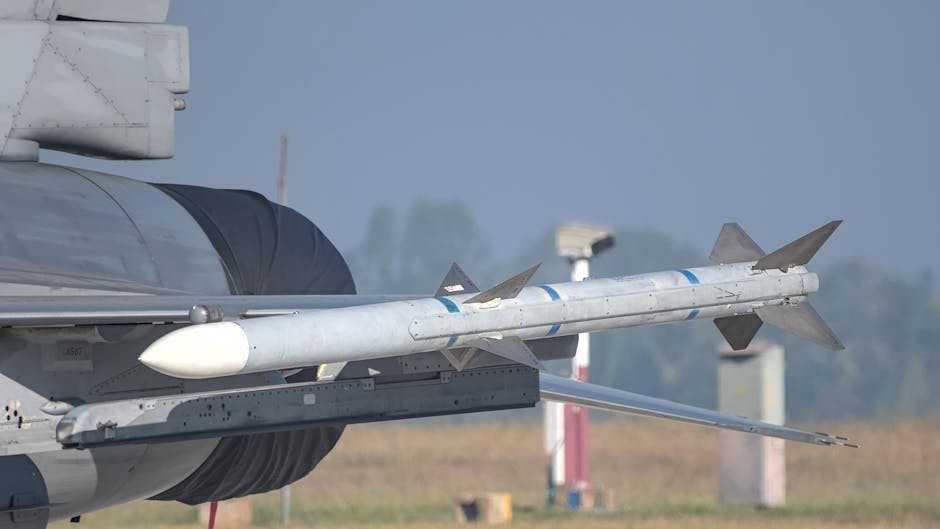
US Fires Tomahawk Missile Amid Tensions With China Over Pacific War Games – Image for illustrative purposes only (Image credits: Pexels)
Manila – A Tomahawk cruise missile sliced through the night sky over the Philippines early Tuesday, launched from Tacloban City and striking a target more than 600 kilometers away in Nueva Ecija.[1] The precision strike marked the first use of the weapon in this year’s Balikatan exercises, the largest joint military drills ever held by the United States, the Philippines, and allies. China, which issued a stark rebuke when the maneuvers began three weeks ago, continues to view the activities as provocative amid ongoing disputes in the South China Sea and pressures around Taiwan.[2]
The Landmark Tomahawk Firing
US Army forces operating the Typhon Mid-Range Capability system fired the missile just after midnight on May 5 from Tacloban Airport in Leyte province. It reached its designated impact zone in Laur, Nueva Ecija – a remote artillery range with no nearby structures or civilians – around 1 a.m., demonstrating pinpoint accuracy over a distance of roughly 630 kilometers.[1] Philippine military spokesperson Colonel Dennis Hernandez described the event as a single, scripted activity tied to a simulated land conflict scenario at Fort Magsaysay.
The launch supported notional ground operations during the Joint Pacific Multinational Readiness Center phase of Balikatan. Hernandez emphasized that only one round was expended in a controlled exercise, with no connection to real-world threats. Progressive groups, however, condemned the firing from a civilian airport, arguing it endangered local communities and turned the Philippines into a foreign military testing ground.[1]
Balikatan’s Unprecedented Scale
The 19-day exercises, which kicked off on April 20 at Camp Aguinaldo in Manila, drew more than 17,000 troops from seven nations, matching last year’s numbers but elevated by Japan’s debut as a major participant with 1,400 personnel.[2][3] Around 10,000 US service members joined Philippine forces, alongside contingents from Australia, New Zealand, France, and Canada. US Lieutenant General Christian Wortman, commander of the Marine Expeditionary Force, affirmed at the opening ceremony that America’s Indo-Pacific priorities remained firm despite global distractions.
Activities spanned live-fire drills in northern provinces facing the Taiwan Strait, including the Batanes islands less than 200 kilometers from Taiwan’s southern coast, and areas bordering the contested South China Sea. Japan planned to deploy its Type 88 cruise missile against a decommissioned World War II-era vessel off Luzon, while the US Typhon system – stationed in the Philippines since 2024 – integrated into multiple scenarios. Philippine Armed Forces chief General Romeo Brawner noted assurances from US Indo-Pacific Command’s Admiral Samuel Paparo that Balikatan 2026 would be the biggest yet.[4]
These maneuvers built on recent trilateral flights over the Bashi Channel in February, testing seamless operations in contested waters. Japan formalized its role through a reciprocal access agreement ratified the previous June.
Beijing’s Immediate Backlash
China’s foreign ministry spokesman Guo Jiakun responded swiftly to the drills’ launch, cautioning the US, Japan, and Philippines against escalating risks. “What the Asia-Pacific region needs most is peace and tranquility, and what it needs least is the introduction of external forces to sow division and confrontation,” he stated during a briefing.[2] He added that such security pacts amounted to “playing with fire – ultimately backfiring upon themselves.”
The rhetoric echoed Beijing’s long-standing objections to perceived encirclement, particularly as Philippine President Ferdinand Marcos Jr. has expanded defense ties with Western partners over the past two years. Agreements with New Zealand, Canada, and France now enable broader joint training. About 50 protesters gathered outside the Manila kickoff site, decrying US involvement and labeling President Donald Trump an “imperialist terrorist.”[3]
Strategic Stakes in a Tense Region
Balikatan unfolded against dual backdrops: simmering US-Iran hostilities in the Middle East, where a fragile two-week ceasefire followed initial strikes, and persistent flashpoints closer to home. Repeated Philippine-Chinese clashes in the South China Sea have heightened Manila’s deterrence needs, while Beijing’s military drills near Taiwan raise invasion fears. Marcos warned last November that any Taiwan conflict would inevitably pull his nation in due to geography.[2]
Japan’s Colonel Takeshi Higuchi framed the exercises as essential to upholding the regional status quo against force. The Tomahawk test, leveraging Typhon’s versatility for Tomahawks and other munitions, signals advancing allied capabilities in long-range strikes – directly relevant to Pacific contingencies.[1] As the drills near completion, they reinforce a web of partnerships aimed at stability, even as interpretations diverge sharply between Washington and Beijing.
These developments leave observers watching whether heightened interoperability translates to de-escalation or further strains in one of the world’s most volatile theaters.