

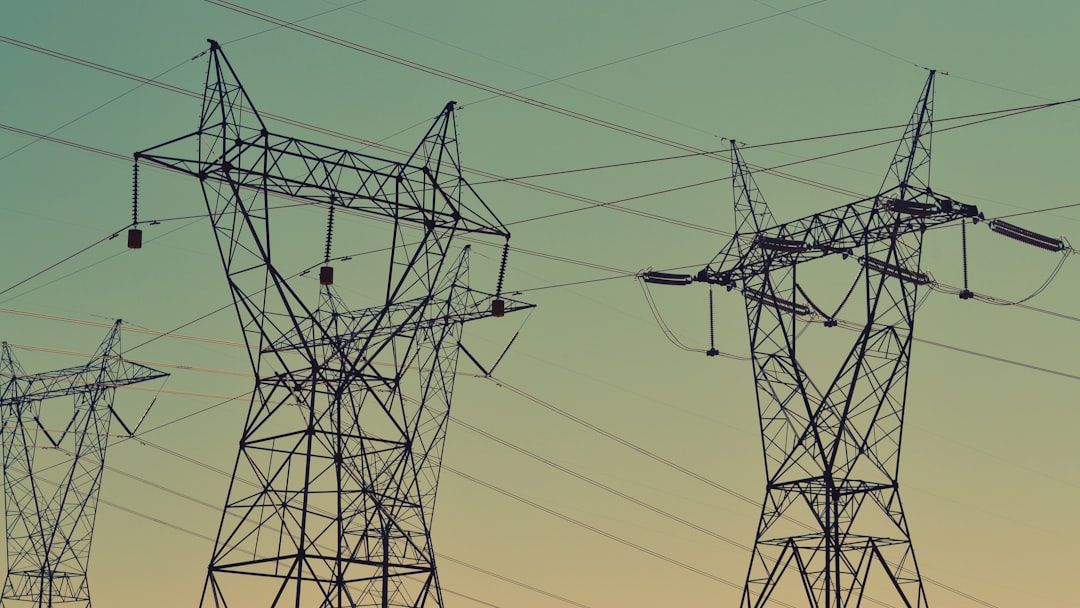
California’s Battery Array Is as Powerful as 12 Nuclear Power Plants. Here’s What’s on the Horizon. – Image for illustrative purposes only (Image credits: Unsplash)
San Francisco – In late March, as households across California fired up electric appliances for dinner and evening entertainment, the state’s grid operators tapped into a groundbreaking resource. Batteries discharged more than 12,000 megawatts of power for the first time, a figure comparable to the output of 12 large nuclear power plants and sufficient to cover over 40 percent of the evening peak demand.[1]
This milestone underscored the rapid shift in the state’s energy landscape, where carbon-free sources generated more than 60 percent of electricity the previous year. Yet challenges loomed, including policy shifts from the Trump administration and surging demand from new technologies.
A Record-Breaking Evening Discharge
The late March event marked a pivotal moment for California’s energy infrastructure. Grid operators relied on battery arrays to stabilize supply during high-demand hours, typically around 7 p.m., when solar generation wanes. This deployment highlighted how storage had evolved from a niche supplement to a cornerstone of reliability.[1]
Ed Smeloff, an energy consultant at GridLab and a specialist in transmission planning, noted the transformation. “The most remarkable change… has been the very rapid addition of grid-connected batteries,” he said, emphasizing their role in replacing natural gas during peaks.[1]
The Surge in Battery Capacity
California’s battery fleet grew swiftly, enabling such feats. These systems charge during the day from abundant solar and wind, then release stored energy when needed most. The state’s progress reflected years of investment, positioning it as a leader in grid-scale storage.[1]
Smeloff described batteries as now providing up to 40 percent of peak capacity needs. This shift reduced dependence on fossil fuels, aligning with broader decarbonization goals. However, the grid remained in transition, balancing renewables with emerging pressures.
Federal Policies Test Resilience
The Trump administration introduced headwinds through actions targeting renewables. Officials moved to abandon offshore wind initiatives, reopen idled oil pipelines, and phase out tax credits via the “One Big Beautiful Bill” passed last year. Projects starting after 2030 would lose incentives covering up to 30 percent of costs.[1]
Still, Smeloff saw sustained momentum. “There’s still significant momentum for new projects to be completed and interconnected… before 2030,” he explained. Batteries, in particular, benefited from extended tax credits through 2032, while solar’s low costs kept it competitive. Offshore wind, however, faced greater risks due to federal dependencies and infrastructure needs.[1]
External factors added complexity. Recent tensions, such as the war on Iran, exposed fossil fuel vulnerabilities, bolstering the case for renewables. Tariffs on Chinese imports created supply uncertainties but spurred domestic manufacturing efforts. Smeloff advocated a balanced approach: leveraging low-cost imports while building U.S. capacity.
Data centers fueled by artificial intelligence emerged as a double-edged driver. Developers sought clean energy branding, potentially accelerating renewables. Yet California’s aging transmission, especially in the Bay Area, required upgrades to handle loads projected between 4,000 and 16,000 megawatts by 2035.
Anticipating Load Growth and Clean Expansion
Future demand loomed large, driven by electrification. Electric vehicles, heat pumps, and building upgrades would strain the system through 2035. Data centers amplified this, particularly in Silicon Valley.[1]
To meet the 2045 goal of 100 percent clean energy, California planned substantial additions. More batteries and charging generators – solar, wind – topped the list. Interstate lines, like the TransWest Express from Wyoming, promised support by 2030, but post-2032 uncertainties persisted amid shifting federal policies.
Spotlight on Ambitious Projects
One standout initiative captured attention: the Valley Clean Infrastructure Project in the Southern San Joaquin Valley’s Westlands Water District. Developed by Golden State Clean Energy, it aimed for 21 gigawatts – unprecedented in scale.[1]
Smeloff highlighted its potential, stressing compatibility with local values. Such ventures could redefine grid capacity, blending agriculture and energy production.
California’s battery achievement in March signaled a maturing clean energy system capable of nuclear-scale delivery. While federal cuts and demand surges posed tests, built-in momentum and strategic projects offered pathways forward. The state stood at a crossroads, where innovation could secure a resilient, low-carbon grid for decades.