

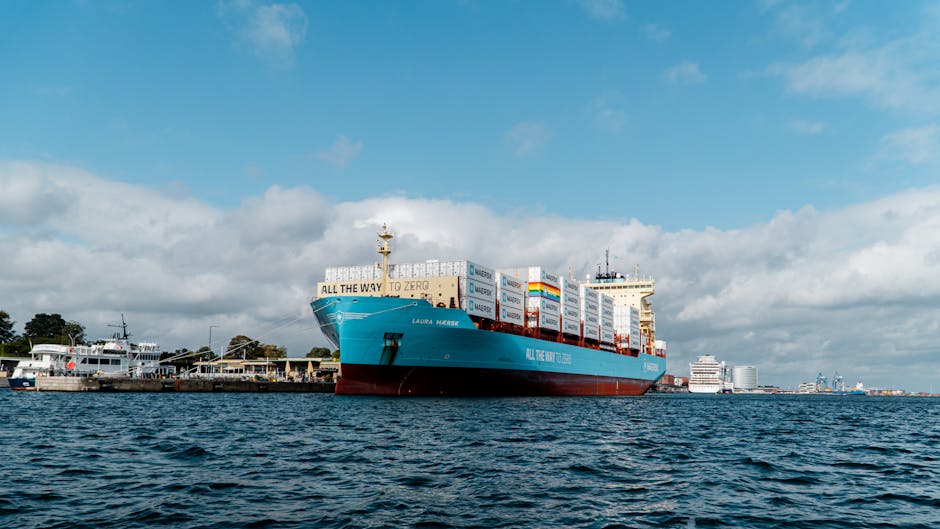
Q&A: How countries got the global ‘net-zero’ shipping deal ‘back on track’ – Image for illustrative purposes only (Image credits: Pexels)
London, UK – Delegates at the International Maritime Organization’s Marine Environment Protection Committee meeting last week recommitted to a landmark net-zero emissions framework for global shipping, despite fierce resistance from major fossil fuel producers and key flag states. The agreement, first hashed out in principle a year earlier, had stalled amid accusations of aggressive U.S. lobbying tactics. Now, with further negotiations slated for later this year, the path toward adoption in December 2026 appears clearer, though tensions linger over carbon pricing and funding mechanisms.
From Compromise to Collapse: The Framework’s Rocky Path
In April 2025, a majority of IMO member states approved a compromise net-zero framework during the MEPC83 session. This plan outlined emissions intensity targets starting at 4% reduction by 2028 and rising to 30% by 2035, alongside a tiered levy system. Ships exceeding limits would buy remedial units at rates up to $380 each, channeling funds into an IMO net-zero fund projected to raise $10-15 billion annually in early years.
That momentum crumbled by October 2025. An extraordinary session aimed at formal adoption ended in adjournment after the U.S. rejected the proposal outright and rallied allies. Negotiators from Saudi Arabia, Russia, and others backed the move, shifting some prior supporters and delaying decisions by a full year. The framework aimed to address shipping’s 2% share of global emissions, a sector outside the Paris Agreement, but opposition centered on its economic implications.
Fossil Fuel Producers Lead the Charge Against Carbon Measures
A bloc including the United States, Saudi Arabia, Russia, the United Arab Emirates, and Algeria voiced strong objections ahead of the April 2026 MEPC84 meeting. They criticized the framework’s carbon pricing as overly punitive, arguing it threatened food and energy security, especially in developing nations. U.S. submissions called for abandoning it entirely, labeling its flaws insurmountable.
Opponents advocated for technology-neutral approaches without penalties or funds, preserving options like liquefied natural gas. Yet analysts noted inconsistencies: while claiming concern for poorer countries, some pushed to scrap the very IMO fund intended to aid their decarbonization efforts. Campaigners highlighted how U.S. port fees and broader energy disruptions from geopolitical conflicts already burdened shipping far more than the proposed rules.
Flag States’ Counter-Proposal Shakes Up Negotiations
Liberia and Panama, which register a third of the world’s commercial fleet, joined Argentina in tabling a major alternative. Their plan limited targets to commercially viable fuels, eliminated the emissions levy and fund, and focused on voluntary measures. Backed by the U.S. and Gulf states, it drew support from nations like Ghana and Nigeria, though these same countries sought transition funding the proposal explicitly rejected.
Japan offered milder tweaks, such as easing targets and removing fund payments for non-compliant ships. Observers dismissed the flag states’ idea as status quo, lacking incentives for zero-emission fuels. Delaine McCullough, director of the Ocean Conservancy’s shipping program, noted: “By removing the mandatory greenhouse gas price, you take away the ability to provide any kind of rewards or other incentives.” Ties between these registries – often U.S.-owned – and industry interests fueled questions about their shift from prior levy support.
Supporters Rally to Preserve the Original Deal
A coalition of over 50 nations, including the European Union, Brazil, China, Colombia, Kenya, and Pacific island states, defended the framework as a hard-won balance. They argued it flexibly accommodated all fuels, including bunker oil with carbon capture, and warned that unraveling it risked fragmented regional rules harmful to developing economies. Brazil’s submission emphasized its non-tax nature and inclusivity.
Pacific islands, initial levy advocates, accepted the compromise but threatened to revert if diluted. Michael Mbaru, a low-carbon shipping expert for Kenya’s climate envoy, stressed: “If the global package unravels, pressure grows for more regional and unilateral measures instead.” Supporters pushed for intersessional talks to clarify fuel accounting, food security impacts, and fund governance, building toward consensus.
| Position | Key Supporters | Main Arguments |
|---|---|---|
| Pro-Framework | EU, Brazil, China, Pacific islands, Kenya | Balanced compromise; funds developing nations; avoids fragmentation |
| Anti-Framework / Alternatives | US, Saudi Arabia, Liberia, Panama | No carbon pricing; technology-neutral; protects energy security |
Toward December: Survival, Not Victory
The MEPC84 closed with the original framework reaffirmed as the basis for progress, rejecting alternatives that failed to gain majority backing. Nearly 100 delegations spoke, with over half favoring the 2025 plan. Five nations that previously supported adjournment now backed it, signaling shifting dynamics.
IMO Secretary-General Arsenio Dominguez urged rebuilding trust: “We are back on track, but we have to rebuild trust.” Intersessional groups will meet in September and November to refine details before MEPC85. Em Fenton of Opportunity Green cautioned that survival demands urgency: “Survival is not a victory and we cannot end up in a cycle of open-ended negotiations.”
As shipping decarbonization hangs in the balance, the coming months will test whether consensus emerges or fractures deepen, determining if the sector meets its 2050 net-zero pledge.