

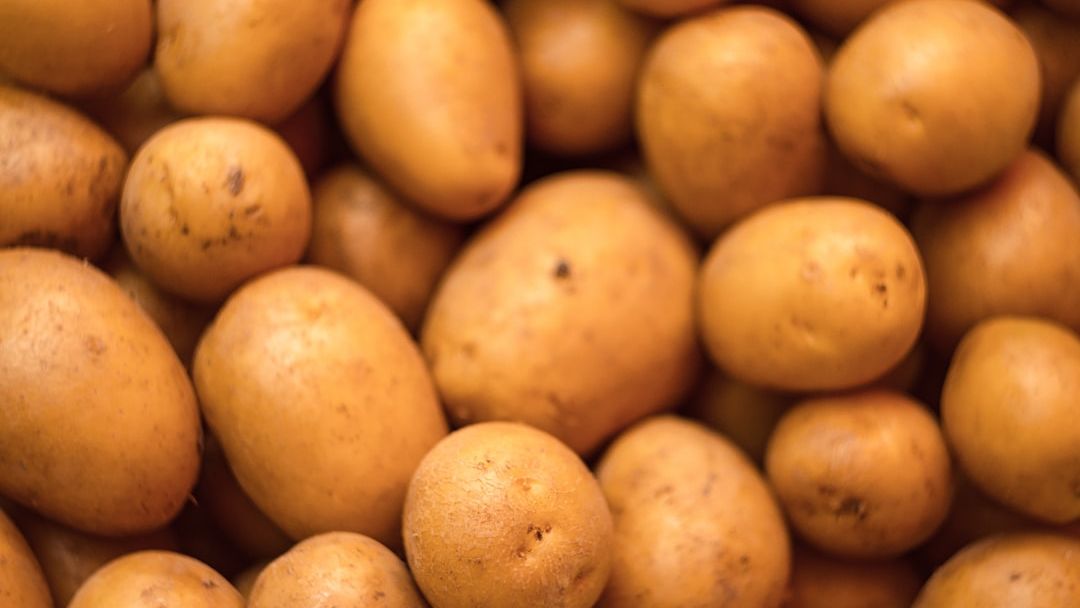
How Potatoes Shaped the Genes of the First People to Grow Them – Image for illustrative purposes only (Image credits: Unsplash)
Peruvian Andes — Indigenous Quechua speakers carry the highest known average copies of the gene for salivary amylase, an enzyme that breaks down starch, among global populations. Researchers traced this trait to natural selection pressures that emerged around the time their ancestors domesticated potatoes roughly 10,000 years ago.[1][2] Those with more copies of the AMY1 gene likely gained a survival edge in the high-altitude highlands, where the tuber became a dietary cornerstone. A new study published this week in Nature Communications provides some of the strongest evidence yet linking human diet to rapid genetic adaptation.[1]
Unlocking the Amylase Advantage
The process begins in the mouth. When people chew starchy foods like saltine crackers, saliva floods with amylase, converting complex carbohydrates into simpler sugars for quicker energy. Individuals vary widely in amylase production based on AMY1 gene copy number—some have four copies, others more than a dozen.
Quechua people averaged 10 copies in DNA samples collected from Peru’s Andean communities. This exceeded figures from 83 other populations studied, including the genetically related Maya of Mexico, who averaged six copies despite no potato-farming tradition.[2] Scientists from the University at Buffalo and UCLA analyzed these genomes against vast databases to pinpoint the pattern.
“Biologists have long suspected that different groups of humans have evolved genetic adaptations in response to their diets, but there are very few cases where the evidence is this strong,” said Omer Gokcumen, a University at Buffalo professor and co-corresponding author.[2]
Domestication and Dietary Revolution
Potatoes originated in the Andes, where wild tubers evolved into the domesticated staple around 10,000 years ago. Ancient highlanders transformed bitter, toxic varieties into reliable food sources suited to harsh altitudes and thin soils. This shift made starch the backbone of their nutrition.
Ancestors of today’s Quechua already showed variation in AMY1 copies before widespread cultivation. However, potato reliance amplified the benefit for those with higher numbers. Researchers calculated a 1.24 percent reproductive or survival advantage per generation for individuals carrying 10 or more copies after domestication began.[2]
The adaptation timeline aligned precisely with archaeological evidence of potato farming between 6,000 and 10,000 years ago. “Evolution is chiseling a sculpture, not constructing a building,” Gokcumen noted. Lower-copy individuals faded from the population over generations, leaving descendants with enhanced starch-processing capacity.[2]
Distinguishing Selection from Bottlenecks
European arrival in the 15th century devastated Indigenous American populations through disease and conflict, creating genetic bottlenecks. Skeptics might attribute high AMY1 copies to this random drift rather than diet-driven selection.
Advanced ultra-long DNA sequencing resolved the debate. Signals of elevated copy numbers appeared thousands of years before contact, predating the bottleneck by millennia. “We saw that the signal of natural selection was also much older, leading us to distinguish it from the population bottleneck,” explained Kendra Scheer, a PhD student in Gokcumen’s lab and co-first author.[2]
| Population | Avg. AMY1 Copies | Potato History |
|---|---|---|
| Quechua (Peru) | 10 | Domesticated ~10,000 ya |
| Maya (Mexico) | 6 | No tradition |
| Global Average | 6-8 | Varies |
This comparison underscored the potato’s role. Luane Landau, another first author from Gokcumen’s lab, highlighted the Maya contrast: “This direct comparison is one of the major reasons why we think their high number of AMY1 copies in the Peruvians did not evolve just by chance but instead linked to their long history of eating potatoes.”[2]
Beyond the Andes: Broader Lessons
The findings build on earlier work, including Gokcumen’s discovery that AMY1 duplications date back 800,000 years and Bigham’s evidence of starch pathway selection in Andeans. High-altitude living already demanded adaptations to low oxygen; potatoes added dietary pressures.
“The high altitude Andes region is known for being a very rich geographic region for understanding human evolutionary adaptation to hypoxia… But I think this research highlights how the Andes are very useful for understanding human evolutionary adaptation to other environmental selective pressures like diet adaptation,” said Abigail Bigham, UCLA anthropologist and co-corresponding author.[2]
Modern implications extend to personalized nutrition. Gokcumen speculated, “There could come a day when our diets are personalized according to our DNA.” Paleo diet advocates might reconsider: “Our metabolic pathways are not simply a product of that Paleolithic past,” Bigham added.[2]
As global diets mix cuisines from every corner, questions linger about future evolution. Scheer pondered the irony: With french fries ubiquitous, what selective forces now shape our starch-handling genes?
This Andean story reveals how a single crop, over mere millennia, etched itself into human biology—a reminder that domestication flows both ways.