

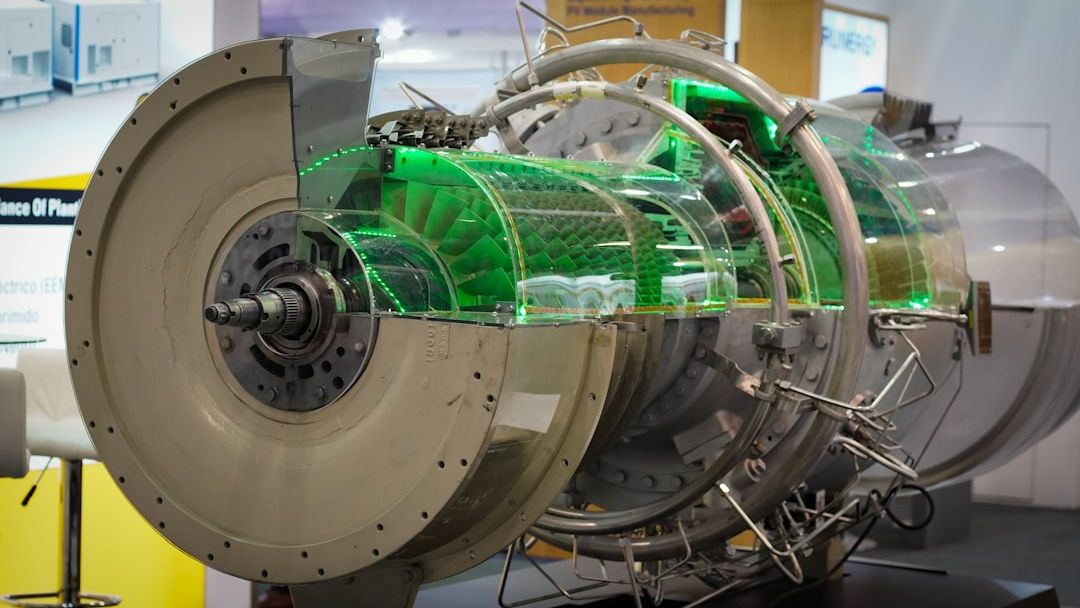
Engineers at NASA's Jet Propulsion Lab make a breakthrough in rotor technology – Image for illustrative purposes only (Image credits: Unsplash)
Engineers at NASA’s Jet Propulsion Laboratory in California are advancing rotor technology for a new generation of helicopters that could operate on Mars. Their efforts build directly on the achievements of the Ingenuity aircraft, which completed its mission more than three years ago. The work focuses on creating vehicles capable of carrying heavier equipment across greater distances in the planet’s thin atmosphere. These developments support broader plans to send additional rotorcraft to the red planet in the coming years.
Ingenuity Sets a New Standard for Aerial Exploration
Ingenuity became the first aircraft to fly on another world after arriving on Mars with the Perseverance rover. The small helicopter completed 72 flights, far exceeding its original target of five flights over 30 days. It demonstrated that powered flight could provide scientists with access to terrain that ground vehicles could not reach. The mission ended in January 2024 when the craft experienced a crash landing.
Throughout its operations, Ingenuity collected valuable data on how helicopters perform in Martian conditions. Its success opened possibilities for using air travel to cover longer distances and survey wider areas. Researchers gained insights into flight dynamics that had never been tested outside Earth. This foundation now guides the design of larger and more capable follow-on vehicles.
Adapting Rotors for Mars’ Thin Atmosphere
Mars presents unique challenges for rotorcraft because its atmosphere is far less dense than Earth’s. Engineers must create blades that generate sufficient lift while operating at lower speeds and with reduced air resistance. The current work at JPL emphasizes improvements in rotor efficiency and structural strength to support increased payload capacity.
These refinements aim to allow future helicopters to travel farther and remain airborne for extended periods. The designs incorporate lessons from Ingenuity’s performance data to address issues such as blade durability and power management. Teams continue testing prototypes in simulated Martian environments to verify their effectiveness. Progress in this area could enable more ambitious scientific investigations once the vehicles reach the surface.
Plans for the SkyFall Mission Take Shape
NASA intends to launch three additional helicopters to Mars as part of the SkyFall mission, with a possible departure as early as late 2028. The rotorcraft will travel aboard a nuclear-powered spacecraft known as Space Reactor-1, or SR-1. This platform represents one of several technology demonstration projects announced by NASA Administrator Jared Isaacman earlier this year.
The mission will test whether multiple helicopters can operate together to expand exploration coverage. Each vehicle is expected to build on Ingenuity’s proven concept while addressing limitations in range and carrying ability. Coordination between the helicopters and ground assets could provide new perspectives on Martian geology and climate. Development timelines remain subject to further review as engineering teams finalize the rotor configurations.
Looking Ahead to Expanded Planetary Reach
The ongoing rotor technology efforts at JPL reflect a steady shift toward routine aerial operations on Mars. Future missions could use these vehicles to scout landing sites, transport small instruments, or relay data from remote locations. Such capabilities would complement existing rover programs and reduce reliance on surface-only travel.
While many technical details remain under development, the path forward draws clear inspiration from Ingenuity’s record. Continued investment in these systems positions NASA to explore previously inaccessible regions of the planet. The results of the current work will help determine how quickly these expanded operations can begin.