

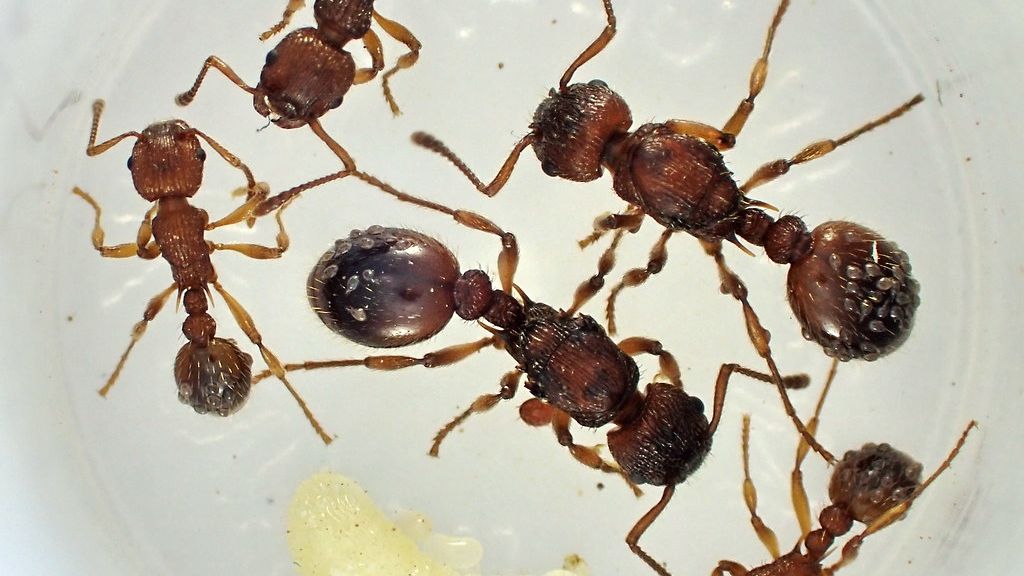
Where Does Novelty Come From? – Image for illustrative purposes only (Image credits: Flickr)
Paleobiologist Douglas Erwin has spent decades studying the fossil record to understand a persistent puzzle in evolution. New traits and body plans appear regularly across deep time, yet only a fraction of them reshape entire ecosystems or allow lineages to thrive. The distinction matters because it reveals why some biological changes remain curiosities while others drive major shifts in the history of life. Erwin’s recent conversation highlights how this process also offers lessons for understanding innovation in human culture and technology.
Novelty and Innovation Are Not the Same
Erwin draws a clear line between the origin of new features and their eventual success. Novelty refers to the appearance of new characters, major transformations in existing ones, or fresh combinations of traits. Innovation, by contrast, describes the ecological and evolutionary dominance that follows when those new features allow a group of organisms to exploit new resources or environments. The fossil record shows repeated examples where novelties emerged long before the groups carrying them became widespread or diverse. This separation challenges the common assumption that any new trait automatically leads to advantage. Evidence from macroevolutionary patterns supports the distinction. Many lineages display long intervals between the first appearance of a novel structure and the later radiation of species that use it effectively. These lags indicate that novelty alone does not guarantee success. Instead, additional conditions must align before a new trait translates into broader impact.
A Framework for How Change Unfolds
Erwin outlines a sequence of five linked stages that move from potential to realized success. The process begins with the generation of potential for novelty through genetic, developmental, or environmental factors. Next comes the actual formation of novel attributes in individual organisms or populations. Refinement follows as natural selection shapes those attributes into more functional forms. Exploitation occurs when a clade begins to use the novelty to occupy new ecological roles. Finally, innovations become established through ecological processes that may trigger further rounds of change. This sequence is not strictly linear. Stages can overlap or repeat, and external events such as environmental shifts often determine whether a lineage advances from one stage to the next. The framework helps explain why some novelties stall while others accelerate into major evolutionary events.
Why Lags Matter in the Fossil Record
The separation between novelty and innovation appears repeatedly in the history of life. Cambrian fossils, for instance, show early experiments with new body plans that took millions of years to produce dominant groups. Similar delays mark the rise of flowering plants and the diversification of mammals after the dinosaur extinction. These patterns suggest that the mere existence of a new trait is only the starting point. Ecological opportunity, competition, and further adaptation determine whether the trait spreads. Understanding these delays has practical value for interpreting both ancient and modern biology. It cautions against assuming that any newly observed trait will immediately alter species distributions or community structure. Instead, researchers must track how the trait interacts with surrounding conditions over extended periods.
Lessons That Extend Beyond Biology
The same logic applies to cultural and technological change. New ideas or inventions often appear well before they reshape societies or industries. Early computing devices existed for decades before widespread adoption transformed economies. Likewise, many artistic or scientific concepts circulated in limited circles long before they influenced broader culture. The framework suggests that successful innovation requires not only the creation of something new but also the right conditions for its refinement, spread, and integration into existing systems. Erwin’s perspective underscores that both biological and cultural evolution depend on more than isolated breakthroughs. Sustained success emerges from the interplay of generation, refinement, and opportunity. This view encourages a longer-term perspective when evaluating contemporary novelties in science, technology, or society.