

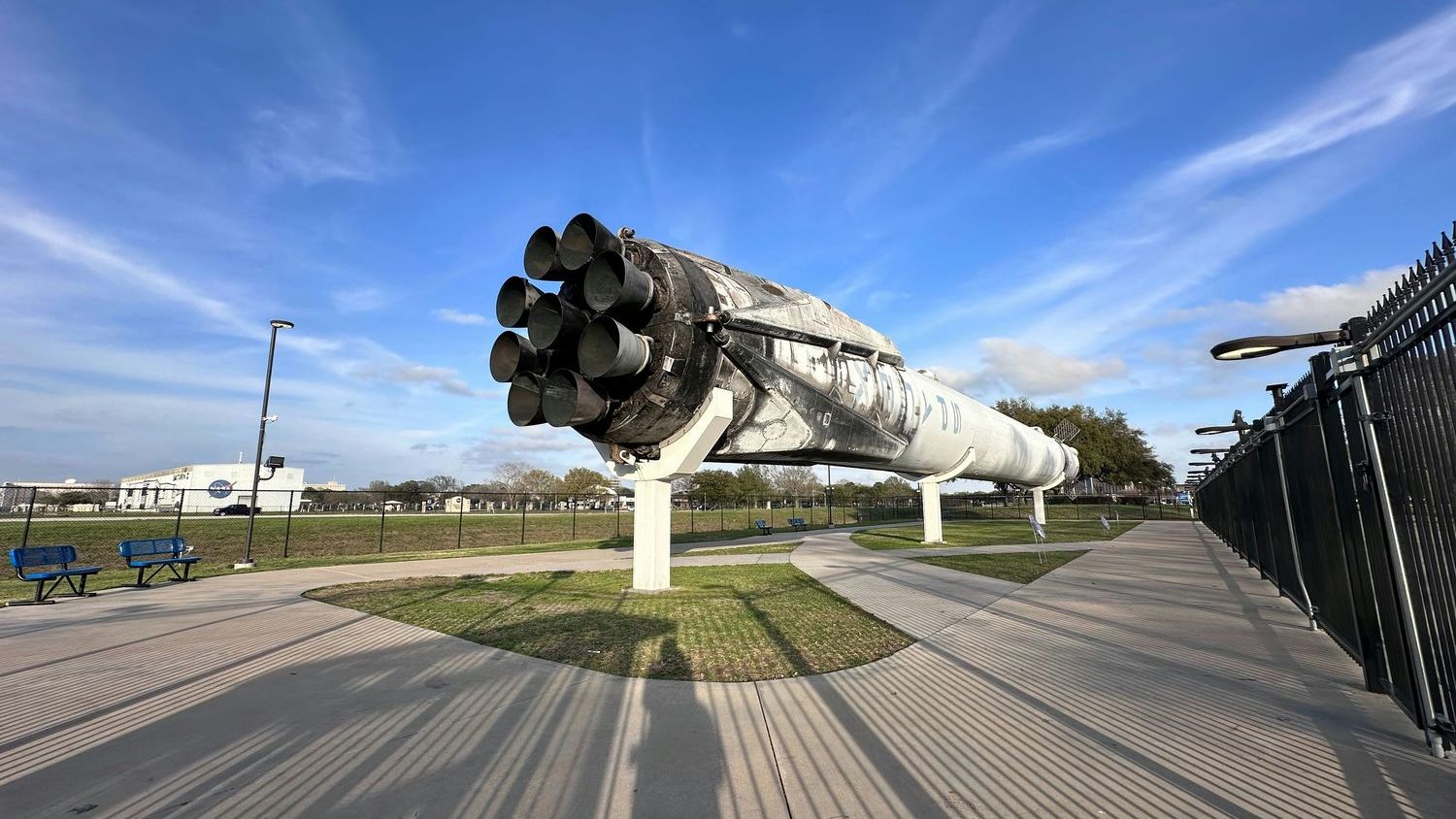
Once again, SpaceX has set a new record for the tallest rocket ever built – Image for illustrative purposes only (Image credits: Unsplash)
SpaceX has once more assembled a full-scale Starship on its launch mount in South Texas, marking the third such stacking in as many years. The latest configuration, designated Version 3, stands taller than its predecessors and incorporates several engineering refinements aimed at greater performance. This development occurs just a few miles north of the U.S.-Mexico border, where the company continues its rapid iteration of the vehicle intended for deep-space missions.
Why the Latest Assembly Carries Weight
The stacking of Starship Version 3 arrives at a point when SpaceX seeks to move beyond repeated test flights and toward operational capabilities. Engineers have focused on improvements that address both thrust and reusability, elements viewed as essential for sustained activity beyond low-Earth orbit. The timing aligns with broader goals that include supporting NASA’s Artemis lunar program, where Starship variants are slated to serve as human landers.
Each new iteration builds directly on data gathered from prior flights and ground tests. Version 3 therefore represents a deliberate step in a program that treats hardware as an evolving platform rather than a fixed design. Observers note that the vehicle’s increased height and power reflect incremental gains that could eventually enable more ambitious trajectories.
Key Engineering Refinements in Version 3
Among the most visible changes are upgraded Raptor engines on both the Super Heavy booster and the upper stage. These engines deliver higher thrust while operating more efficiently, a combination that improves overall vehicle performance without requiring a larger propellant load. The booster also features a new lattice-like structure at its top, designed to withstand the stresses of hot staging during separation.
Recovery systems have been adjusted as well. The booster now carries three modified grid fins instead of four, a configuration intended to maintain control during descent while simplifying the hardware. These fins help guide the first stage back to a landing site for potential reuse, a core element of SpaceX’s cost-reduction strategy.
- Higher-thrust Raptor engines on booster and upper stage
- Reusable lattice structure for hot staging
- Three grid fins for controlled booster recovery
Role in Future In-Orbit Refueling Tests
Version 3 is positioned to support early experiments with propellant transfer in space. Engineers consider this capability critical because most destinations beyond low-Earth orbit demand more fuel than a single launch can carry. Successful refueling demonstrations would allow multiple Starships to rendezvous and transfer cryogenic propellants, extending mission range.
In the nearer term, the same technology supports planned lunar landings under the Artemis program. NASA has selected Starship as the human landing system, and in-orbit refueling forms a required step before crews can descend to the lunar surface. The current stacking therefore serves as a practical milestone toward those integrated operations.
Continued Iteration Within the Program
SpaceX has made clear that Starship development remains an ongoing process, with additional versions already in planning. Version 3 is not presented as a final product but as one stage in a sequence that prioritizes flight data over perfection on the ground. This approach allows the company to identify and correct issues through repeated testing rather than prolonged ground qualification.
The emphasis on reuse and rapid turnaround continues to shape design choices. By refining engines, staging hardware, and recovery systems in parallel, the program aims to reduce both cost and complexity over successive flights. How quickly these refinements translate into routine operations will depend on the results of upcoming test campaigns.
What matters now: The stacking confirms that Version 3 hardware is ready for integrated testing, yet the vehicle must still demonstrate reliable flight performance and refueling before it can support crewed or deep-space missions.
Starship Version 3 therefore advances a program that has already achieved several firsts in reusability and scale. Its success will be measured not only by height or thrust but by the ability to perform the complex maneuvers required for sustained exploration beyond Earth orbit.