

The Origin That Never Really Ended

Doctor Manhattan, born Jonathan “Jon” Osterman, is a fictional DC Comics character created by writer Alan Moore and artist Dave Gibbons. He debuted in the limited series graphic novel Watchmen. After a laboratory accident, atomic physicist Jon Osterman gains the ability to observe and manipulate matter at the subatomic level, and the U.S. government dubs him Doctor Manhattan due to his immense destructive potential.
Moore sought to delve into nuclear physics and quantum mechanics in constructing the character of Manhattan. He believed a character living in a quantum universe would not perceive time from a linear perspective, which would influence the character’s perception of human affairs. That non-linear perception of time is the key to understanding why his story cannot simply conclude.
Manhattan cryptically responds that “nothing ever ends” before leaving Earth. This line, long read as philosophical closure, turned out to be a structural prophecy embedded directly into DC’s publishing history.
The Departure That Was Actually an Arrival

In reality, Jon decided to broaden his range of exploration and travel to a completely different universe. Jon observed the Flash as he attempted to restore his own universe and undo the temporal distortion caused by Flashpoint. Jon interfered with this by erasing ten years of the restored universe’s timeline and in effect creating a new reality.
It was revealed that Jon’s actions left the residents of Earth 0 ten years younger and caused them to lose much of their past. Jon continued to observe and experiment with this universe over time. So the moment widely understood as Manhattan leaving was simultaneously the moment he entered another universe and began reshaping it.
In the end of the story, Dr. Manhattan leaves Earth, disillusioned by humanity, to go explore life in other galaxies. Since then, Dr. Manhattan has appeared in other DC comic storylines and adaptations, taking on an increasingly powerful cosmic role as one who can alter reality and timelines on a massive scale. This includes being responsible for the New 52 reboot of the DC Universe in the comics.
The New 52: The Clearest Mathematical Fingerprint

He was revealed to be responsible for the Flashpoint event, creating the New 52 timeline/universe in the process, a factor that removed 10 years of history of the DC characters. This is the most concrete, plot-confirmed evidence of Manhattan’s ongoing presence. A decade of DC history did not simply evaporate. It was removed by a specific actor with a specific motive.
After departing his universe at the end of Watchmen, Jon Osterman began observing the heroes of the DC Universe and experimented with their timeline. He plucked characters out of their natural state, removed key relationships and even prevented heroes from rising altogether. For the first time since the New 52 began, there was a reason why the new timeline had so many inconsistencies and odd occurrences: it was all because of Doctor Manhattan’s experiments.
He pushes Alan Scott’s lantern a few inches away during his train accident, causing Alan’s death, keeping him from becoming Green Lantern, and preventing the formation of the Justice Society. This in turn suppressed the concept of legacy in the DC Universe. A few inches of movement. That’s the scale of precision Manhattan operated at while supposedly absent.
The DC Rebirth Revelation: The First Public Admission
After several years of disappointing sales due to the failure of The New 52 and DC YOU Initiatives, DC decided to return to its roots with DC Rebirth, which introduced Watchmen to the broader DC Universe by hinting at Doctor Manhattan’s involvement in the restructuring of time and space which followed DC’s Flashpoint event.
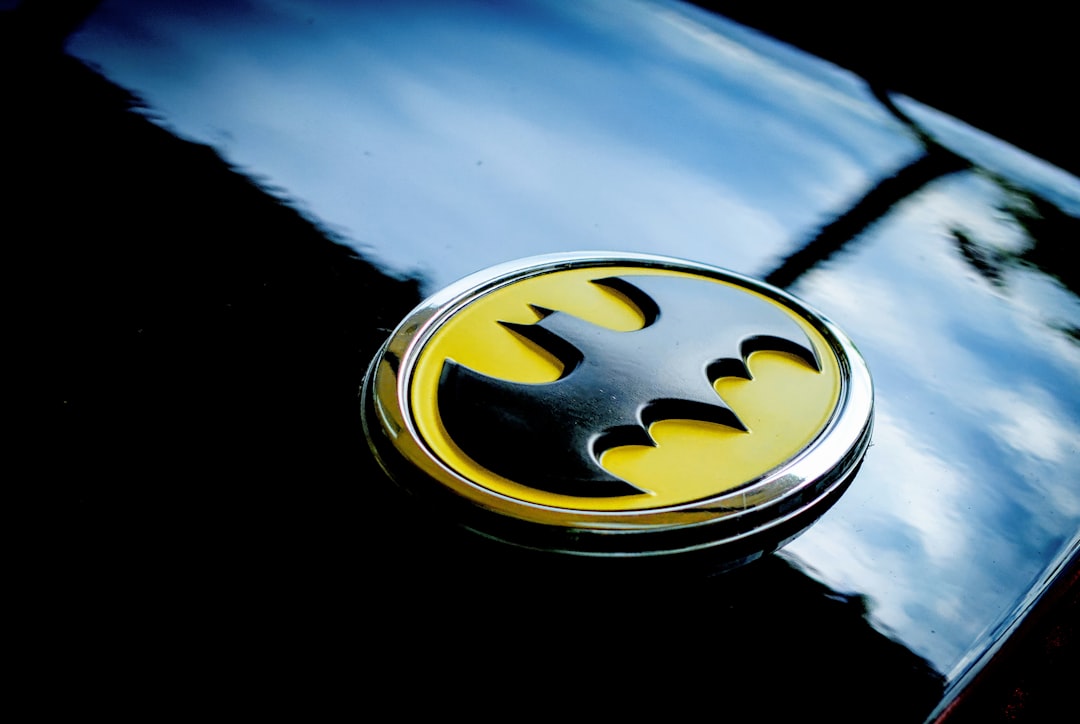
The most stunning and by far consequential change to Watchmen came in 2016 during DC’s Rebirth initiative. The one-shot story DC Universe: Rebirth #1 by Geoff Johns, Ethan Van Sciver, and Gary Frank stunned the comics’ world with its final few pages showing Batman holding the Comedian’s button from Watchmen’s iconic cover. The button was physical proof. Manhattan had been there. He had left evidence.
In DC Rebirth #1, Pandora accuses her killer, currently thought to be Manhattan, of believing in skepticism, doubt, and corruption, proclaiming that he cannot understand the hope personified in the heroes of the DC Universe and that they will “prove [him] wrong.” Pandora’s accusation pointed directly at Manhattan before any explicit confirmation arrived.
Doomsday Clock: The Official Collision
Doomsday Clock is a 2017–2019 superhero comic book limited series published by DC Comics, written by Geoff Johns with art by penciller Gary Frank and colorist Brad Anderson. The series concludes a tangential story established in the New 52 and DC Rebirth, and it is a sequel to the 1986–1987 graphic novel Watchmen by Alan Moore, Dave Gibbons and John Higgins, making it the first official crossover between Watchmen and the mainstream DC Universe.
Doomsday Clock received acclaim from critics. On the review aggregator Comic Book Roundup, it holds an average rating of 8.5 out of 10 from professional critics, based on 438 reviews. This was not a fringe experiment. The story landed well with professional readers precisely because the logic behind Manhattan’s presence had been building for years.
Johns felt like there was an interesting story to be told in DC Rebirth with Doctor Manhattan; he thought there was an interesting dichotomy between Superman, an alien who embodies and is compassionate for humanity, and Doctor Manhattan, a human who has detached himself from humanity. That tension became the moral backbone of the entire series.
The Connective Energy: A Physics-Based Argument for His Permanence

In the DC Universe, Manhattan’s power is revealed to be glowing with Connective Energy, the opposite of Crisis Energy. His powers are more limited compared to his native universe, with Doomsday Clock revealing that he is not invulnerable or omniscient. This is a crucial detail. Manhattan’s energy type is defined in opposition to the destructive Crisis Energy that has plagued DC continuity for decades.
Wally West stated that Jon was full of Connective Energy, which is essentially a form of positive cosmic energy, opposite in nature to the negative Crisis energy wielded by beings like Perpetua. Ozymandias stated that if the energy generated by Jon was synthesized, it would be able to solve all of the world’s energy problems. He is not just a visitor or an antagonist. His very energy is structurally corrective to the DC cosmos.
It was later revealed that Doctor Manhattan tried to fix the fractures of the Multiverse, which were residuals of every previous crises, by using his positive Connective Energy, but his actions were not enough to “cure” the reality. The leftovers of his energy were gathered by the Quintessence and gifted to the Justice League to fight one last time the mother of the Multiverse, Perpetua. Even after his apparent disappearance, his energy continued doing work inside the DC Universe.
Superman and the Paradox of the Unseen Future
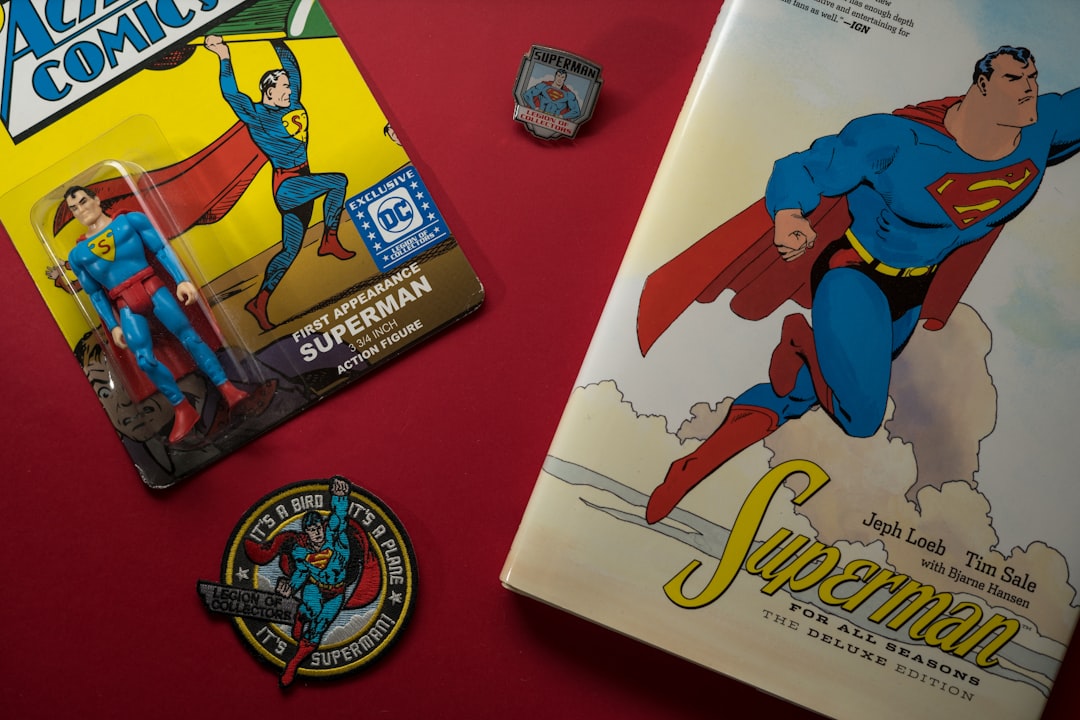
He claims to have traveled to the DC Universe hoping that he might find a place among other super-powered beings. Dr. Manhattan’s plans changed, however, after he used his quantum vision to look into the future and saw himself confronted by another superhero. The confrontation he feared was with Superman, the most hope-driven figure in DC history.
This act of kindness, likely something he was not used to since the last decades of his life on the Watchmen Earth were spent with people constantly scheming to use him, shifted his perspective, and Superman convinced Doctor Manhattan that the reason he could not see the future of the DC Universe at the time was not because either of them died, but because he was going to go back home and do his best to save his own universe instead.
Doctor Manhattan is metaphorically reborn as Jon Osterman, and decides to act, no longer resigning himself or humanity as puppets on strings, but instead takes in the light that Superman represents, and willingly gives his life to save both the DC Universe and his home universe. In his own world, the nuclear missiles vanish. The scars of a destroyed city start to heal.
The Legacy Transfer: Clark and the Problem of Ending
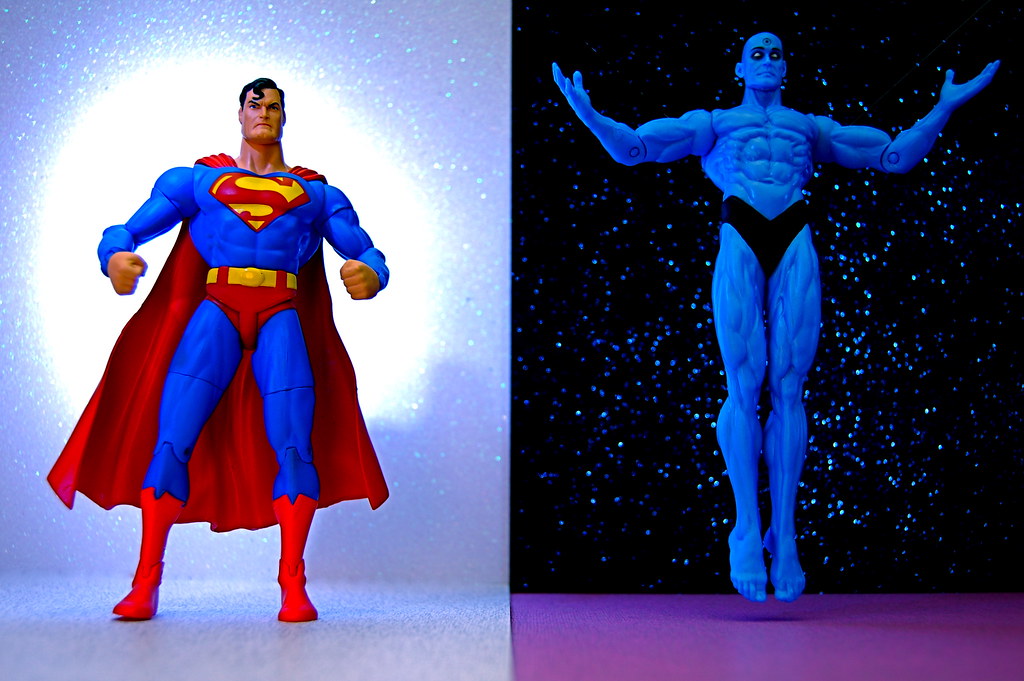
In the continuation of Alan Moore and Dave Gibbons’ iconic Watchmen series, Doctor Manhattan restored the DC Universe before fading away and transferring his incredible powers to a young boy he helped raise, Clark, the biological son of the villains Mime and Marionette. After giving the youngster his powers and disappearing from existence, Clark arrived at the doorstep of Silk Spectre and Owlman.
When the time was right, Manhattan gave the last of his powers to the boy and sent him off to live with Dan and Laurie Hollis. Arriving on their doorstep with a clean-cut hairstyle, a suit, and Doctor Manhattan’s atomic emblem on his forehead, the boy introduces himself as Clark. The name is obviously deliberate. Manhattan gave his universe a Superman of its own.
While not the true creator of the DC multiverse, Doctor Manhattan did ultimately become the one who would recreate and “fix” the DC multiverse in the conclusion of Doomsday Clock, at the cost of his own life, though he would be reborn as a child in the new multiverse. He didn’t end. He transformed, again.
New History of the DC Universe: The 2025 Confirmation

Mark Waid’s New History of the DC Universe #4 confirms that Doctor Manhattan and the Watchmen are now a core part of DC’s timeline, and they’ve brought the Wildstorm and Absolute Universes with them. Published in late 2025, this is the most recent and definitive canonization of everything Doomsday Clock established.
In New History of the DC Universe #4, Barry Allen’s narration first described in-universe how Doctor Manhattan was not only responsible for the changes to the DCU’s history since the Flashpoint, but also responsible for the changes to its past, going as far back to the first Crisis, in order to study the Metaverse shifts and reboots caused by The Eternal Return. His reach extends further back than anyone previously understood.
This move finally provides a definitive answer to years of speculation about the canonicity of Doomsday Clock. While some subsequent stories seemed to ignore its events, Waid’s New History makes it clear: it happened, and it mattered. There is no longer any ambiguity about Manhattan’s role in DC history.
The Paradox Resolved: He Was Always There
After entering the Multiverse following the events of Watchmen, Doctor Manhattan arrived in the current universe in 1938. Not after Flashpoint. Not in the modern era. He arrived in 1938, the very dawn of DC’s superhero age, meaning his presence spans nearly the entire timeline of the DC Universe as readers know it.
Doomsday Clock doesn’t just embed Watchmen within the DC universe; it implicates Dr. Manhattan in one of the company’s central narrative preoccupations: revising its own continuity. The paradox is that Manhattan’s absence was always his most active form of presence. Every gap, every inconsistency, every year of missing history was him.
After its publication, Watchmen became one of DC Comics’ most lauded series, even becoming the only graphic novel to make TIME Magazine’s 100 Best Novels list. Despite the overwhelming success of Watchmen, the series remained independent for decades. There were no official crossovers between universes, nor was Watchmen designated its own place in DC’s vast multiverse. That independence, it turns out, was itself the illusion. The math was always there. The readers just hadn’t been given all the variables yet.
Doctor Manhattan told Ozymandias that nothing ever ends, and four decades of DC publishing history have proven him right in a way that even Alan Moore probably never intended. The ending of Watchmen was not a conclusion. It was coordinates.