

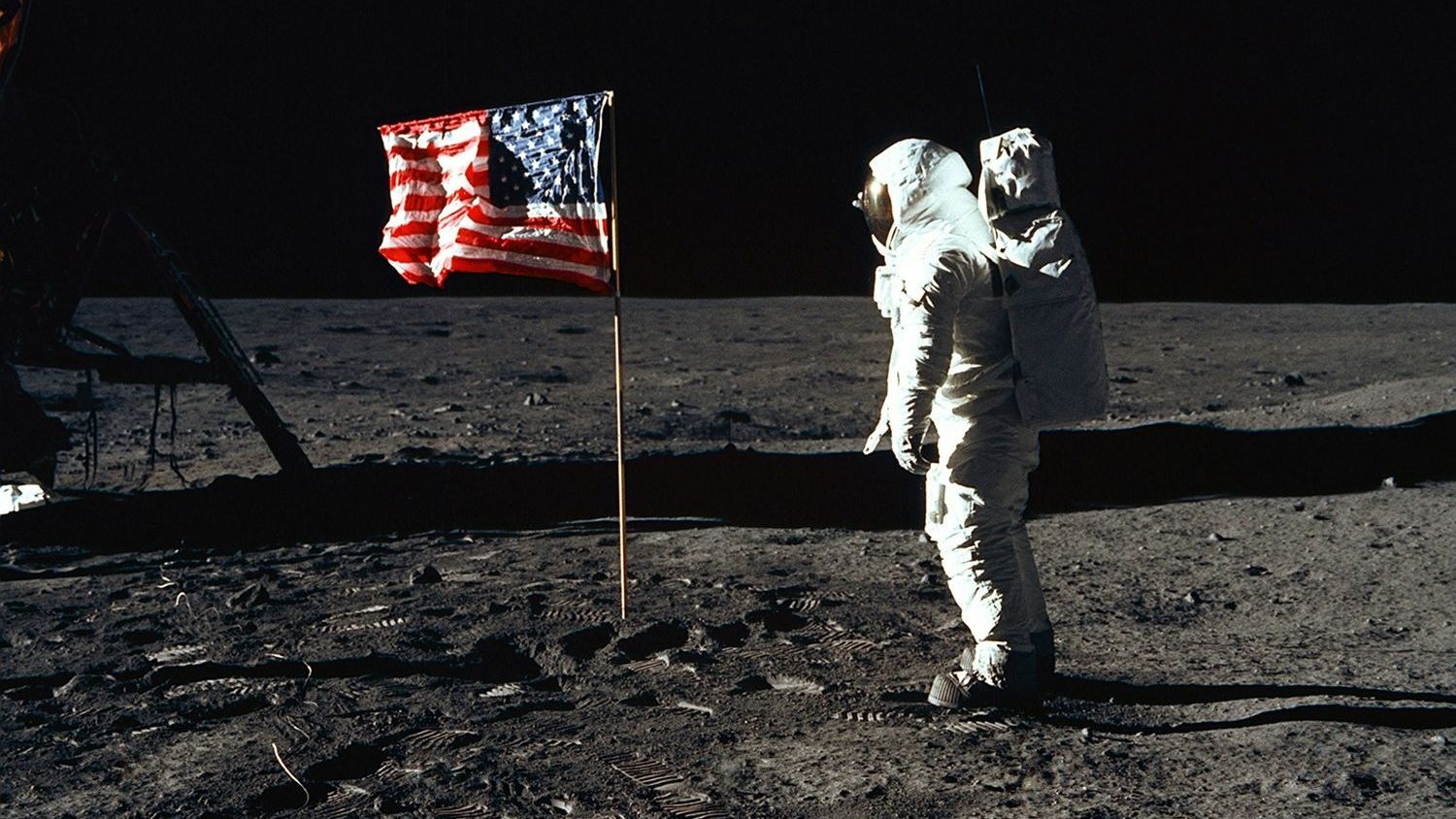
I spent years convinced the moon landing was faked – and the single piece of evidence that changed my mind isn’t one most conspiracy debunkers ever bring up – Image for illustrative purposes only (Image credits: Unsplash)
For years, holding onto doubts about the Apollo missions shaped how one person navigated everyday conversations and private reflections. The belief created small but persistent friction at social gatherings and left an unresolved tension between personal skepticism and the broader historical record. Over time, that tension gave way to a clearer view once a single structural fact about international relations came into focus.
The Everyday Cost of Lingering Uncertainty
Belief in a faked moon landing rarely stayed confined to private thoughts. It surfaced during casual discussions, where gentle pushback on accepted history often shifted the tone of the room. Friends and colleagues moved on quickly, leaving the skeptic with a sense of quiet satisfaction in standing apart from the consensus.
That stance felt intellectually honest at the time. It preserved an open question that seemed too readily dismissed by mainstream accounts. Yet the position also carried a subtle social price, turning routine exchanges into opportunities for mild contrarianism rather than shared understanding.
Why Standard Rebuttals Rarely Landed
Most responses to moon landing skepticism focus on technical details such as the behavior of flags in vacuum or the absence of stars in photographs. These explanations require specialized knowledge of physics and photography that many listeners lack. Without independent means to verify either side, the debate reduces to choosing which expert to trust.
The pattern repeats across similar claims. Technical counterarguments add more specialized information without resolving the underlying issue of authority. A person already inclined to question official sources simply adds the new details to the list of claims they set aside. The cycle leaves the original doubt intact.
The Geopolitical Fact That Shifted the Perspective
The decisive observation came from considering the incentives of the United States’ main rival during the Cold War. The Soviet Union had tracked every American space achievement with intense scrutiny and possessed both the technical capability and political motivation to expose any deception. Their state media could have broadcast evidence of fraud to the world at any moment.
Instead, Soviet leaders publicly congratulated the United States on the landings. Their scientists accepted the results without reservation, and that acceptance continued even after the Soviet Union dissolved and its archives opened. Later Russian space cooperation with NASA showed no sign of revisiting the original missions as suspect.
This record stands in direct contrast to what a successful hoax would require. The conspiracy framework demands that the one nation with the strongest reasons to reveal any fakery chose silence instead. No technical adjustment can explain away that consistent geopolitical behavior across decades.
Why Structural Arguments Often Prove More Persuasive
Arguments centered on incentives and historical context avoid the need for specialized expertise. They ask only whether the world described by the conspiracy theory matches the observable actions of real actors. In this case, the Soviet response provides a clear mismatch that requires no advanced training to evaluate.
Technical debunkings remain valuable for those already inclined to examine evidence closely. Yet they leave untouched the deeper question of what kind of coordinated silence would be necessary for the alternative story to hold. The Soviet record supplies that missing test without demanding trust in any single scientific claim.
A Practical Approach to Other Contrarian Ideas
The same line of reasoning has since applied to additional topics where skepticism once seemed reasonable. It begins by asking what the surrounding world would need to look like for the alternative view to be accurate, then checks that picture against documented events and incentives.
Key steps in this evaluation include:
- Identifying the actors with the greatest motivation to expose any deception.
- Reviewing their actual public and private responses over time.
- Comparing those responses to what the skeptical account predicts.
- Adjusting the belief when the mismatch becomes clear.
This method does not guarantee immediate certainty, yet it consistently highlights where contrarian positions demand implausible levels of coordinated restraint from multiple independent parties.
The process ultimately replaced a long-held doubt with a simpler recognition that the historical record aligns with the mainstream account. That shift reduced unnecessary friction in daily interactions and left more room for curiosity about other questions that remain genuinely open.