

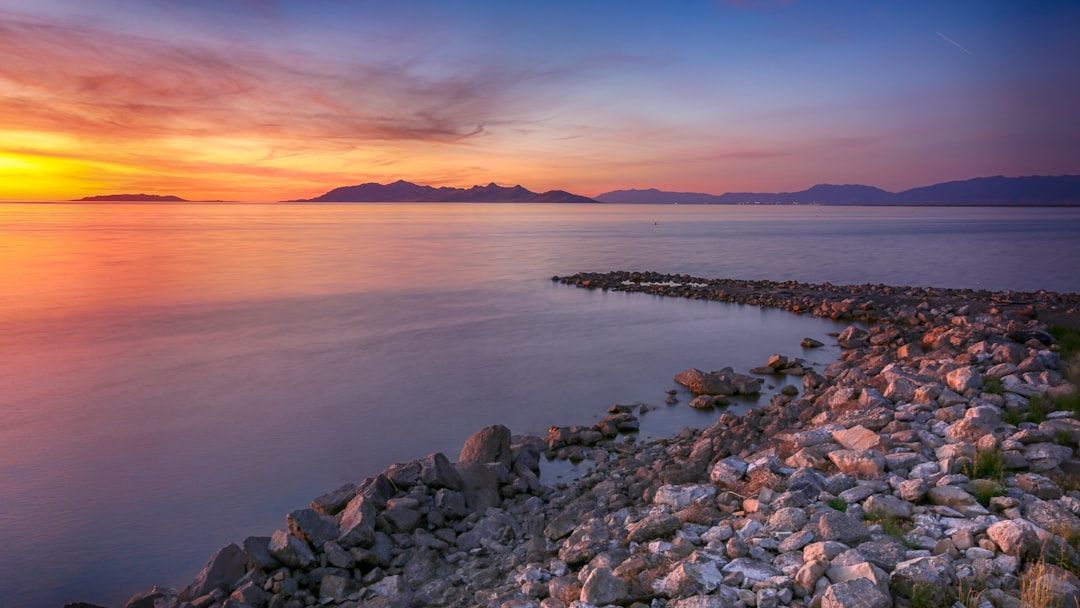
Climate Change and Faith – The Deseret News Investigation Into How Religious Communities Across Utah Are Rethinking Their Relationship With the Natural World – Image for illustrative purposes only (Image credits: Unsplash)
Religious organizations control nearly 8 percent of the world’s habitable land, a share that gives their environmental choices influence far beyond any single congregation. In Utah, that reality is meeting the visible retreat of the Great Salt Lake and the haze of distant wildfires. Sermons once focused narrowly on personal stewardship now touch on collective responsibility for the land, though the shift remains measured and scripture-centered.
Signs of Change Along the Wasatch Front
The Great Salt Lake’s receding shoreline has become impossible to overlook from the air or the ground. Boats sit higher on exposed flats, and the salt crust stretches farther each year. Farmers in Cache Valley now mention the persistent drought in the same breath as crop yields, a departure from earlier dismissals of climate concerns as distant worries.
Local congregations reflect the same gradual adjustment. Catholic parishes in Ogden and LDS meetinghouses in Provo use language about guardianship and inheritance that would have drawn little notice a decade ago. The words stay rooted in familiar texts, yet they now frame the natural world as something requiring active protection rather than passive acceptance.
Youth and Scholarship Drive the Conversation
Younger members have played a central role in widening the discussion. At Brigham Young University, student-led sustainability groups have operated for years, sometimes with faculty backing and sometimes independently. Their efforts coincide with findings from a 2016 campus study that revealed more varied Mormon attitudes toward the environment than many outsiders expected.
A 2020 analysis further linked religious affiliation to patterns of greenhouse-gas emissions, underscoring why these local conversations matter. Reporting from KUER in late 2021 highlighted how the old divide between scientific data and scriptural teaching is softening faster than anticipated. Participants in interfaith forums describe the change as steady rather than sudden.
Global Reach of Local Decisions
Faith institutions rank among the largest landowners and investors worldwide. Choices to improve building efficiency, plant trees on church grounds, or reconsider fossil-fuel holdings can therefore affect supply chains and carbon footprints on a broad scale. Cardinal Pedro Barreto’s description of the earth as a shared home has resonated in these settings because it sidesteps partisan framing.
Several initiatives illustrate the practical steps already underway. The Creation Care movement encourages congregations to reduce waste. Green Ramadan programs promote resource conservation during fasting periods. GreenFaith networks connect diverse traditions around common environmental goals. Each effort begins small yet draws on the same scriptural emphasis on care for creation.
| Earlier Emphasis | Current Direction |
|---|---|
| Stewardship viewed mainly as personal duty | Stewardship extended to collective climate response |
| Climate topics often avoided in sermons | Climate topics introduced through scriptural language |
| Focus limited to local land use | Recognition of wider land-ownership influence |
Remaining Questions and Limits
Whether these shifts produce measurable reductions in emissions or water use remains uncertain. Utah’s drought continues, and the lake has not returned to earlier levels. Moral appeals alone have historically fallen short when concrete policy or investment changes are required.
Still, the quiet preparation inside congregations suggests a longer-term reorientation. Religious leaders are positioning their communities to discuss climate issues on grounds of principle rather than partisan contest. The outcome will depend on whether the emerging language translates into sustained, practical steps across the state’s diverse faith traditions.