

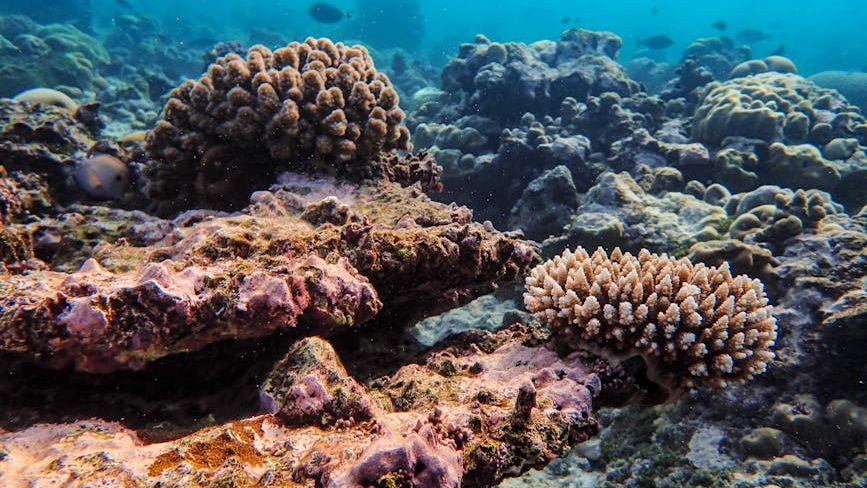
Coral Reefs Are at a Tipping Point – Image for illustrative purposes only (Image credits: Pexels)
Coral reefs support an extraordinary range of marine life and provide essential services to coastal communities worldwide. Yet mounting pressures from warming waters and other environmental shifts have placed many of these systems in a precarious position. Divers who have returned to long-studied sites report visible changes that raise questions about whether recovery remains possible or whether some reefs have already crossed a threshold from which they cannot return.
Why the Current Moment Carries Particular Weight
Reefs have endured natural disturbances for millennia, yet the pace and scale of recent stressors differ markedly from historical patterns. Ocean temperatures that once fluctuated within tolerable limits now remain elevated for longer periods, leaving corals with less time to recover between events. This sustained exposure has prompted researchers to examine whether the ecosystems retain the capacity to rebuild or whether cumulative damage has altered their fundamental resilience.
Communities that depend on reefs for fisheries and shoreline protection watch these developments closely. Any widespread loss would affect food security and increase vulnerability to storms in regions already facing other challenges. The question is no longer whether change is occurring, but how far it has progressed and what, if anything, can still be done to influence the outcome.
Observations from Recent Underwater Surveys
Experienced divers returning to familiar reef locations describe a landscape that looks markedly different from earlier visits. Large coral colonies that once dominated the seascape now appear fragmented or covered in algae, while fish populations that relied on the complex structure have declined in both number and variety. These visual cues align with broader monitoring data showing reduced live coral cover across multiple ocean basins.
At the same time, small patches of new growth appear in some areas, suggesting that certain species retain the ability to settle and begin rebuilding. The presence of these recruits offers a narrow window of hope, though their survival depends on conditions remaining stable long enough for them to mature. Divers note that the overall trajectory still points toward continued loss unless the underlying drivers of stress ease.
Broader Pressures Shaping Reef Health
Rising sea temperatures represent the most immediate threat, but they interact with other factors that compound the difficulty. Ocean acidification reduces the availability of carbonate ions that corals need to build their skeletons, while nutrient runoff from land can encourage algal overgrowth that smothers recovering colonies. These combined influences create conditions in which even modest additional warming can trigger large-scale bleaching events.
Local management efforts, such as marine protected areas and restrictions on destructive fishing practices, have shown some success in preserving remaining coral cover. However, these measures cannot fully offset the effects of global temperature trends. The interplay between local actions and planetary-scale changes determines whether individual reefs can persist or whether they shift into alternative states dominated by algae or other organisms.
Paths Forward and Remaining Uncertainties
Restoration projects that transplant nursery-grown corals onto degraded sites continue in several locations, with early results indicating that carefully selected genotypes can survive and contribute to structural complexity. These efforts remain small in scale relative to the total area affected, yet they provide valuable information about which approaches might work under real-world conditions.
At the same time, scientists emphasize that the most effective protection still lies in reducing the primary drivers of stress. Continued monitoring through repeated dives and remote sensing will be essential to track whether current trends stabilize or accelerate. The coming years will clarify whether the observed changes represent a temporary setback or a lasting transformation of these vital marine habitats.
The evidence gathered so far indicates that many reefs stand near a decisive threshold. How the next decade unfolds will depend on both the trajectory of global temperatures and the effectiveness of local conservation measures already underway.