

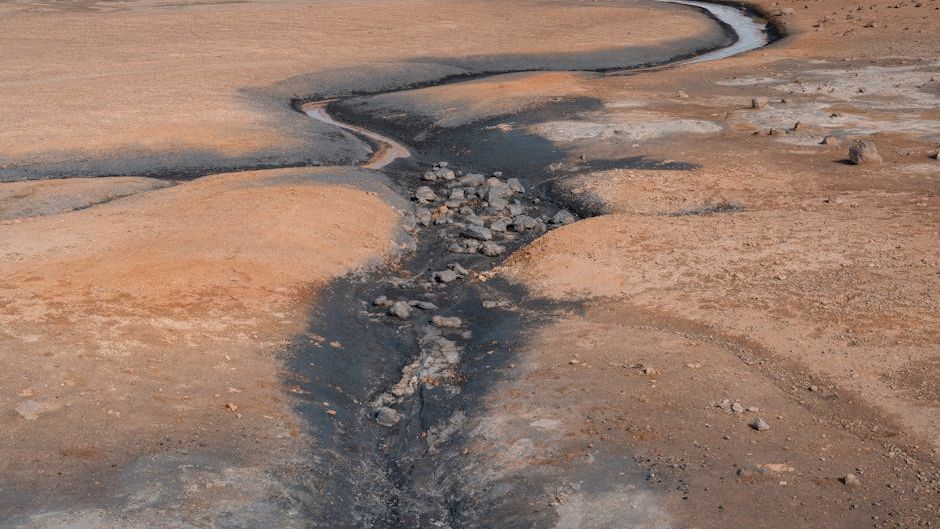
A Cataclysmic Upswelling of Groundwater Carved This Channel on Mars – Image for illustrative purposes only (Image credits: Pexels)
Shalbatana Vallis cuts across the Martian landscape for 1,300 kilometers. Researchers have traced its formation to a single, violent release of groundwater that swept through the region in one intense episode. The finding adds weight to the view that liquid water once moved across the surface in dramatic volumes.
Scale of the Ancient Channel
The valley runs in a broad, straight path that stands out even among other Martian features. Its length and depth point to an enormous volume of water moving at high speed. Such dimensions rule out slow erosion over long periods and instead match the signature of a rapid flood.
Measurements show the channel maintains consistent width along much of its course. This uniformity suggests the water arrived and departed quickly rather than carving gradually. The surrounding terrain shows little sign of repeated flooding, reinforcing the picture of one major event.
Evidence for a Single Catastrophic Release
Geological markers inside the valley include streamlined islands and abrupt channel walls. These shapes form only when water moves with great force and then recedes almost at once. The absence of layered deposits typical of long-term river activity further supports the rapid-flood interpretation.
Scientists compared the valley with similar features on Earth created by sudden dam failures or glacial outbursts. The match in morphology is close enough to indicate the same kind of short-lived, high-energy process. No other mechanism yet proposed accounts for the observed details as cleanly.
Possible Role of a Massive Impact
One leading explanation links the flood to a large meteorite strike. The impact could have fractured the crust and allowed pressurized groundwater to burst upward. Heat from the collision would have melted subsurface ice, adding to the sudden surge.
Alternative triggers such as volcanic activity or tectonic shifts remain under discussion. Each would still require a rapid breach of an underground reservoir. The impact scenario currently fits the timing and scale most closely, though further orbital data may refine the picture.
Broader Clues About Mars’ Watery Past
The discovery strengthens the case that liquid water existed on Mars long enough to shape major landforms. It also shows that water could move in quantities large enough to affect climate and surface chemistry. Such episodes likely occurred during a period when the planet retained more heat and a thicker atmosphere.
Future missions may target similar channels to test whether organic materials or minerals formed in the presence of water survive in the deposits. Each new detail helps narrow the window when Mars could have supported conditions closer to those on early Earth.
What stands out now: A single groundwater flood produced one of the longest channels on Mars, offering direct evidence that liquid water once flowed across the surface in powerful surges.