

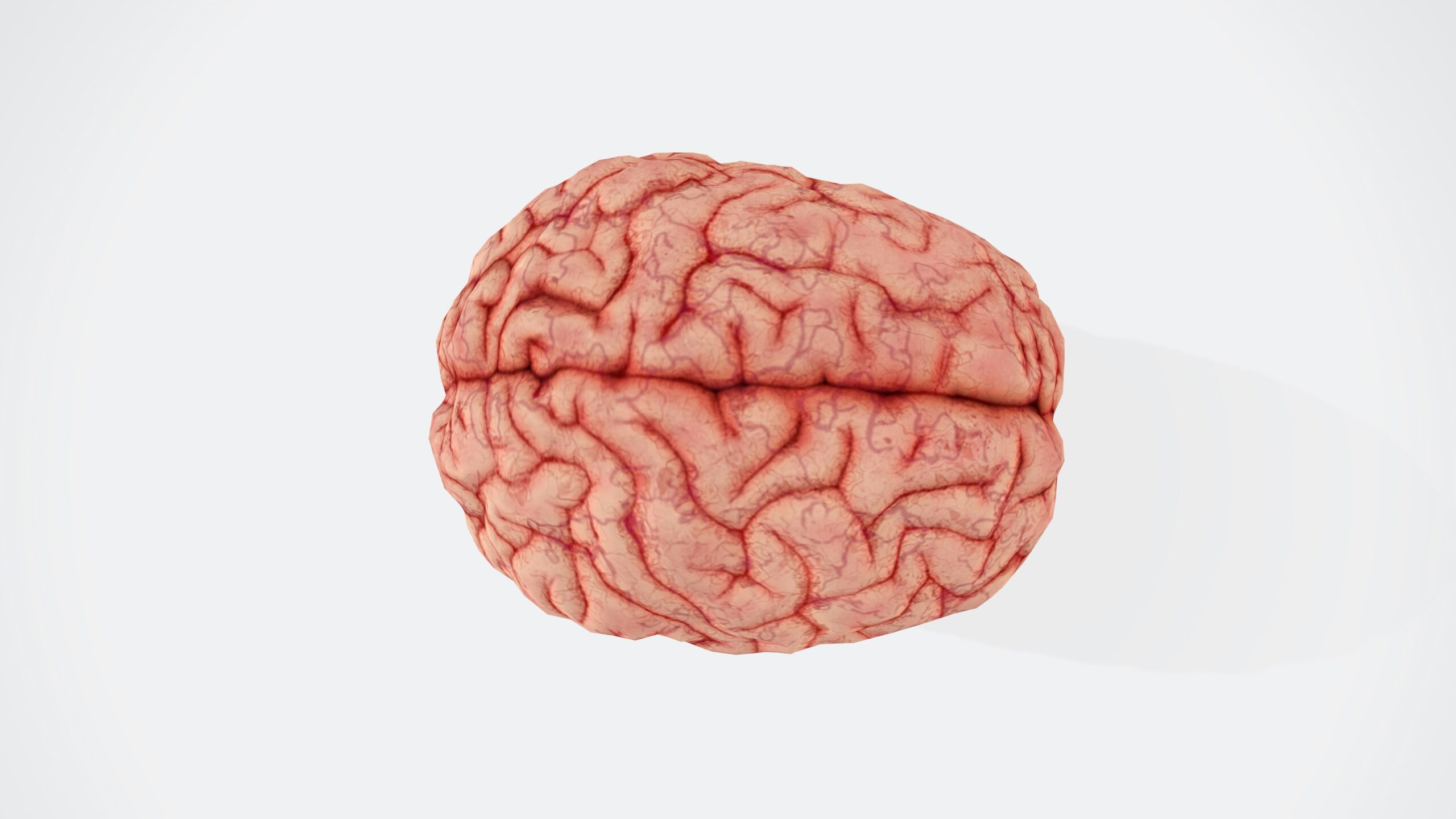
Why aren’t brain transplants possible? – Image for illustrative purposes only (Image credits: Unsplash)
Medical teams can imagine aligning the countless nerves that link a brain to the rest of the body. Yet the real barrier lies far beyond any operating table. Even perfect physical connections would leave the brain unable to send or receive the precise messages it needs to control movement, sensation, or thought. This gap between alignment and actual communication keeps the procedure firmly in the realm of impossibility.
The Scale of the Connection Problem
A human brain contains billions of nerve fibers that must reach specific targets throughout the body. Surgeons could, in theory, position donor and recipient nerves side by side during an operation. The difficulty arises because each fiber carries its own distinct signal, and these signals must match exactly for the brain to function.
Current surgical tools allow doctors to stitch or glue large nerves together with reasonable success in limb reattachments. Brain transplants, however, involve far smaller and more numerous connections. The sheer number of required matches turns a technical task into an overwhelming one that no existing method can complete.
Why Alignment Alone Falls Short
Once nerves are placed together, their internal pathways must somehow resume carrying information. In practice, severed nerves do not automatically reestablish the correct routes. Signals can cross or fade, leaving the brain without reliable input or output. This breakdown occurs even when the physical ends touch, because the biological mechanisms that guide precise reconnection in early development no longer operate in adults.
Neuroscience research shows that nerve fibers rely on chemical cues and timing to form working links. After injury, these cues are largely absent or scrambled. Without them, the brain cannot interpret incoming data correctly or issue commands that the body will follow. The result is not merely loss of function but a fundamental mismatch between what the brain intends and what actually happens.
Experiments with simpler nerve repairs highlight the same limitation. Even when surgeons achieve good physical contact, patients often regain only partial sensation or movement. Scaling this challenge to the entire brain multiplies the problem beyond current capabilities.
Broader Limits in Neuroscience
Understanding how the brain processes information adds another layer of difficulty. Each region expects signals from particular sources at particular times. Disrupted timing or routing can produce confusion rather than coherent experience. Researchers continue to study how these patterns form and whether they can ever be restored after complete separation.
Progress in related fields, such as spinal cord repair, remains slow for the same underlying reasons. Partial successes in reconnecting a few pathways do not translate to the full set required for brain function. The field therefore treats full brain transplantation as outside present scientific reach.
Key points on the barrier
- Physical alignment of nerves is only the first step.
- Precise signal routing and timing must also be restored.
- Adult nervous systems lack the developmental cues needed for accurate reconnection.
- Partial repairs in other procedures show how quickly complexity grows.
Looking Ahead Without Overpromising
Scientists continue to explore ways to support nerve regrowth and improve signal clarity. These efforts focus on smaller injuries where partial recovery can still improve quality of life. Full brain transplantation, however, would require solving the communication problem at a scale that remains unmatched by any current approach.
The distinction between lining up nerves and making them work together therefore stands as the central reason the procedure stays impossible today. Until neuroscience finds reliable methods to restore that communication, the idea remains a thought experiment rather than a medical option.