

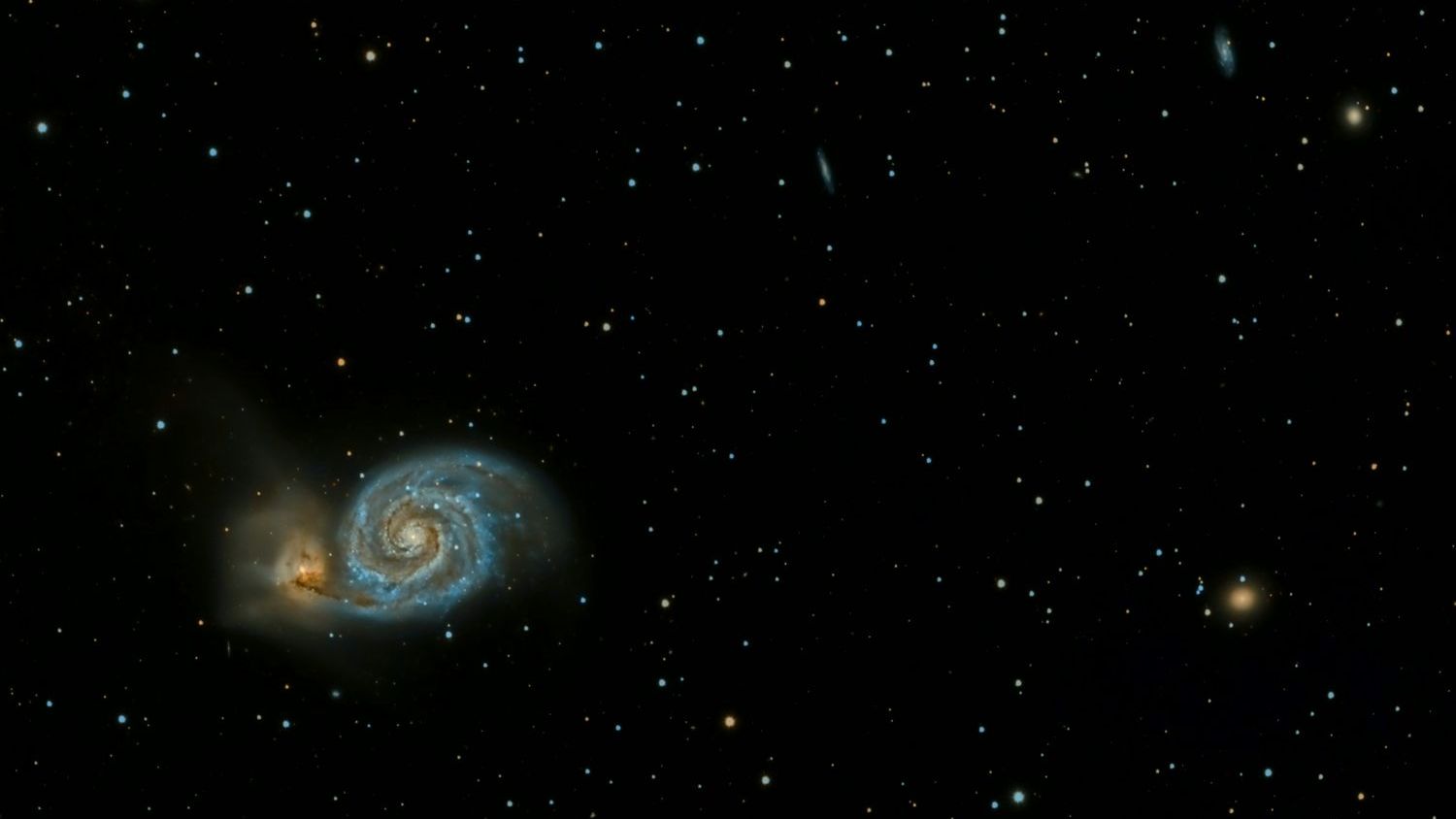
Webb and Hubble sink deep into the dazzling Whirlpool Galaxy – Space photo of the week – Image for illustrative purposes only (Image credits: Unsplash)
A new composite image of the Whirlpool Galaxy has drawn fresh attention from astronomers seeking answers about how stars come into being. The portrait merges data from two of the most powerful observatories in operation, revealing structures that single-telescope views had left unclear. Researchers now hope the added detail will help resolve long-standing questions about the conditions that trigger star birth across spiral galaxies.
Two Observatories, One Clearer Picture
The James Webb Space Telescope and the Hubble Space Telescope each bring distinct strengths to the effort. Hubble has long captured visible-light details of the galaxy’s sweeping arms and bright star clusters. Webb adds infrared sensitivity that penetrates dust clouds and highlights regions where new stars are still forming.
When the datasets are aligned, the result shows both the large-scale architecture of the galaxy and the hidden activity inside its densest clouds. This layered view reduces the ambiguity that has slowed progress on star-formation models for decades.
Why Star Formation Remains a Puzzle
Even after years of observation, scientists still lack a complete explanation for why some gas clouds collapse into stars while others remain stable. Density, temperature, magnetic fields, and external triggers all appear to play roles, yet their relative importance varies from one region to another.
The Whirlpool Galaxy, located roughly 23 million light-years away, offers a nearby laboratory where these processes can be studied in detail. Its face-on orientation and active star-forming regions make it an especially useful target for testing theoretical predictions against real conditions.
What the Combined Data Reveal
Early analysis of the new image has already identified pockets of gas that appear on the verge of collapse but had not been fully characterized before. The infrared data highlight warm dust lanes that may be channeling material toward future star-forming sites.
At the same time, visible-light features captured by Hubble show older stellar populations that help astronomers gauge how star formation has evolved across different parts of the galaxy. Together, the observations provide a timeline that single-wavelength studies could not supply.
Next Steps for the Research Team
Astronomers plan to compare the Whirlpool findings with similar data from other nearby galaxies. Such comparisons should clarify whether the patterns observed here are typical or unique to this system.
Further modeling work will test whether current theories can reproduce the structures now visible in the combined image. Any mismatches will point to gaps that future observations or refined simulations must address.
The effort underscores how complementary instruments continue to advance understanding even as individual telescopes reach new performance levels. Continued collaboration between the two observatories is expected to yield additional insights into the processes that shape galaxies across the universe.