

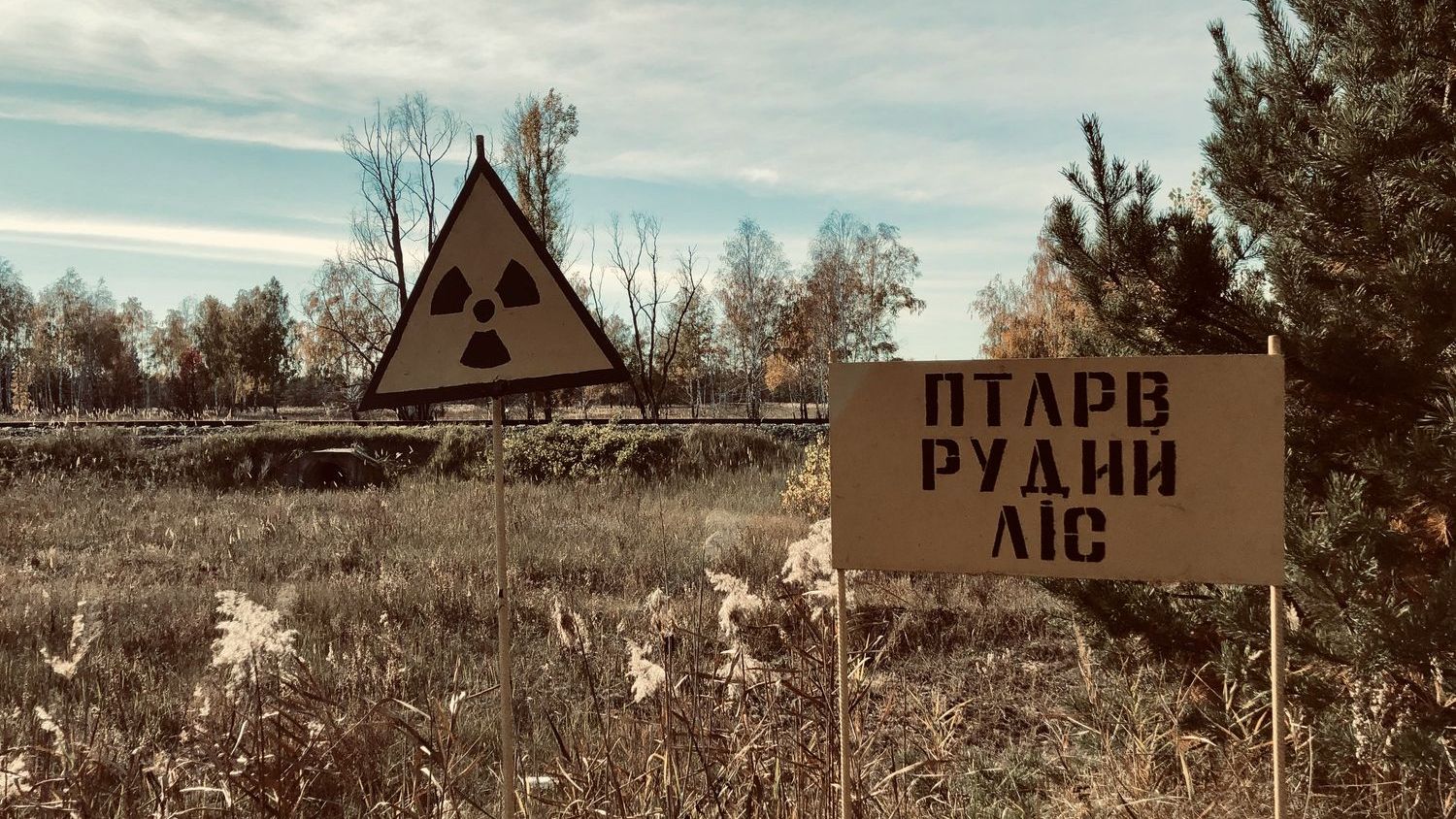
The Chernobyl exclusion zone is now one of the largest wildlife sanctuaries in Europe, revealing a grim paradox: removing humans from the landscape did far more for the animals than a nuclear disaster did to harm them – Image for illustrative purposes only (Image credits: Unsplash)
The forced evacuation of more than 100,000 people from the area around the Chernobyl nuclear plant in 1986 created an immediate human tragedy. Yet that same departure set in motion an ecological recovery that continues to surprise researchers four decades later. In the absence of farming, logging, and daily human activity, large mammals and predators have returned in numbers that exceed pre-accident levels in several key species.
Wildlife Populations Rebound Without Human Interference
Gray wolves now number roughly seven times higher inside the exclusion zone than they did before the 1986 accident. Researchers attribute the increase directly to the removal of hunting, road traffic, and habitat fragmentation that normally limit predator numbers across Europe. Similar gains appear among lynx, brown bears, European bison, moose, and wild boar, all of which maintain stable breeding populations across the 30-kilometer radius once dominated by agriculture and industry.
Endangered Przewalski’s horses have also established free-roaming herds that show no signs of decline despite the radioactive setting. These developments represent an unintentional rewilding on a scale rarely seen on the continent, turning a landscape once defined by human displacement into one of Europe’s largest de facto nature reserves.
Radiation Effects Exist but Do Not Override Broader Gains
Scientists tracking the zone emphasize that low-level radiation continues to influence individual animals. Some birds show higher rates of cataracts, and certain amphibians display changes in skin pigmentation. Wolves carry genetic variations linked to altered immune responses and possible cancer resistance, adaptations that appear tied to generational exposure.
These biological costs remain real. At the same time, field data indicate that the overall population growth and reproductive success of large mammals far exceed what would be expected if radiation were the dominant limiting factor. The removal of chronic human pressures appears to have neutralized or outweighed many of those radiation-related effects at the ecosystem level.
Human Absence Proves More Restorative Than the Disaster Was Destructive
Long-term observations reveal a clear pattern: the complete halt of modern development allowed the landscape to reset in ways that intensive human use had previously prevented. Agriculture, forestry, and settlement had steadily reduced biodiversity before 1986. Their sudden end created conditions for natural recolonization that no active conservation program had planned.
This outcome does not lessen the suffering experienced by evacuees or the responders who faced acute radiation exposure. It does illustrate how consistently disruptive everyday human activity can be to wild ecosystems compared with the lingering presence of radionuclides. The exclusion zone functions as an unplanned experiment showing that biodiversity can rebound rapidly once those routine pressures disappear.
New Pressures Test the Sanctuary’s Stability
Recent geopolitical events have introduced fresh risks. Military movements in 2022 disturbed radioactive sediments in areas such as the Red Forest, while forest fires linked to conflict activity threaten to redistribute particles. Interruptions in scientific monitoring have also limited researchers’ ability to track ongoing changes.
These developments underscore the fragility of an accidental refuge. Continued protection from both human development and new disturbances will determine whether the current wildlife gains persist.
Lessons for Conservation in Disturbed Landscapes
The Chernobyl findings challenge assumptions that industrial contamination and robust wildlife cannot coexist. They also show that severely altered environments can recover faster than many models predict when left largely untouched. Species returned and multiplied without reintroduction programs, funding, or direct management.
The clearest takeaway remains practical: sometimes the most effective step for wildlife is simply to step back. Four decades of data from the exclusion zone continue to refine understanding of how ecosystems respond when human activity is removed, offering insights that extend well beyond the site itself.