

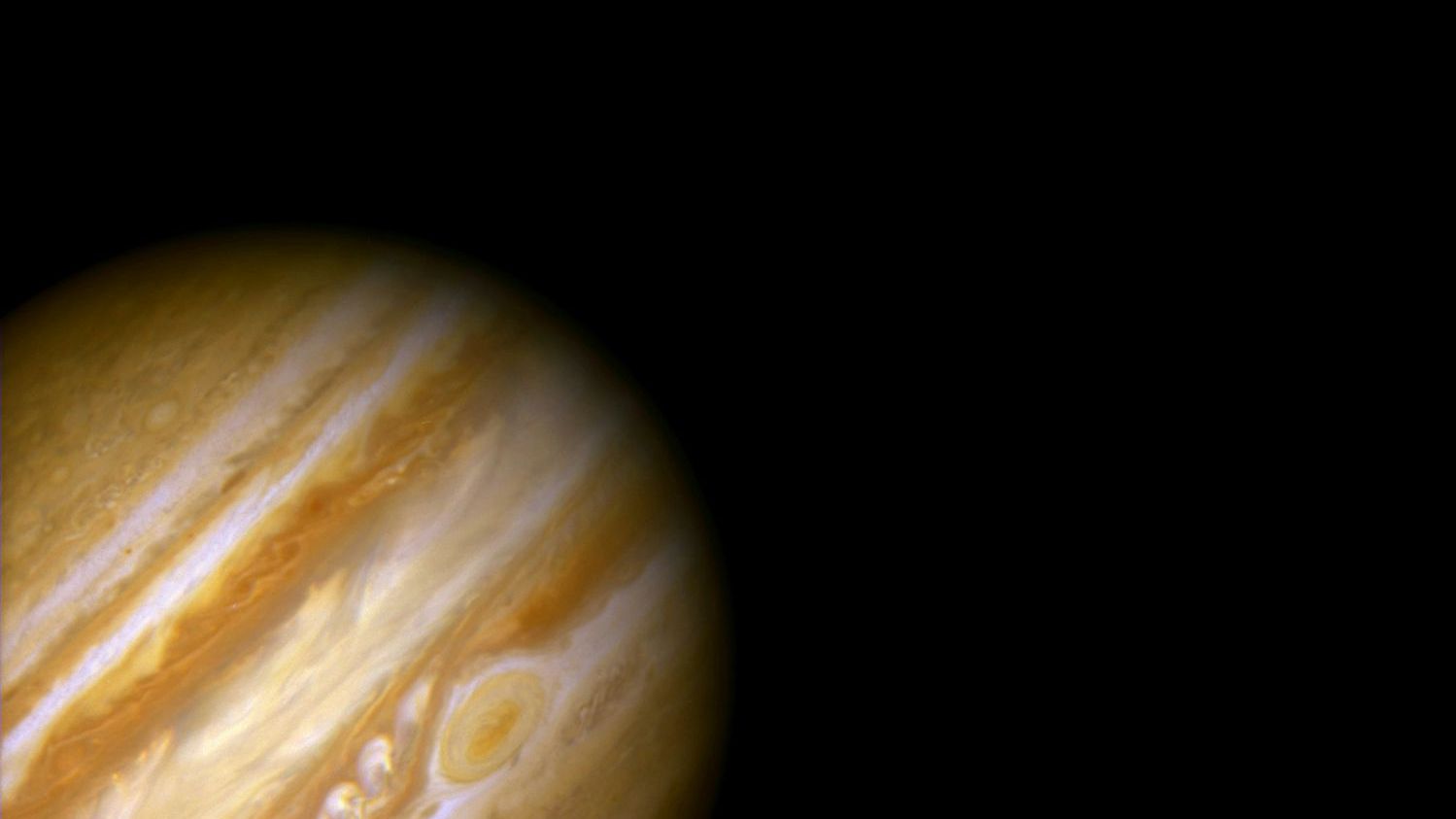
超级闪电之外-隐形超级风暴揭示木星上的闪电 – Image for illustrative purposes only (Image credits: Unsplash)
Recent data from NASA’s Juno spacecraft have forced a reevaluation of how lightning behaves in the atmosphere of Jupiter. For years, researchers focused on the brightest flashes visible at night and concluded that the gas giant produced only the most extreme electrical discharges. Fresh analysis of storms in the planet’s northern regions now shows a broader spectrum of activity, including fainter events that occur at different depths and intensities.
Earlier Views Centered on the Brightest Events
Planetary scientists long treated Jupiter’s lightning as a marker of vigorous convection in the upper atmosphere. Because direct detection from Earth or distant spacecraft proved difficult, most studies examined only the strongest nighttime strikes. This narrow focus led many to compare those events directly to Earth’s rare superbolts, the most powerful lightning recorded on our planet.
The approach left open the possibility that weaker or daytime flashes existed but remained hidden. Without instruments capable of piercing thick cloud layers, the full picture stayed incomplete.
Stealth Superstorms Emerge as Key Observatories
During 2021 and 2022, concentrated clusters of powerful, isolated storms appeared in Jupiter’s North Equatorial Belt. Researchers labeled these features stealth superstorms because their structure allowed unusually precise mapping of lightning locations. The storms created conditions where electrical activity could be isolated from surrounding atmospheric noise.
These events provided a natural laboratory for studying lightning at varying altitudes. Their presence challenged the assumption that all detectable flashes on Jupiter must resemble the most intense terrestrial examples.
Radio Signals Reveal What Light Cannot
Juno’s microwave radiometer and Waves instrument recorded electromagnetic pulses generated by lightning. Radio waves travel through cloud decks that block visible light, giving scientists access to discharges at multiple depths. The spacecraft has collected such measurements throughout its decade-long orbit of the gas giant.
Analysis showed radio pulses occurring at a rate of roughly three per second inside the stealth superstorms. That frequency matches some earlier nighttime observations, yet the signals arrived from shallower layers than previously emphasized.
Intensity Remains an Open Question
Some of the detected pulses appear comparable in strength to average lightning on Earth. Others could reach energies millions of times greater, though direct comparison is complicated by differences in the radio frequencies involved. The exact power scale therefore stays uncertain and requires further modeling.
These variations suggest Jupiter hosts a wider range of electrical processes than a single superbolt template can explain. Continued monitoring will help clarify whether the differences arise from storm depth, atmospheric composition, or other factors.
What matters now: Multi-instrument observations like those from Juno are essential for distinguishing between lightning types on gas giants and for refining models of their deep atmospheric circulation.
Future missions equipped with similar radio and microwave capabilities could extend these findings to other planets. The current results already demonstrate that Jupiter’s electrical environment is more layered and diverse than earlier snapshots suggested.