

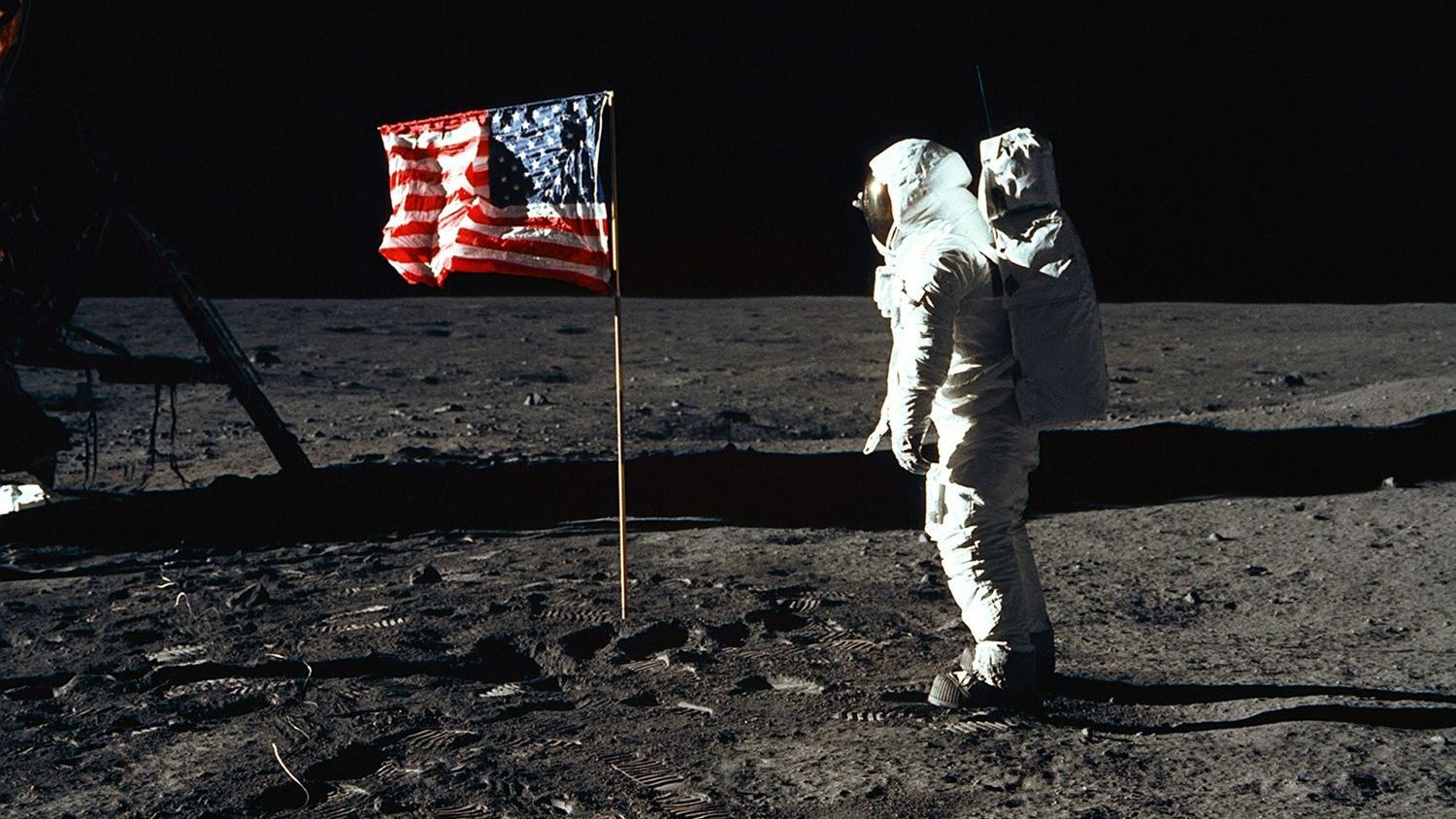
Richard Nixon’s White House had a speech prepared in case Neil Armstrong and Buzz Aldrin became stranded on the lunar surface, and the speech written by William Safire begins “Fate has ordained that the men who went to the moon to explore in peace will stay on the moon to rest in peace,” and the contingency plan had NASA ending communications with the lunar module, leaving Michael Collins as the only Apollo 11 astronaut able to return to Earth. – Image for illustrative purposes only (Image credits: Unsplash)
Two days before Apollo 11 touched down on the lunar surface in July 1969, a short memo reached the desk of President Richard Nixon’s chief of staff. Written by White House speechwriter William Safire, the document outlined exactly what Nixon should say if Neil Armstrong and Buzz Aldrin became stranded on the moon. The plan also detailed the steps that would follow the address, including the moment when mission control would cut contact with the lunar module.
The Memo That Anticipated the Worst
The note, dated 18 July 1969 and titled “IN EVENT OF MOON DISASTER,” was prepared because officials understood the mission’s narrow margins. Safire had been told that the most dangerous phase would not be the landing itself but the ascent engine firing that would lift the lunar module back into orbit to meet the command module. If that engine failed, no rescue was possible.
The memo therefore treated a permanent stranding as a realistic possibility rather than a remote one. It reached the White House at a time when the entire nation was focused on the first crewed lunar landing, yet the document remained unused once the crew returned safely.
The Speech Nixon Would Have Delivered
The draft opened with a line that has since become its most quoted passage: “Fate has ordained that the men who went to the moon to explore in peace will stay on the moon to rest in peace.” Safire then named Armstrong and Aldrin directly, stated there was no hope of recovery, and described their loss as part of humanity’s search for truth.
The text was deliberately brief, only twelve sentences long. Its closing image drew from a First World War poem by Rupert Brooke, adapted to read that anyone who looked at the moon in the nights ahead “will know that there is some corner of another world that is forever mankind.” The tone was measured and solemn, not triumphant.
The Full Sequence of Events Laid Out in Advance
Beyond the words themselves, the memo described a precise sequence of actions. Nixon was to telephone the two astronauts’ wives first. After the address, NASA would terminate communications with the lunar module. A clergyman would then conduct a ceremony modeled on a burial at sea, commending the souls of the stranded crew to “the deepest of the deep” and ending with the Lord’s Prayer.
The decision to end radio contact while the men were still alive on the surface was the most striking procedural detail. It reflected an institutional acceptance that, in this scenario, the two astronauts could not be brought home. The memo did not name the third crew member, Michael Collins, yet it implicitly left him as the sole Apollo 11 astronaut able to return to Earth.
The contingency plan addressed a narrow but real risk: an ascent-engine failure with no backup option. It showed that senior officials had already considered how the nation would respond if the mission ended in permanent loss.
How the Document Reached the Public
The memo stayed in White House files for nearly three decades. Historian James Mann discovered it in the late 1990s while researching Nixon-era archives. He published an account in the Los Angeles Times, after which Safire wrote his own recollection in the New York Times.
Today the original typed copy resides in the Nixon Presidential Library collection at the National Archives. Its existence continues to illustrate how one administration prepared for the human cost of space exploration at the highest levels of government.
With new lunar missions now under active planning, the 1969 document remains the clearest surviving example of how leaders once thought about the possibility of crew loss on another world.