

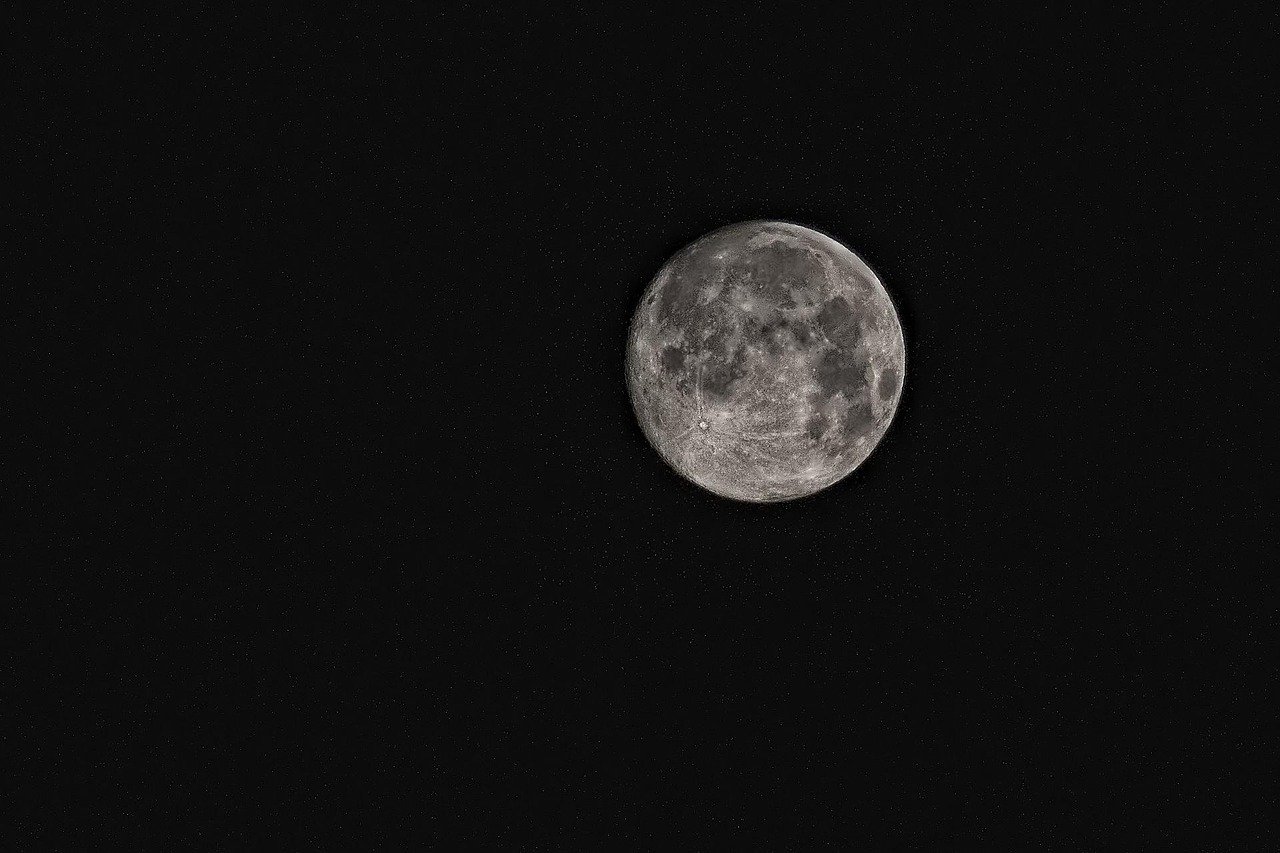
A Celestial Phenomenon Captured in Real Time (Image Credits: Pixabay)
NASA’s Artemis II mission delivered a profound reminder of Earth’s fragility during a lunar flyby on April 6, 2026. Astronauts aboard the Orion spacecraft watched as their home planet dipped below the Moon’s rugged horizon in a phenomenon known as Earthset. These images, the first captured by humans from the Moon’s far side showing Earth, offer a fresh perspective on our cosmic neighborhood.[1][2]
A Celestial Phenomenon Captured in Real Time
Earthset occurred at 6:41 p.m. Eastern Daylight Time as the crew orbited just 4,067 miles from the lunar surface. The photograph reveals a crescent-shaped Earth, its sunlit side glowing with white clouds and blue oceans over the Oceania region, while the nighttime portion appeared dark. In the foreground, the Moon’s cratered terrain dominated, including Ohm crater with its terraced edges, flat floor, and central peaks.[3][4]
This view echoed the iconic Earthrise from Apollo 8 in 1968 but reversed, with Earth sinking rather than rising. The astronauts described the scene during a brief communications blackout, noting the stark contrast between the barren lunar landscape and Earth’s vibrant atmosphere. Such moments underscored the mission’s role in advancing human exploration beyond low Earth orbit.
Revealing the Moon’s Hidden Hemisphere
The far side of the Moon, perpetually turned away from Earth, presented a rugged vista of impact craters, ancient lava flows, and surface ridges. Crew members observed variations in color, brightness, and texture that hint at the Moon’s geological history. Specific features like Jule Crater, Birkhoff Crater, and Stebbins Crater emerged in sharp detail along the lunar terminator, where long shadows accentuated the topography.[3]
During the seven-hour flyby, the team reached a maximum distance of 252,756 miles from Earth, setting a new record for crewed spaceflight. These observations provide scientists with human-verified data to complement orbital imagery. The mission highlighted differences between the Moon’s near side, marked by dark maria, and the far side’s crater-dominated surface.
Solar Eclipse and Other Rare Sights
Beyond Earthset, the crew documented a total solar eclipse lasting 54 minutes, with the Moon fully blocking the Sun and revealing its glowing corona. Venus appeared as a bright point in one frame, adding to the surreal scene. Astronauts donned eclipse glasses – the first such use at the Moon – to safely view the event.[4]
Additional photos captured Earthrise as the spacecraft emerged from behind the Moon and close-ups of the Orientale Basin. Pilot Victor Glover captured the eclipse’s intensity, stating, “This continues to be unreal. The Sun has gone behind the Moon and the corona is still visible, and it’s bright and creates a halo almost around the entire moon. The Earth is so bright out there and the Moon is just hanging in front of us.”[4]
- Earthset over Ohm crater
- Total solar eclipse with corona
- Lunar terminator craters
- Earthrise post-flyby
- Crew using eclipse viewers
The Artemis II Crew and Mission Legacy
Commander Reid Wiseman led the four-person team, including Pilot Victor Glover and Mission Specialists Christina Koch and Jeremy Hansen. After reestablishing contact post-blackout, Koch remarked, “It is so great to hear from Earth again.” The 10-day mission concluded with splashdown off California’s coast on April 10, 2026.[3]
These images not only thrilled the public but also validated Orion’s systems for future Artemis flights. NASA processed and released the photos shortly after return, fueling excitement for lunar return.
Key Takeaways
- Artemis II marked the first crewed lunar flyby since Apollo 17.
- Earthset photos show Oceania’s clouds against the Moon’s craters.
- The mission captured a unique solar eclipse visible only from deep space.
Artemis II’s Earthset images remind us of humanity’s small place in the cosmos while showcasing technological triumphs. As NASA eyes sustained lunar presence, these views pave the way. What do you think about these far-side perspectives? Tell us in the comments.