

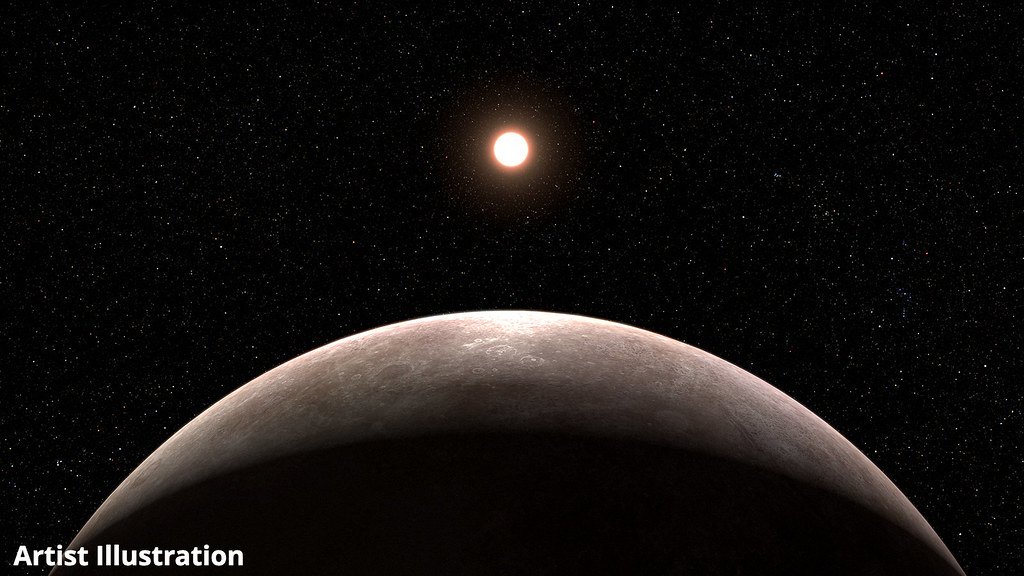
Pioneering Haze Formation in Simulated Skies (Image Credits: Flickr)
Telescopes like the James Webb Space Telescope have begun unveiling the atmospheres of distant exoplanets, revealing compositions that hint at planetary formation and potential habitability. Yet interpreting these spectral signals demands precise data on chemical reactions and physical properties under extreme conditions. Scientists turn to laboratory setups that recreate these alien environments, providing the ground-truth measurements essential for accurate models.[1][2]
Pioneering Haze Formation in Simulated Skies
Researchers at Johns Hopkins University launched a breakthrough with the PHAZER chamber, the first setup to mimic haze production in exoplanet atmospheres. They mixed gases such as hydrogen, carbon dioxide, water vapor, methane, and nitrogen, then exposed the blend to plasma discharge over three days to trigger reactions. All nine tested combinations yielded haze particles, with water-rich atmospheres producing the most.[2][3]
Lead scientist Sarah Hörst noted, “We had this idea for a long time that methane chemistry was the one true path to make a haze, and we know that’s not true now.”[2] These particles vary in color and size, influencing how atmospheres trap heat and interact with starlight. Such findings challenge assumptions and refine predictions for hazy worlds observed by JWST.
Recreating Extreme Climates and Interiors
A 2,000-pound instrument at the University of Colorado Boulder replicates high-pressure, high-temperature conditions akin to those on Venus or distant exoplanets. Frequency comb lasers probe gas mixtures inside a steel chamber reaching 1,000 Kelvin and 100 atmospheres, mapping absorption spectra for gases like methane and carbon dioxide.[4] This setup generates reference data to decode transit spectroscopy from space telescopes.
Labs also simulate planetary interiors using diamond-anvil cells and multi-anvil presses to compress materials under extreme pressures and temperatures. These experiments reveal how hydrogen dissolves in silicate melts, forming water that shapes sub-Neptune structures like K2-18b. Outgassing tests heat meteorite samples to 1,475 K, showing water vapor dominates released gases at about two-thirds of the total.[1]
Advanced Chambers for Photochemical Insights
The Berlin Atmospheric Simulation Experimental chamber, or BASE, controls pressure down to 5×10⁻⁹ mbar, gas compositions, and radiation like UV photons or electrons. It targets photochemical processes in exoplanet atmospheres, from early Earth-like steam worlds to hot Venus analogs, with real-time spectroscopy from vacuum UV to near-infrared.[5]
Other tools include aerodynamic laser-heated levitation furnaces that melt rocks above 3,000 K without contamination, capturing evaporating gases via infrared spectrometers aligned with JWST wavelengths. Haze reaction chambers expose methane-nitrogen mixes to UV lamps, producing aerosols analyzed for composition, particle size, and optical properties.
- Vacuum tube-furnaces for outgassing meteorites
- Absorption cells for gas opacity measurements
- Plasma or UV discharge chambers for haze analogs
- High P-T presses for interior equations of state
- Mass spectrometers and atomic force microscopy for product analysis
Bridging Observations and Models
Laboratory data fill gaps in models for super-Earths and sub-Neptunes, planets without Solar System counterparts. Solubility experiments melt silicates at 1,823 K under proto-atmospheres, quenching them into glass to detect dissolved hydroxyl from water. These insights explain volatile retention during magma ocean phases.
Such work supports JWST preparations, like simulations for GJ 486 b and TRAPPIST-1e. Haze layers can mute spectral features, but lab analogs clarify obscured signals, aiding habitability assessments. “Having a haze layer can change the temperature structure of an atmosphere,” Hörst explained.[2]
| Chamber/Setup | Key Simulation | Main Output |
|---|---|---|
| PHAZER (JHU) | Haze in H2/CO2/H2O mixes | Particle production rates, colors |
| BASE (Berlin) | UV/electron-driven photochemistry | Spectral monitoring, trace gases |
| Colorado Climate Rig | High T/P gas absorption | Laser spectroscopy references |
Key Takeaways
- Labs provide essential data on haze, outgassing, and solubilities absent from models.
- Experiments like PHAZER reveal haze forms beyond methane chemistry alone.
- These simulations enable accurate JWST interpretations for habitability.
Laboratory recreations of exoplanet atmospheres stand as vital bridges between faint telescope signals and profound planetary insights. As observations multiply, these Earth-based worlds in chambers will sharpen our view of cosmic diversity. What role do you see labs playing in the hunt for habitable exoplanets? Share your thoughts in the comments.