

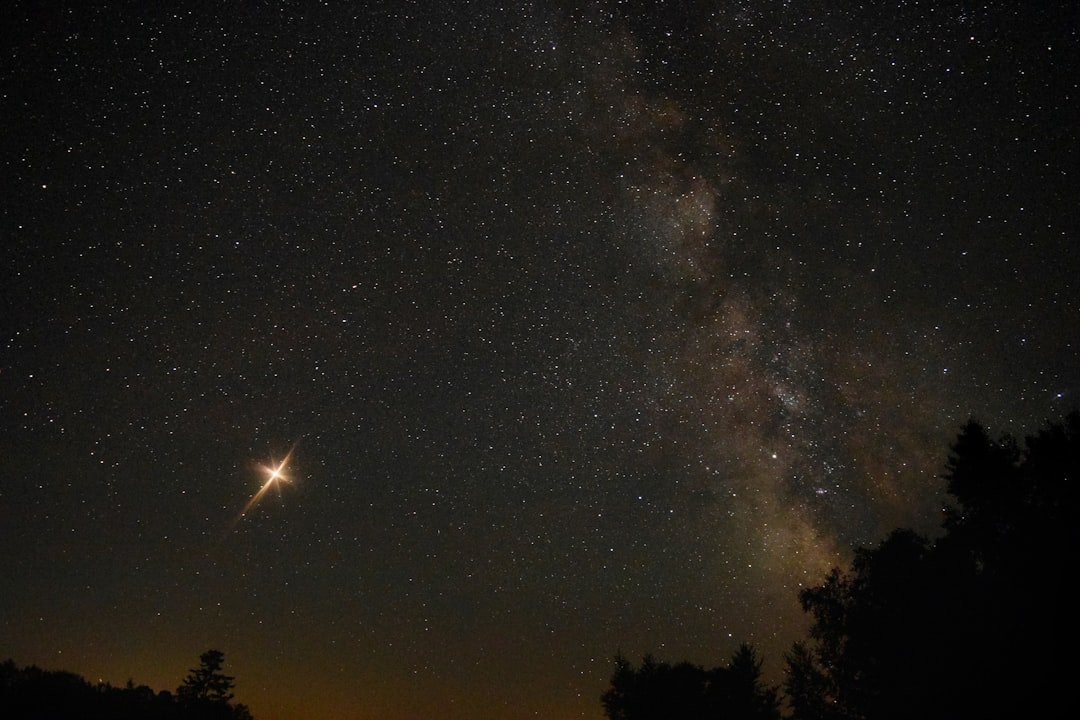
A Predawn Planetary Cluster Emerges (Image Credits: Unsplash)
Southern Hemisphere – Astronomy enthusiasts in the Southern Hemisphere prepare for a striking predawn display this month. On the morning of April 15, a thin waning crescent moon positioned itself above Mercury, Mars, and Saturn, all huddled low on the eastern horizon about 60 minutes before sunrise.[1] This event underscores April’s rich lineup of planetary sightings, blending evening brilliance with early morning challenges that reward patient observers.
A Predawn Planetary Cluster Emerges
April brings a compact gathering of morning planets that peaks mid-month, drawing eyes eastward before dawn. Mercury, the brightest at magnitude -0.1, leads the group alongside fainter Mars at 1.2 and Saturn at 0.9, with Neptune tagging along at magnitude 7.8 for telescope users.[2] Observers spotted the trio tightening on April 20, spanning just 1.6 degrees in a near-straight line.[3]
Southern Hemisphere locations like Sydney, Cape Town, and Rio de Janeiro offered the clearest views, as the planets rose higher and earlier relative to the horizon—up to 90 minutes before sunrise compared to 30 minutes farther north.[2] Northern viewers faced tougher conditions with low altitudes and brightening twilight, often requiring binoculars from sites with unobstructed eastern vistas such as beaches or plains.
Evening Skies Dazzle with Venus and Jupiter
After sunset, Venus commanded attention in the western sky, shining at magnitude -3.9 and climbing from Aries into Taurus by April 18. It lingered two to three hours past sundown, perfect for naked-eye spotting near the Pleiades star cluster.[4] A waxing crescent moon joined it on April 18-19, creating a picturesque trio with earthshine illuminating the scene.
Jupiter followed suit higher in Gemini, at magnitude -2.1, visible through much of the evening until setting around 1 a.m. by month’s end. Telescopes revealed its oblate disk, dark belts, and occasional glimpses of the Great Red Spot, while the moon passed 2.7 degrees north on April 22.[3] Uranus made a brief appearance near Venus on April 23, 0.8 degrees apart, challenging binoculars at magnitude 5.8.
Key Dates for Planetary Action
The month’s celestial calendar packed multiple highlights beyond the main clusters. Mercury reached greatest western elongation on April 3, maximizing its separation from the sun for early risers. Mars edged past Neptune on April 13, followed by Mercury’s pass on April 16.[2]
- April 15: Waning crescent moon above Mercury, Mars, Saturn (Southern Hemisphere best).
- April 18-20: Peak of four-planet alignment (Mercury, Mars, Saturn, Neptune).
- April 20: Mercury-Saturn-Mars in tight line, 2 degrees high 30 minutes pre-sunrise.
- April 22: Moon near Jupiter; Lyrid meteor shower peaks predawn.
- April 23: Venus-Uranus close pair low west.
These moments shifted nightly, encouraging repeated predawn or post-sunset checks with apps for precise timings from any location.
Observing Tips for Clearer Views
Success hinged on timing and location. For morning planets, arrive 60-90 minutes before sunrise in the Southern Hemisphere, scanning low east for steady points of light against fading stars. Binoculars helped separate Saturn and Mars from Mercury’s glare, while avoiding direct sun exposure protected eyes and equipment.[1]
Evening sessions favored clear western horizons free of trees or buildings. Larger telescopes unveiled Venus’s gibbous phase at 11 arcseconds and Jupiter’s 36-39 arcsecond disk with moon shadows. Dark skies amplified fainter targets like Neptune, though its dimness demanded steady skies and averted vision.
| Planet | Best Time | Magnitude | Key Constellation |
|---|---|---|---|
| Mercury | Predawn East | -0.1 | Pisces/Cetus |
| Venus | Post-sunset West | -3.9 | Taurus |
| Mars | Predawn East | 1.2 | Pisces |
| Jupiter | Evening West | -2.1 | Gemini |
| Saturn | Predawn East | 0.9 | Cetus |
Broader Sky Events Round Out the Month
Beyond planets, April featured the Lyrid meteor shower peaking April 22, delivering up to 20 meteors per hour from Lyra’s radiant predawn. The full Pink Moon crested April 1-2 near Spica, while a new supermoon on April 17 darkened skies for deeper stargazing.[3]
Comet C/2025 R3 neared perihelion around April 19, potentially visible near the alignment for wide-field viewers.
Key Takeaways
- Prioritize Southern Hemisphere dawns for Mercury-Mars-Saturn views April 15-20.
- Scan evening west for Venus and Jupiter; add telescope for details.
- Track moon pairings on April 15, 18, and 22 to anchor sightings.
April 2026 delivered accessible wonders for all skill levels, reminding viewers of the solar system’s dynamic dance. What caught your eye this month? Share your sightings in the comments.