

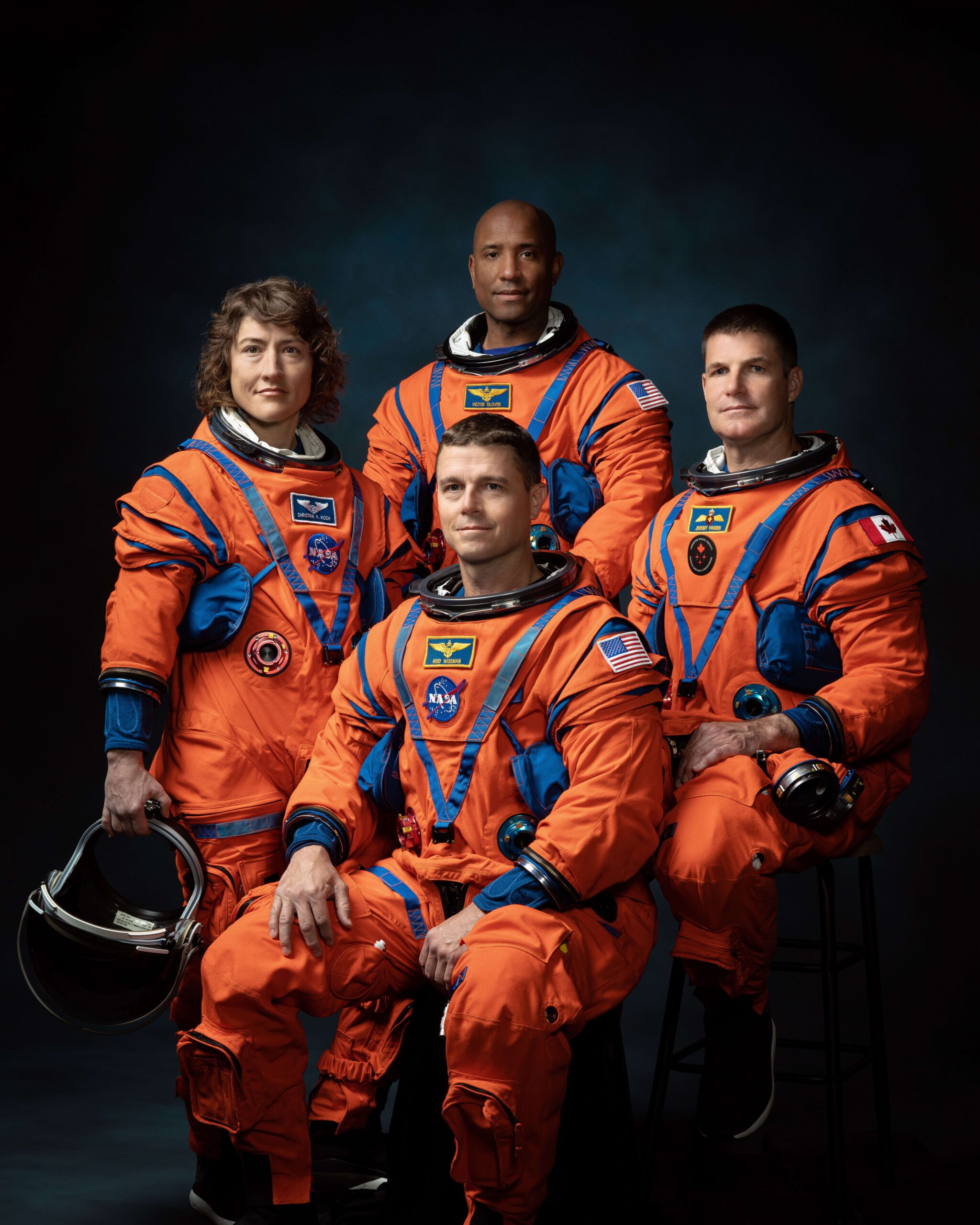
First Crewed Lunar Flyby Since Apollo Era (Image Credits: Upload.wikimedia.org)
Houston – The Artemis II astronauts landed at Ellington Field near NASA’s Johnson Space Center on April 11, 2026, drawing waves of applause from friends, family, and colleagues. This homecoming followed their safe splashdown in the Pacific Ocean the day before, capping a 10-day journey that took them around the Moon for the first time in over 50 years.[1][2] The crew shared brief remarks with the crowd, their faces lit with smiles as they stepped onto Texas soil once more.[3]
First Crewed Lunar Flyby Since Apollo Era
Humanity’s return to deep space reached a pivotal moment with Artemis II, surpassing Apollo 13’s distance record during its lunar loop. The mission launched in early April 2026, propelling the Orion capsule beyond Earth orbit for critical tests of life support, navigation, and reentry systems.[4][5] NASA described the flight as a cornerstone for future Moon landings and Mars ambitions.
Engineers monitored every phase closely, from separation of the Space Launch System’s boosters to the uncrewed upper stage’s fiery discard. The crew conducted dozens of experiments, validating technologies essential for longer-duration trips. This success cleared key hurdles ahead of Artemis III’s planned lunar landing.[6]
Splashdown Drama in the Pacific
The Orion capsule plummeted through Earth’s atmosphere at hypersonic speeds before parachuting into Pacific waters off San Diego at 8:07 p.m. EDT on April 10, 2026. Recovery teams from NASA and the Navy swiftly secured the spacecraft, confirming the astronauts’ excellent condition after the intense reentry.[7][8] Cheers erupted worldwide as live broadcasts captured the buoyant finale.
Post-splashdown medical checks proceeded without issues, allowing a rapid transit back to the mainland. Within hours, the team boarded aircraft for the short hop to Houston. This efficient turnaround underscored NASA’s refined operations for deep-space returns.[9]
Emotional Landings and Public Debut
Crowds gathered at Ellington Field as the crew’s plane taxied in on April 11, waving flags and holding signs of celebration. Reid Wiseman, Victor Glover, Christina Koch, and Jeremy Hansen descended the stairs to hugs and high-fives, their mission suits still bearing traces of the adventure.[10][11] NASA personnel lined the tarmac, amplifying the festive atmosphere.
The astronauts then addressed the audience briefly, expressing gratitude and hinting at the mission’s profound impacts. Each member represented diverse expertise, from command experience to international collaboration. Here’s a quick look at the team:
- Reid Wiseman: NASA commander, leading the crew with prior International Space Station tenure.
- Victor Glover: NASA pilot, bringing piloting prowess from his astronaut class.
- Christina Koch: NASA mission specialist, holder of women’s longest single spaceflight record.
- Jeremy Hansen: CSA mission specialist, marking Canada’s deepest space venture.[12]
These remarks marked their initial public appearance since departure, fueling anticipation for detailed debriefs.
Path Forward for NASA’s Lunar Ambitions
Artemis II’s data will refine Orion’s heat shield and propulsion, directly informing Artemis III’s crewed landing targeted for late 2027. Partnerships with the Canadian Space Agency strengthened through Hansen’s role, promising shared Gateway station contributions.[13] Johnson Space Center now buzzes with analysis as the program accelerates.
A timeline of key mission phases highlights the precision involved:
| Phase | Date | Milestone |
|---|---|---|
| Launch | April 1-2, 2026 | Liftoff from Kennedy Space Center |
| Lunar Insertion | Early April | Orbit around Moon achieved |
| Splashdown | April 10, 2026 | Safe Pacific recovery |
| Homecoming | April 11, 2026 | Arrival at Ellington Field |
Challenges like radiation exposure and microgravity effects received thorough study, yielding invaluable insights.
Key Takeaways
- Artemis II proved Orion’s readiness for deep space, exceeding Apollo-era distances.
- International teamwork shone, with Canada’s Hansen as a trailblazer.
- Splashdown and recovery processes operated flawlessly, paving way for landings.
The Artemis II homecoming reaffirms NASA’s momentum toward sustainable lunar presence, inspiring a new generation of explorers. As debriefs unfold, the world watches how these lessons propel humanity further. What are your thoughts on this lunar revival? Share in the comments below.