


The brain is not a fixed machine that slowly wears out. It reshapes itself throughout life, pruning old connections and building new ones in response to challenge, learning, and habit. That capacity is called neuroplasticity, and it has become one of the most compelling areas in aging research over the past decade.
Modern research has painted a much brighter picture of the aging brain, thanks to this phenomenon. Neuroplasticity is the brain’s ability to recognize and form new connections throughout life, which means that even in our later years, our brains can still grow and adapt, especially when challenged with new activities. The question researchers have been pressing hard in recent years is not whether this capacity exists, but which specific activities actually harness it in ways that matter for long-term brain health.
What Neuroplasticity Actually Means for Aging Adults

Neuroplasticity has been formally defined as “the capacity of the nervous system to alter its activity in response to internal or external stimuli by reorganizing its structure, functions or connections.” In plain terms, it means your brain can be trained, much like a muscle responds to physical exercise.
Neuroplasticity is at its peak in the early stages of life, but with aging, there is a decrease in synaptic formation, gray matter volume, and adaptability, which can impact cognitive function and the natural recovery process. This natural tapering does not mean decline is inevitable or unstoppable.
Regular mental challenges, like brain games, can strengthen pathways between neurons, helping preserve memory and cognitive skills over time. Knowing which challenges genuinely deliver that benefit, rather than just feeling stimulating, is where science has made real progress recently.
The Scale of the Problem Driving This Research

The Lancet Commission report on dementia prevention, intervention, and care has estimated that roughly forty percent of dementia risk across the lifespan is due to modifiable factors. That is a remarkably large share of risk that lifestyle and behavioral choices can potentially influence.
The number of people with dementia is projected to triple within the next thirty years, and the lack of an effective treatment has an ever-increasing impact on public health, highlighting the importance of effective prevention strategies. Against this backdrop, cognitive training has moved from a fringe topic to a mainstream area of clinical focus.
Most recently, the World Health Organization published its 2024 practice guidelines recommending cognitive training as an evidence-based intervention for individuals with dementia. That institutional endorsement reflects just how seriously the field now takes mental activity as a preventive tool.
Game 1: Speed-Based Cognitive Training (BrainHQ-Style Programs)

BrainHQ features speed-based cognitive games that adapt to become more demanding as users improve, an approach supported by hundreds of scientific studies. These are not casual diversions. The core mechanics are specifically engineered to push the brain’s processing speed in ways that passive entertainment cannot.
Half the volunteers in a major McGill University trial were randomly assigned to engage in online brain-training games using BrainHQ, which offers cognitively stimulating exercises that become progressively more challenging the better you do, with each group assigned to complete their activity for thirty minutes a day for ten weeks. The researchers then used a specialized PET scanner to look directly inside participants’ brains for measurable changes.
Participants in the BrainHQ group had a roughly two percent increase in cholinergic activity in the anterior cingulate cortex, a part of the brain involved in learning, attention, and executive function. Cholinergic activity is closely tied to memory and attention, and its preservation is one of the key targets in Alzheimer’s research.
The ACTIVE Trial: 20 Years of Evidence on Speed Training

Adults aged sixty-five and older who completed five to six weeks of cognitive speed training and who had follow-up sessions one to three years later were less likely to be diagnosed with dementia, including Alzheimer’s disease, up to two decades later. This finding, from the landmark ACTIVE study, is the first of its kind with a twenty-year window.
In this twenty-year follow-up, investigators found that roughly forty percent of participants in the speed-training group with booster sessions were diagnosed with dementia, which was a twenty-five percent reduced incidence compared to about forty-nine percent in the control group, and this was the only intervention with a statistically significant difference.
Participants randomized to the speed-training arm who completed one or more booster sessions had a significantly lower risk of being diagnosed with Alzheimer’s disease and related dementias, and no prior cognitive training intervention has been shown to reduce risk of such conditions over a twenty-year period. The emphasis on booster sessions is key – sustained engagement appears to matter more than a single intense training period.
Game 2: Crossword Puzzles

A study from Columbia University and Duke University published in the journal NEJM Evidence found that participants with mild cognitive impairment who trained with web-based crossword puzzles demonstrated greater cognitive improvement than those who were trained on cognitive video games. The finding surprised some researchers, given the sophistication of computerized game design.
Crossword puzzles were superior to cognitive games on the primary cognitive outcome measure at both twelve weeks and seventy-eight weeks, and also superior on a measure of daily functioning at seventy-eight weeks. Daily functioning is especially meaningful as a metric because it reflects real-world independence, not just performance on lab tests.
Crossword puzzle participation at baseline delayed onset of accelerated memory decline by roughly two and a half years, and late-life crossword puzzle participation, independent of education level, was associated with delayed onset of memory decline in persons who developed dementia. That figure, drawn from the Bronx Aging Study, has held up through subsequent replications.
What the COGIT-2 Trial Adds in 2025
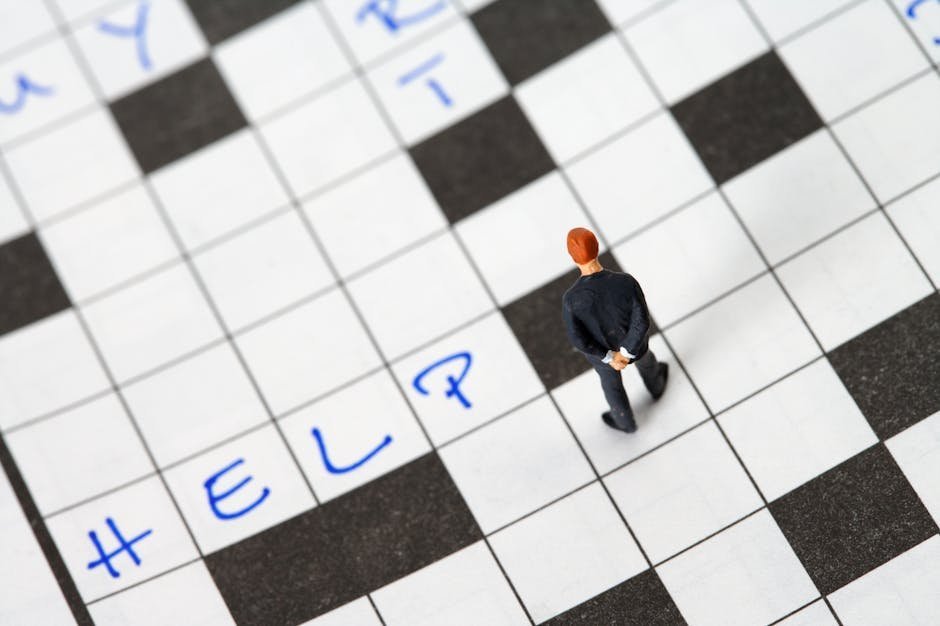
In the recently completed COGIT-2 trial, crossword puzzles were superior to computerized cognitive training on the Alzheimer’s Disease Assessment Scale cognitive subscale and on daily function, correlating with decreased brain atrophy over seventy-eight weeks. Brain atrophy is a hard structural marker, making this a clinically meaningful result.
The COGIT-2 study is a seventy-eight-week, multicenter clinical trial comparing home-based, high-dose crosswords at four puzzles per week to low-dose crosswords at one puzzle per week, with crossword puzzles designed to have a moderate level of difficulty. Frequency and difficulty level both appear to shape the magnitude of the benefit.
Participation in cognitively stimulating leisure activities such as crossword puzzles may delay onset of memory decline in the preclinical stages of dementia, possibly via its effect on improving cognitive reserve. Cognitive reserve – essentially the brain’s built-up resilience against damage – is one of the most robust protective concepts in dementia research today.
Game 3: Number Puzzles Including Sudoku
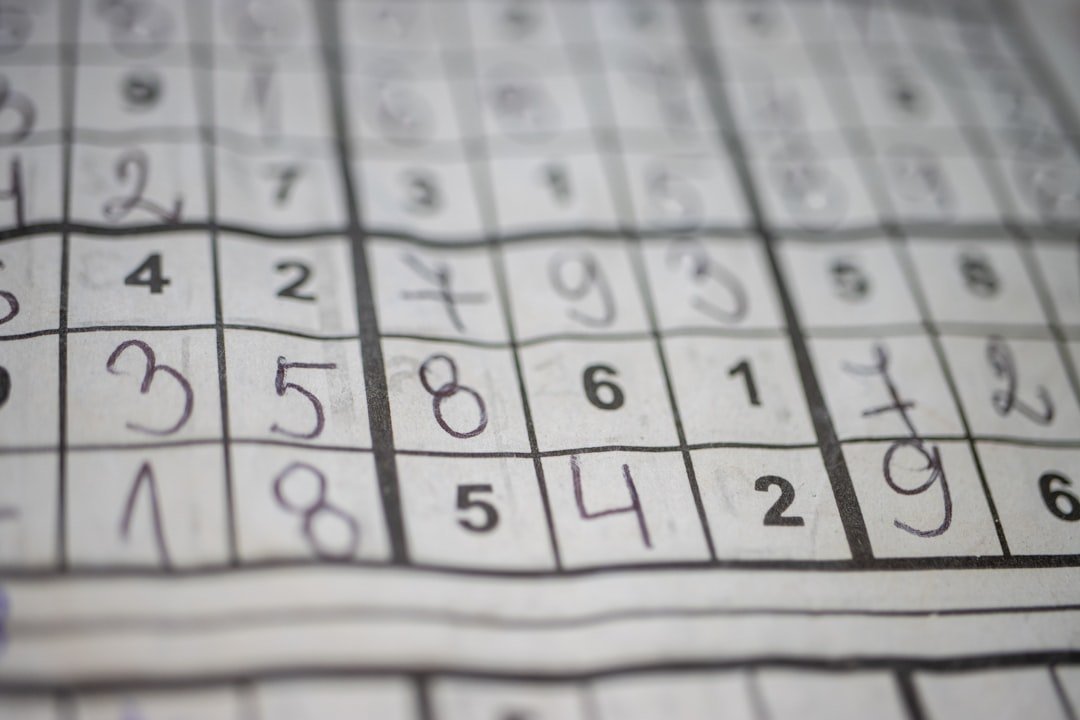
Number puzzles such as Sudoku may have a similar impact as crossword puzzles when it comes to cognitive function. A study involving around twenty thousand people aged fifty and older found a direct correlation between brain function and the frequency of completing number puzzles, with engaging in these puzzles more than once a day enhancing cognitive performance to levels typical of individuals eight years younger.
The more regularly adults aged fifty and over played puzzles such as crosswords and Sudoku, the better their brain function, according to research in more than nineteen thousand participants, led by the University of Exeter and King’s College London. The scale of that dataset gives the finding considerable weight.
Studies suggest that Sudoku may support working memory, enhance cognitive performance, and create neuroplasticity changes in the prefrontal cortex through pattern recognition and logical reasoning challenges. The prefrontal cortex is central to planning, decision-making, and managing attention – functions that tend to erode early in cognitive decline.
The Dual N-Back Task: A Challenging but Promising Option

The dual n-back task involves simultaneous serial presentation of auditory and visual stimuli that requires participants to make a specific response when the current stimulus matches the one presented a set number of trials back. It is genuinely difficult, and that difficulty is part of its cognitive value.
Numerous studies have linked n-back training to improvement of working memory capacity, near transfer to performance of structurally similar tasks, and even far transfer to fluid intelligence. Fluid intelligence refers to the ability to reason through novel problems, which is among the most practically useful cognitive capacities in daily life.
Research showed that n-back training not only improves working memory but also transfers to attention and fluid intelligence for both young and older adults, providing evidence for brain plasticity, particularly in older adults, although the degree and extent of it are expected to decrease with age. It is worth noting that results across studies on n-back training have been mixed, and further research continues to clarify where its benefits reliably generalize.
What Makes a Brain Game Actually Work

The mismatch model of cognitive plasticity suggests that increasing the demand on cognitive processes leads to expansion of resources associated with cognitive functioning, and that the ceiling of one’s cognitive abilities can be progressively pushed upward by continually challenging the upper limits of those abilities. Adaptive dual n-back tasks align well with this model, as task difficulty increases once a trainee reaches a pre-specified accuracy level, maintaining difficulty at the upper end of ability and, in theory, expanding that ability.
Research suggests the most effective cognitive training programs combine multiple cognitive domains, including memory, attention, processing speed, and executive function. A single type of puzzle used in isolation likely produces narrower benefits than a varied mental routine.
Claims about preventing dementia or dramatically boosting IQ through brain games are not supported by current scientific evidence. The honest picture is more nuanced: these games can meaningfully slow specific aspects of decline, build cognitive reserve, and in some cases produce measurable changes in brain chemistry – but they are most powerful as part of a broader lifestyle approach rather than a standalone cure.
Combining Brain Games with Broader Brain Health Strategies

Aerobic exercise increases brain-derived neurotrophic factor, which promotes synaptic plasticity and neurogenesis in the hippocampus. Moderate-intensity aerobic exercise performed three to four times per week has been shown to optimally stimulate this production and hippocampal neurogenesis. Physical and cognitive training appear to complement each other in ways that neither achieves alone.
The evidence collected across major trials indicates that multidomain approaches targeting simultaneously multiple risk factors, and tailored at both individual and population level, are likely to be most effective and feasible in dementia risk reduction. That means combining brain games with exercise, social engagement, sleep, and diet rather than treating them as alternatives.
For optimal cognitive health, brain games work best as one component of a comprehensive approach that includes physical exercise, social engagement, adequate sleep, healthy nutrition, and lifelong learning. Consistency over time matters more than any single session, and starting earlier in life appears to offer greater protective effects.
Practical Takeaways for Getting Started

Research suggests that fifteen to thirty minutes daily is more beneficial than occasional long sessions, and diversifying activities by combining different types of cognitive challenges rather than focusing on one game produces the strongest outcomes. Think of it as cross-training for the brain rather than repeating the same drill.
Participants who engaged in cognitively stimulating leisure activities showed fewer declines in cognitive function regardless of whether they played Sudoku or did crossword puzzles, and those who started such activities between assessment rounds showed better cognitive functioning two years later than those who did not engage at all. Starting later in life still delivers real benefits.
Research findings suggest that cognitive training programs may hold promise in delaying the progression of clinical symptoms and may serve as a preventive approach for cognitively vulnerable older adults, potentially delaying the onset of dementia. The key word throughout the science is delay. These tools do not make the brain immune to aging, but they appear to reliably push that timeline forward – and in the context of dementia, even a few years of preserved independence is a meaningful outcome.
The brain rewards consistent effort in ways we are only beginning to fully measure. A crossword puzzle at breakfast, a number grid before bed, or thirty minutes with a speed-training app a few times a week may seem modest. But the science increasingly suggests that these small, repeated challenges accumulate into something the brain can genuinely hold onto.