


Most people don’t decide to doomscroll. It just happens. You open your phone to check one notification, and forty minutes later you’re deep in a thread about a political crisis you can’t do anything about, feeling vaguely awful. That’s not a personal failure. That’s a system working exactly as designed.
The feeds on your favorite apps aren’t neutral windows onto the world. They’re precision-tuned engines built to hold your attention, and they’ve gotten very good at it. Understanding how they work, and how to deliberately reset them, may be one of the more practical things you can do for your mental health in 2026.
The Doomscrolling Problem Is Bigger Than You Think

A 2024 Morning Consult survey found that roughly a third of American adults doomscroll on a regular basis, with that figure rising to nearly half of millennials and more than half of Gen Z adults. These aren’t people who have simply lost track of time. Doomscrolling, defined as the compulsive consumption of negative online information, has been increasingly linked to poorer mental health and heightened anxiety in contexts of societal threat. The scale of the issue makes it a genuine public health concern, not just a quirk of modern life.
A 2024 World Health Organization report found that more than one in ten adolescents showed signs of problematic social media behavior, struggling to control their use and experiencing negative consequences, with the report defining this as a pattern of behavior characterized by addiction-like symptoms.
Why Algorithms Push You Toward Negative Content
Research has demonstrated that the tendency of social media platforms to amplify negative content may worsen continuous scrolling behavior, and doomscrolling has been linked to platform-level incentives where digital news environments use features such as gamified interfaces and algorithmic recommendation systems to keep audiences engaged and prolong time spent on their services. This isn’t accidental design. It’s the business model.
Many researchers have hypothesized that by focusing on users’ revealed preferences, these algorithms may exacerbate human behavioral biases, and in a preregistered algorithmic audit, Twitter’s engagement-based ranking algorithm was found to amplify emotionally charged, out-group hostile content that users say makes them feel worse about their political out-group. Data from four US and UK news sites covering nearly 100,000 articles and two social media platforms show that social media users are nearly twice as likely to share links to negative news articles.
What Doomscrolling Actually Does to Your Brain

An August 2024 study of 800 adults published in Computers in Human Behavior Reports suggests that doomscrolling evokes greater levels of existential anxiety, a feeling of dread or panic that arises when we confront the limitations of our existence. The effect goes further than a bad mood. The habit of doomscrolling involves repeated exposure to threat-based content, which overstimulates the limbic system, particularly the amygdala, triggering prolonged stress responses.
A study in Computers in Human Behavior in April 2024 also found that employees who doomscroll while at work may become less engaged with their professional tasks. Physical effects can include headaches, muscle tension, neck and shoulder pain, low appetite, difficulty sleeping, and even elevated blood pressure, according to Harvard experts.
The Infinite Scroll Trap Was Literally Invented to Keep You Online

Infinite scrolling is a design approach that loads content continuously as the user scrolls down, eliminating the need for pagination, and this feature can exacerbate doomscrolling because it removes the natural stopping points at which a user might pause. The inventor of infinite scroll has since reconsidered his creation. The concept is sometimes attributed to Aza Raskin, who later expressed regret at the invention, describing it as “one of the first products designed to not simply help a user, but to deliberately keep them online for as long as possible.”
Algorithms now weigh signals such as watch time, scroll behavior, pauses, and even device or location, creating highly individualized feeds. Every hesitation, every accidental linger on a disturbing headline, quietly trains the system to show you more of the same.
How to Reset Your TikTok Feed Right Now
TikTok provides an official way to refresh your feed directly inside the app. Open TikTok and go to Profile, then Menu, then Settings and privacy, then Content preferences, and select “Refresh your For You feed.” Once completed, TikTok clears the interest signals used to personalize your For You Page, and you’ll initially see popular, broadly trending content while the system observes your behavior and recalibrates recommendations.
Keep in mind that once you hit refresh, the change is permanent and can’t be undone, and this reset only affects your For You feed. Your Following feed, profile, followers, inbox, and even the ads you encounter will remain untouched. In the summer of 2025, TikTok also announced two new tools designed to help users customize their algorithm: Topic Management and Smart Keyword Filters, which let you fine-tune your interests and filter out content you don’t want to see.
How to Reset Your Instagram Feed
In November 2024, Instagram began testing a way for people to reset the content recommendations they see in Explore, Reels, and Feed when they want a fresh start. The rollout has been gradual. As of late 2025, you can use the “Reset Suggested Content” feature in your Content Preferences to clear your recommendations and start fresh, accessible by going to Settings, then Content Preferences, then Reset suggested content.
Instagram’s feed control is otherwise manual and behavior-based, meaning the app learns from what you hide, mute, unfollow, and ignore. Consistency matters more than any single action. Instagram responds more to repeated signals than one-off actions.
How to Retrain Your Facebook and YouTube Feeds
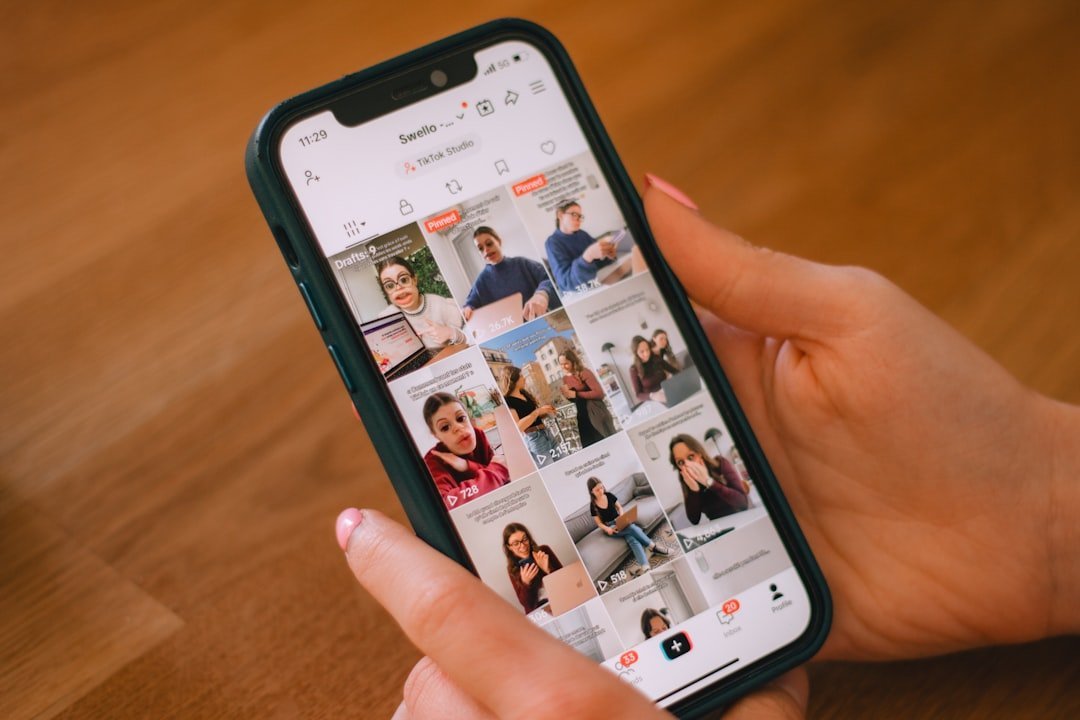
You can effectively “reset” your Facebook algorithm by training Facebook’s AI systems on what you want to see more or less of in your feed. Hiding posts and snoozing or unfollowing accounts sends the same signal to the algorithm, and using these options often is worthwhile, since Facebook responds more reliably to repeated negative feedback than occasional clicks.
Subscriptions heavily shape YouTube recommendations, so unsubscribing from channels you no longer watch and rebuilding your list intentionally is a meaningful step, since YouTube recommendations are driven by watch history, search history, and subscriptions you may have forgotten about. These adjustments won’t deliver instant results, but within a week of consistent signaling, most users notice a real shift in what the feed surfaces.
The Negativity Bias You’re Fighting Against
Psychologists define negativity bias as the human tendency to give more weight to negative experiences or information than positive ones, and this bias is thought to be hardwired, a product of evolution that helped humans survive by prioritizing potential threats. Platforms exploit this instinct, sometimes unknowingly, sometimes not. Research from Stanford HAI found that it’s typically the negative, highly arousing stories that get the most traffic, and analysis revealed that news sources posted almost twice as much negative content as positive content overall.
Research shows that doomscrolling may feed anxiety through what psychologists call intolerance of uncertainty, that uneasy feeling that drives people to keep refreshing the feed “just in case,” and in reality, the more people scroll to soothe that discomfort, the more anxious they become. Knowing this loop exists makes it easier to interrupt.
Practical Daily Habits That Actually Help

Research from Price and colleagues and Güme shows that limiting social media exposure, disabling news notifications, and balancing screen time with positive activities may help improve mood and well-being. Even small changes add up. Even partial news avoidance, checking in once or twice a day instead of hourly, has been linked to lower anxiety and better emotional regulation.
Keeping your phone off your nightstand, though it doesn’t have to leave the bedroom entirely, means you can’t compulsively grab it upon waking. Switching your phone to grayscale is another option, since this type of visual boundary makes scrolling less enticing by dialing back the saturation levels of colors on your screen. These aren’t dramatic interventions, just friction added to a frictionless habit.
What Happens After You Reset: Training a Better Feed
Right after a reset, TikTok will display trending and popular content, treating you like a brand-new user, and from that point on, the algorithm begins gathering fresh data based on your activity such as likes, comments, shares, and especially your watch time, to rebuild your personalized recommendations. The first few days are decisive. Watching videos to completion has two to two and a half times more influence on the algorithm than simply liking them, and the first 48 to 72 hours are crucial, since actively engaging with niche content during this period can make a significant difference.
Scroll past content you don’t care about quickly, use “Not interested” for clearly irrelevant topics, and avoid liking content out of habit. What you skip teaches the algorithm just as much as what you stop to watch. Be deliberate in both directions.
The Bigger Picture: Intentional Use Over Avoidance
Across studies, the antidote to doomscrolling isn’t ignorance, it’s intentionality. Cutting social media out entirely often doesn’t stick, and the research backs that up. Research has noted that doomscrolling and news avoidance can emerge from the same conditions of repetitive, negative reporting, and a 2024 study by the University of Oxford’s Reuters Institute for the Study of Journalism indicated that an increasing number of people are avoiding the news, with 39 percent of people worldwide actively avoiding it in 2023, up from 29 percent in 2017.
A 2025 field experiment published in Science found that decreasing exposure to partisan animosity content shifted out-group feelings measurably, providing causal evidence that what you’re exposed to in a feed genuinely alters your emotional state and polarization. You don’t have to leave the platforms. You just have to stop letting the platforms decide what you see.
The algorithm break isn’t about being uninformed. It’s about reclaiming the right to choose what informs you, and in what quantities. Resetting your feed is a small act of attention management, but repeated consistently, it quietly changes the texture of your daily experience in ways that matter far more than any single headline.