
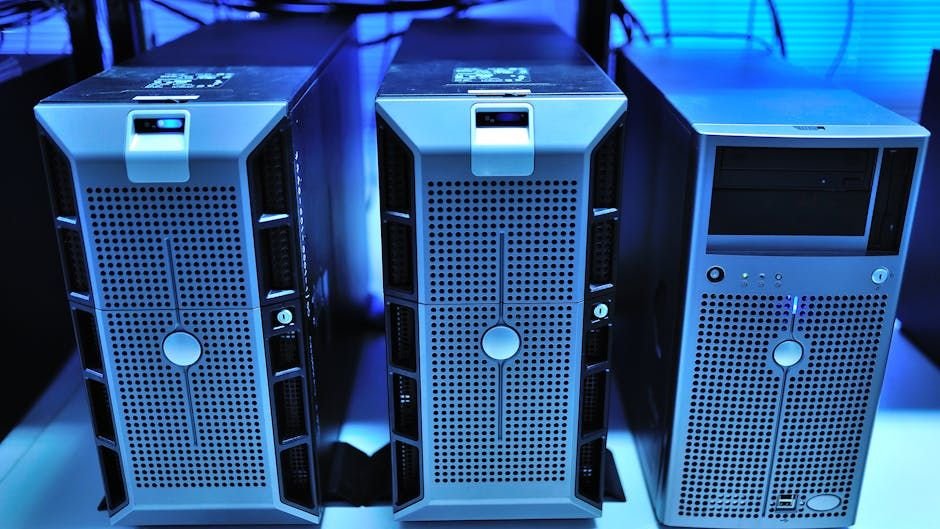

Somewhere in a bank’s data center, on a server that looks nothing like the sleek cloud infrastructure you’d find at a tech startup, a program written before the moon landing is quietly processing your mortgage payment. No fanfare. No outage notice. Just millions of transactions moving through code that has been running longer than most of its users have been alive.
These are the systems that COBOL programmers maintain, and the people who know them best are a shrinking, aging, and increasingly irreplaceable group of specialists that some in the industry have taken to calling the “COBOL Commandos.” They didn’t choose the nickname. They mostly just showed up to work, decade after decade, keeping something enormous from falling apart.
A Language Born in 1959 That Never Really Retired
COBOL, which stands for Common Business-Oriented Language, was first introduced in 1959, making it one of the oldest programming languages still running in active production anywhere in the world. It was designed from the start to handle business data processing, and it turned out to be remarkably good at exactly that. Developed initially to run on large mainframe computers, COBOL became the standard for transaction-based processing and continues to power many financial and administrative systems used by banks and the public sector, largely because of its ability to process large volumes of data and perform business-critical tasks efficiently.
Estimates put the total volume of COBOL code still in use somewhere between 220 billion and 800 billion lines, depending on the source, with the higher figure coming from OpenText’s 2022 assessment. To put that in some perspective, that higher estimate is reportedly eight times more lines of code than there are stars in our galaxy. Whether or not you take the larger figure at face value, the scale is genuinely staggering.
Billions of lines of COBOL process roughly three trillion dollars in commerce every single day, representing the backbone of global financial infrastructure, with decades of regulatory compliance, business rules, and operational knowledge embedded directly into that code. That embedded logic is part of what makes it so difficult to simply walk away from. You’re not just replacing a language. You’re replacing the institutional memory of an entire financial era.
The Mainframe Is Not Going Anywhere (Yet)
US financial institutions still run a substantial share of their core banking, payments, clearing, and settlement operations on COBOL-based systems, platforms that earned their place through unmatched stability and transaction integrity. That legacy, however, has become a constraint. What once reduced risk now concentrates it.
Legacy technology remains deeply entrenched in the global banking sector, with roughly seven in ten banks globally still relying on legacy banking systems as of 2025, and over forty percent of global banking systems continuing to utilize COBOL. The mainframe is not a relic that banks forgot to throw out. It’s infrastructure they have made deliberate choices to keep running, often because the alternative is too expensive, too risky, or both.
In banking, legacy systems handle core functions such as transaction processing, account management, and record-keeping, with COBOL still powering over forty percent of core banking systems today. Banks remain dependent on these systems due to the enormous complexity and risk involved in replacing infrastructure that processes millions of daily transactions, plus the substantial costs and multi-year timelines required for complete system overhauls.
Who Are the COBOL Commandos?

The average COBOL programmer today is around 55 years old, with roughly ten percent of the workforce retiring annually. Meanwhile, fewer new programmers are learning the language, creating a structural talent shortage that shows no sign of correcting itself. These are the men and women who have spent entire careers on systems that the rest of the tech world largely moved past decades ago.
The average age of a COBOL developer sits somewhere between 45 and 55, meaning they will soon be leaving the workforce entirely, and there are only an estimated 24,000 COBOL programmers remaining in the United States. That number may sound larger than you’d expect. In the context of an industry that runs trillions of dollars in daily transactions, it’s a razor-thin margin.
The experts who maintain COBOL systems are rapidly aging, with only about eleven and a half percent of COBOL programmers under the age of 35, while the majority are well into their fifties. Many of these specialists have spent more than twenty years at the same company, staying in their positions far longer than the average IT professional. That kind of tenure carries knowledge that simply doesn’t exist in any documentation.
What Happened When the Pandemic Exposed the Cracks
In 2020, during the COVID-19 pandemic, the US government had to resort to recruiting retired COBOL programmers to help manage the surge in unemployment benefit claims, highlighting the language’s irreplaceable role in certain systems. States that had quietly let their COBOL expertise dwindle found themselves scrambling for people who had been out of the workforce for years, sometimes decades.
It wasn’t a hypothetical risk scenario from a white paper. It was a real-time failure playing out in the middle of an economic crisis, with real people waiting on benefits that systems couldn’t process fast enough. The moment made national headlines, briefly, before the news cycle moved on. The underlying problem did not move on with it.
The US federal government spends somewhere between 78 and 80 percent of its entire IT budget on legacy maintenance, with roughly 74 billion dollars of a 95 billion dollar federal IT budget in FY2024 going to operations and maintenance rather than new development or improvement. Government agencies struggle to hire contractors willing to work on fifty-year-old technology, which has already led to critical system failures during peak demand periods.
The Real Cost of Doing Nothing (and the Cost of Acting)

Legacy business and technology experts are retiring in significant numbers, leaving a dangerous vacuum of technical and institutional knowledge. COBOL programmers are rapidly aging out of the workforce, making them increasingly scarce and expensive to retain. The market dynamics are simple and uncomfortable: as supply shrinks and the systems these specialists support remain critical, their leverage grows.
COBOL programmers with extensive experience have unique career opportunities, and their expertise is in high demand, allowing them to command high salaries by offering their services to organizations that rely on COBOL-based systems. Some retired programmers have been brought back as consultants at rates that would surprise anyone who assumes legacy work is low-value work. It isn’t.
According to one industry survey, roughly nine in ten IT leaders report that expanding their mainframe capabilities is a moderate or critical priority over the next year. Yet more than seven in ten say their mainframe teams are understaffed, and more than half say they are underfunded. Priorities and resources are not aligned, which is a quiet but serious problem.
Why Modernization Keeps Getting Delayed
If estimates of 800 billion lines of COBOL are accurate, rewriting all of that into a new programming language would produce many bugs and even higher costs, making it one of the most expensive and high-risk strategic IT decisions a company can face. No board is eager to approve a project that could cost hundreds of millions of dollars and still fail.
A persistent belief within many institutions holds that legacy core systems, despite their limitations, represent known quantities that should be maintained rather than risked through modernization efforts. This perspective treats modernization as introducing risk rather than reducing it, which fundamentally misunderstands the actual risk profile of aging legacy infrastructure.
The skills crisis is not only about the ability to program in COBOL but also, more importantly, about the knowledge of legacy applications originally developed decades ago, to which layers of changes have been added and whose documentation has often been lost entirely. When the person who knows what a particular module does retires without passing that knowledge on, it doesn’t disappear into thin air. It becomes a landmine.
Research from Deloitte shows that companies spend roughly 55 percent of their IT budgets on maintenance, with another 19 percent going to mandatory upgrades, leaving very little room for actual transformation. The math doesn’t easily favor bold action when so much of the budget is already committed to keeping things running.
The AI Gamble: Can Machines Do What Humans Won’t?
US government agencies and Fortune 500 companies are increasingly turning to AI to modernize mission-critical systems built on COBOL, with the US Social Security Administration planning a three-year, one-billion-dollar AI-assisted upgrade of its legacy COBOL codebase. That figure alone tells you something about the scale of what’s involved.
As experienced programmers retire, organizations face growing challenges maintaining systems that power everything from banking applications to pension disbursements, and engineers are now using tools like ChatGPT and IBM’s watsonX to interpret COBOL code, create documentation, and translate it to modern languages. The tools are real and improving. Whether they’re adequate to the full task is a different question.
COBOL modernization involves more than just translating code into a newer programming language. The mainframe system where that code resides and runs, along with the entire tech stack it interacts with, must be carefully considered, making it system-level engineering work that incorporates not only code translation but also application integration, data architecture redesign, runtime replacement, and transaction processing integrity. AI can assist with parts of this. It cannot replace the judgment that comes from decades of operational experience.
The Institutional Knowledge Problem No One Talks About Enough
Industry reports consistently show COBOL workforce reductions with limited new developers entering the field, and organizations lose decades of accumulated system knowledge with each retirement, making systems increasingly difficult to maintain over time. The code itself can sometimes be reverse-engineered. The reasoning behind the code often cannot.
Organizations sometimes discover hidden COBOL modules powering critical workflows they assumed were retired, such as an old billing adjustment routine still triggered once a month by a downstream system, or a claims calculation module quietly feeding values into a modern CRM. These surprises don’t announce themselves. They show up during outages, migrations, or audits, at the worst possible moment.
Long-tenured employees with deep knowledge of a bank’s existing systems and the embedded business rules that contribute to the bank’s competitive advantage are also aging out. Today’s top technical talent has little desire to work with antiquated systems and platforms, making it hard for banks to attract the experts and innovators necessary to survive in the age of digital transformation. The talent pipeline problem isn’t just about COBOL specifically. It’s about who wants to spend their career maintaining something the rest of the industry treats as a footnote.
What Comes Next for the Banks Still Running on Decades-Old Code

Modernization is no longer simply about keeping pace with innovation. It is about reducing systemic exposure that can no longer be managed through incremental maintenance, especially as COBOL expertise ages out faster than institutions are planning for. The conversation has shifted, at least among those paying close attention.
AI is playing an increasingly important role in modernization efforts, with generative AI being used to reverse-engineer and modernize outdated COBOL code by translating it into modern programming languages. Banks are also leveraging cloud technologies to reduce infrastructure costs and improve scalability, with many institutions implementing hybrid solutions that combine cloud capabilities with existing mainframe systems to minimize disruption while gaining modern functionality.
Re-architecting delivers the most value, but only when institutions are prepared to treat modernization as a multi-year transformation, not a tooling exercise. That framing matters. The organizations that treat COBOL modernization as a project with a completion date tend to underestimate it. The ones that treat it as a sustained institutional commitment tend to make real progress.
The Quiet Stakes of a Very Old Language
COBOL supports 43 percent of key American banking systems and 95 percent of all ATMs. If these systems are not maintained or migrated carefully, the consequences for the American economy would be severe. That’s not alarmism. It’s the straightforward implication of dependency at this scale.
Systems built with COBOL have a reputation for stability, often running without disruption for decades, which is precisely what makes organizations hesitant to migrate away. System failures in this space can result in substantial financial losses and serious reputational damage. The reliability of COBOL is both its greatest strength and the reason it’s so hard to dislodge.
The COBOL Commandos didn’t set out to become indispensable. They learned a language, mastered systems that the broader tech world ignored, and kept showing up. Now, as that generation approaches its final years in the workforce, the financial sector faces a choice it has been quietly avoiding for a long time. Invest seriously in the transition, or wait until a retirement wave forces the issue under far less forgiving circumstances. The code will keep running either way, right up until it doesn’t.