

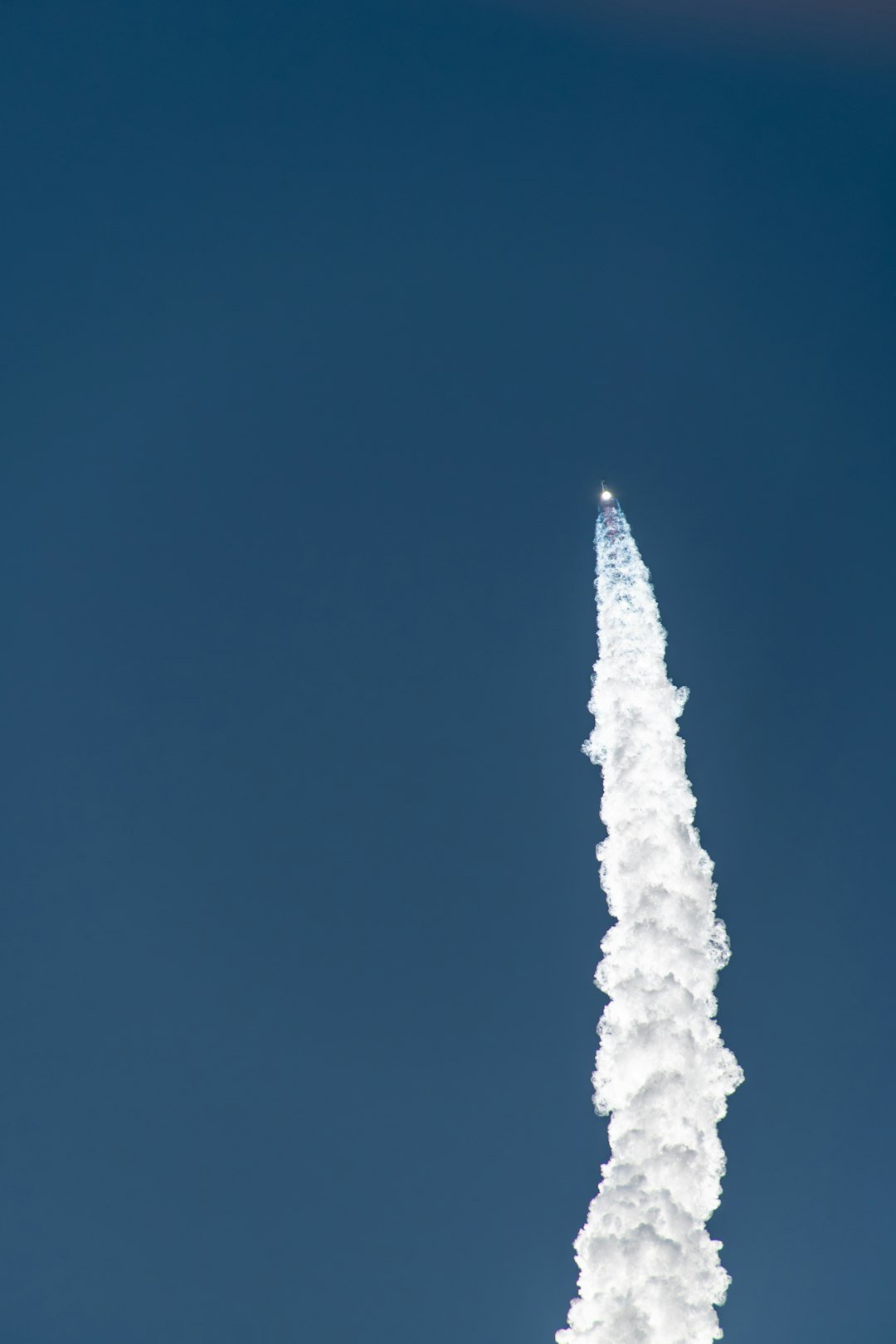
First Full-Duration Burn Ushers in New Era for Starship (Image Credits: Unsplash)
Texas – SpaceX marked a pivotal moment in mid-April with a successful full-duration static fire test of its Starship Version 3 upper stage. The test at the company’s Starbase facilities confirmed the engines’ ability to operate as required for flight. This achievement positions the upgraded vehicle for a potential debut launch in early or mid-May, known as Flight 12. Observers now watch closely as the milestone intersects with NASA’s ambitious Artemis program.
First Full-Duration Burn Ushers in New Era for Starship
SpaceX shared news of the test succinctly on X, highlighting the first full-duration static fire for Starship V3. Unlike shorter ignition checks, this run matched the engines’ operational time during an actual ascent. The demonstration followed an earlier, abbreviated test of the V3 first stage, which faced a ground equipment glitch.
Propulsion readiness stands as the cornerstone for any novel rocket design. The upper stage’s performance alleviates immediate concerns over the May timeline. Yet variables like infrastructure, FAA approvals, and weather loom large before liftoff. Propulsion forms the backbone, but integrated flight demands far more.
Starship V3: Enhanced Power for Ambitious Payloads
The Version 3 iteration surpasses predecessors in scale and capability. Fully stacked, it towers higher than Version 2, powered by redesigned Raptor V3 engines that deliver greater thrust and efficiency. SpaceX projects over 100 tons to low Earth orbit, eclipsing the Space Shuttle’s 27-ton mark and rivaling NASA’s Space Launch System.
Such capacity proves vital for complex missions. Orbital refueling, essential for lunar voyages, benefits from fewer tanker launches with a beefier vehicle. However, SpaceX has yet to validate propellant transfer in orbit. Flight data from V3 hardware remains pending, with Flight 12 set to provide initial proof.
Artemis Hinges on Starship’s Unproven Capabilities
NASA relies on Starship as its primary crewed lunar lander for the Artemis initiative. The agency chose the vehicle to ferry astronauts back to the moon before decade’s end. Recent program adjustments underscore the tight timeline, with Administrator Jared Isaacman announcing a revised sequence earlier this year.
Artemis 3 now targets mid-2027 for low-Earth orbit docking tests between Orion and landers like Starship or Blue Origin’s Blue Moon, skipping a lunar landing. The crewed touchdown shifts to Artemis 4 in late 2028. This incremental path mirrors Apollo’s build-up, prioritizing risk reduction through successive missions.
Persistent Hurdles Beyond the Test Stand
A static fire verifies ground-based engine runtime but falls short of flight realities. Starship V3 must still achieve orbit, endure reentry, execute refueling, and soft-land on the moon. None of these feats have occurred to date. Blue Origin’s parallel efforts offer NASA a backup, though both face similar untested elements.
Flight 12, planned as suborbital, will probe booster separation, upper stage handling, and recovery attempts. Success here would affirm the V3 redesign under real stresses. Setbacks demanding major overhauls could jeopardize 2028 goals. SpaceX’s rapid iteration has fueled progress thus far, yet higher-stakes phases test that model.
Key Challenges Ahead
- Orbital propellant transfer, unproven in any vehicle.
- Integrated V3 performance during suborbital ascent.
- Regulatory and infrastructural readiness for Flight 12.
- Lunar transit and landing for Artemis 4.
- Competition from Blue Origin’s New Glenn and Blue Moon.
Key Takeaways:
- The V3 static fire keeps propulsion on track for May’s Flight 12.
- Artemis 4 lunar landing eyes late 2028, post-docking demo.
- Over 100 tons to orbit promises refueling efficiency gains.
The mid-April static fire preserved momentum without erasing the chasm to lunar success. SpaceX’s engineering prowess shines, yet Artemis demands demonstrations no rocket has achieved. A smooth Flight 12 could render 2028 plausible; stumbles might force further delays. What do you think lies ahead for Starship and the moon return? Share in the comments.