

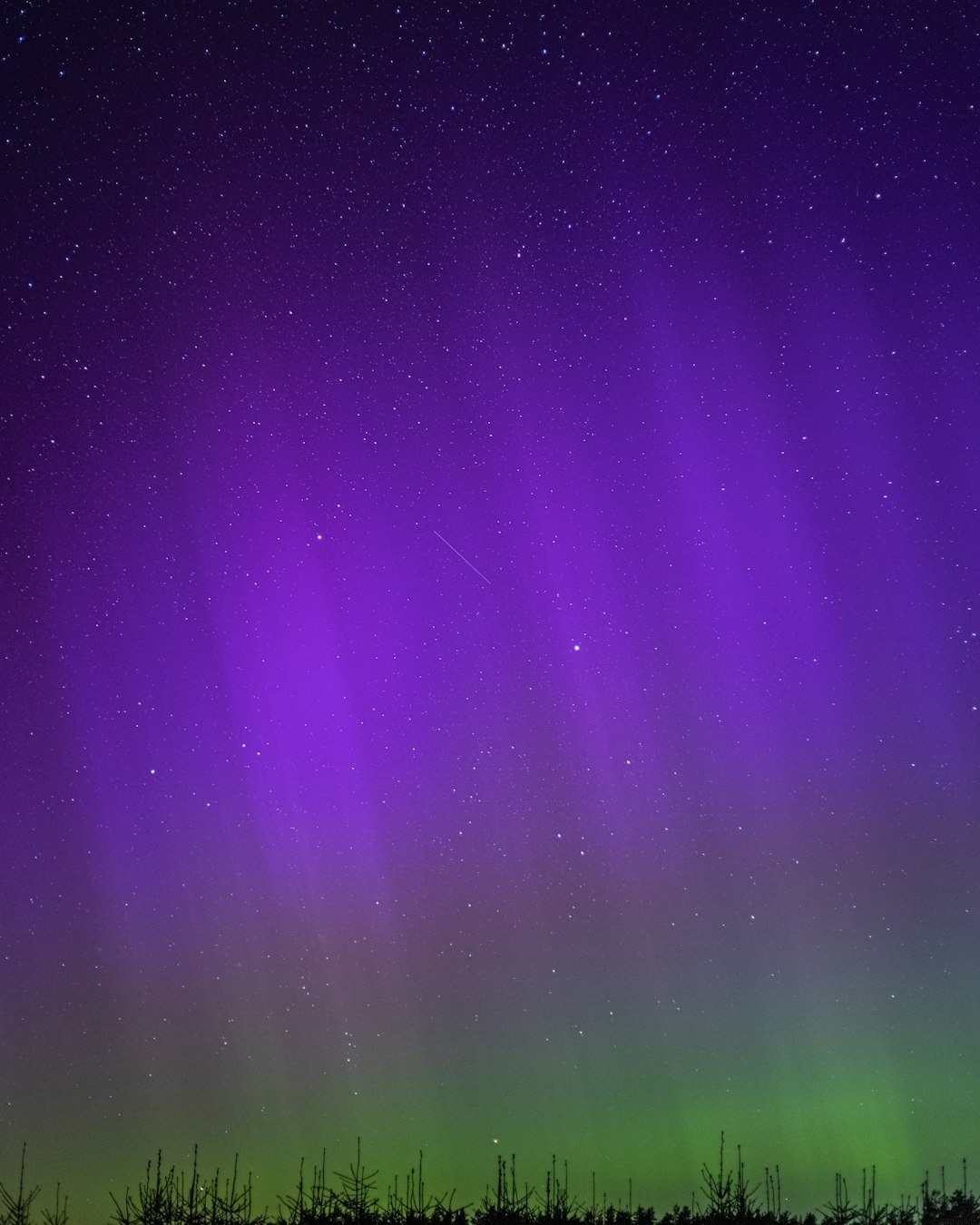
Tracing the Lyrids Back 2,700 Years (Image Credits: Unsplash)
The Lyrid meteor shower graces the spring skies each year, drawing enthusiasts eager for fleeting streaks of light. In 2026, the display activates now through late April, offering a reliable chance to witness cosmic debris igniting in Earth’s atmosphere.[1][2] With favorable moon conditions enhancing visibility this week, observers across the Northern Hemisphere stand ready for the climax on April 22.
Tracing the Lyrids Back 2,700 Years
Records of the Lyrids extend to 687 B.C., when ancient Chinese astronomers noted stars falling like rain.[1] This makes the shower one of the oldest documented celestial events, observed across cultures from Korea to Virginia.[2]
The meteors stem from dust and particles shed by Comet C/1861 G1 Thatcher, a periodic visitor with a 415-year orbit around the sun. Discovered in 1861 by amateur astronomer A.E. Thatcher, the comet last approached the sun closely that year and will not return until long after our time. Fragments from its trail vaporize high in the atmosphere, creating the swift, bright trails characteristic of Lyrids.[1]
Though reliable at 10 to 20 meteors per hour, the Lyrids occasionally surge to 100, a pattern tied to planetary influences on the debris stream every few decades. NASA meteor expert Bill Cooke highlighted their antiquity: “The Lyrids are one of the oldest recorded showers, with observations going back to 687 B.C.”[1]
Pinpointing the 2026 Peak Window
The shower runs from April 15 to 29, but activity intensifies toward the peak late on April 21 into early April 22.[2] Expect the zenithal hourly rate around 18 under ideal skies, translating to 10-20 visible shooting stars per hour for patient watchers.[1]
A waxing crescent moon, about 27 to 40 percent illuminated, sets shortly after midnight, yielding dark conditions prime for meteor spotting until dawn.[3] This alignment favors the predawn hours on April 22, when the radiant climbs highest.
Forecasts predict steady performance without major outbursts this year, though fireballs – brilliant bursts rivaling Venus – remain possible highlights.[2]
Navigating to the Lyra Radiant
Meteors seem to radiate from a point near brilliant Vega, the fifth-brightest star, in the constellation Lyra the Harp. Vega rises in the northeast around 9 or 10 p.m. local time, gaining altitude through the night.[4]
Do not fixate solely on the radiant; scan the entire dome overhead, as trails can arc anywhere. In the Northern Hemisphere, the setup excels, with the point soaring high by dawn. Southern observers may catch fewer, as Lyra stays lower.[2]
Proven Tactics for Clear Sights
Secure a remote site far from city glow to combat light pollution – national parks or rural fields work best. Allow 30 minutes for your eyes to dark-adapt, then recline with a wide sky view.[1] No binoculars or telescopes aid naked-eye detection; equipment narrows your field.
Patience pays off, as Lyrids streak fast without persistent trains in most cases. Dress warmly, bring blankets, and avoid screens to preserve night vision. Clear weather across the U.S. Southwest, Plains, and Midwest promises strong prospects this peak.[5]
Here are key preparation steps:
- Check local forecasts for cloud cover and arrive post-sunset.
- Position facing east, avoiding trees or hills blocking the horizon.
- Report bright fireballs to the American Meteor Society for science contributions.
- Pair with star apps to confirm Vega amid spring constellations.
- Watch solo or in small groups to minimize distractions.
Key Takeaways
- Target after midnight April 22 for darkest skies and highest radiant.
- Expect 10-20 meteors per hour from Comet Thatcher’s ancient trail.
- Prioritize dark locations; let eyes adjust for the full magic.
The Lyrids remind us of the sky’s enduring wonders, connecting modern viewers to ancient stargazers. This 2026 edition invites all to step outside and reclaim a slice of the cosmos. What do you think about this year’s show? Tell us in the comments.