
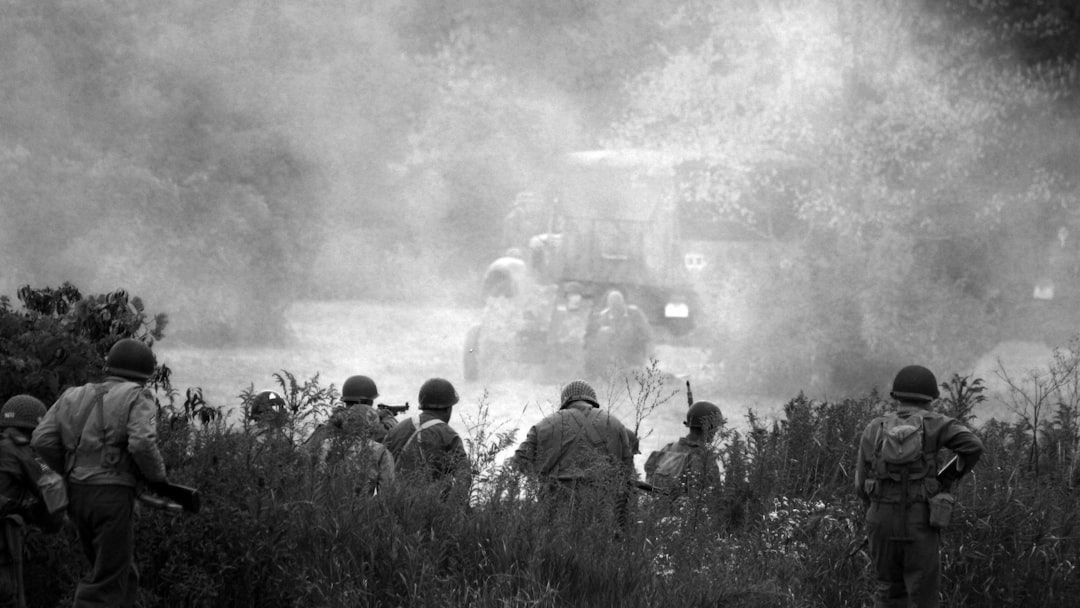

Few units in American military history have been as strange, creative, or quietly consequential as the 23rd Headquarters Special Troops. They didn’t storm beaches or dogfight over Europe. Instead, they inflated rubber tanks, blasted prerecorded battlefield sounds into the night, and impersonated entire divisions they didn’t have. For decades, almost no one knew they existed.
Their story sat sealed in classified archives for more than fifty years before the wider public had any idea what these men had actually done. What follows is their story, told in ten chapters.
A Unit Unlike Any Other: Origins of the Ghost Army
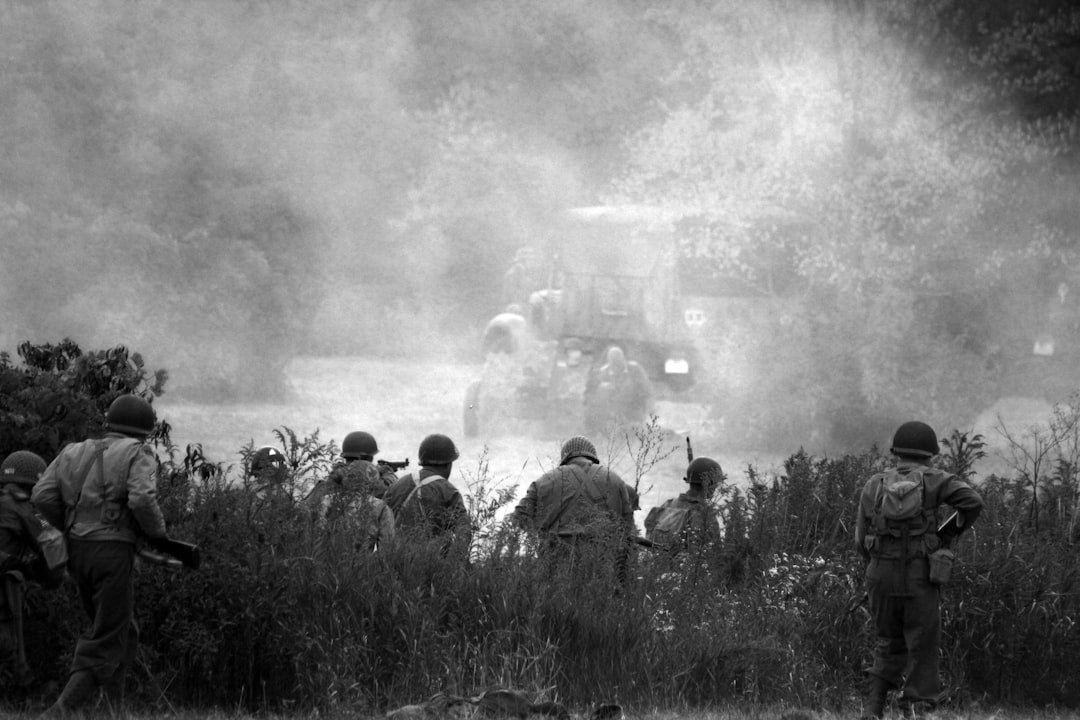
Activated on January 20, 1944, the 23rd Headquarters Special Troops, known as the “Ghost Army,” was the first mobile, multimedia, tactical deception unit in U.S. Army history. The concept was born in London, where American military planners recognized that illusion could serve as a legitimate weapon of war. The brainchild of Colonel Billy Harris and Major Ralph Ingersoll, both American military planners based in London, the unit consisted of a carefully selected group of artists, engineers, professional soldiers, and draftees.
The unit was inspired by the British troops who fought Erwin Rommel in Egypt in fall 1942. To trick the Germans, the British disguised tanks, weapons and supplies as trucks, masking the army’s progress and convincing the enemy that the attack would come from the south, not the north, two or three days later than actually planned. That success gave the Americans confidence that deception at scale could work. The 23rd Headquarters Special Troops was activated by the War Department through AGF’s Second Army on 20 January 1944. It assembled its units, trained quickly and prepared for overseas movement at Camp Forrest, Tennessee.
Who Were These Men? Artists, Architects, and Advertisers in Uniform
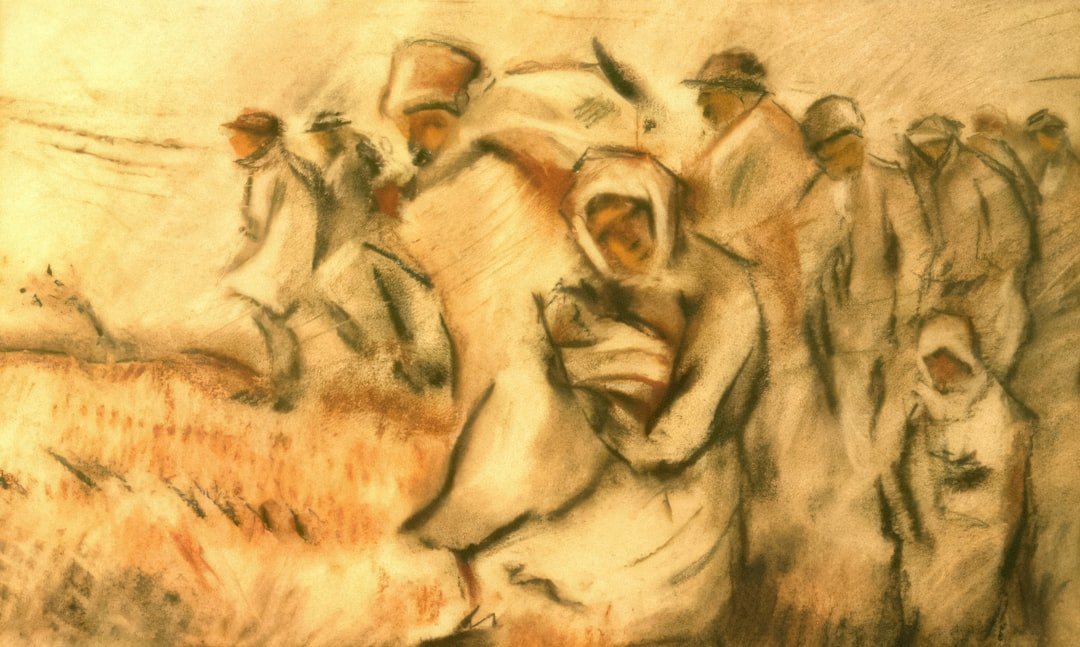
Many Ghost Army soldiers were recruited from art schools, advertising agencies and other occupations that involved creative thinking. In civilian life, ghost soldiers had been artists, architects, actors, set designers, engineers and lawyers. The Army wasn’t looking for typical fighters. It was looking for people who understood illusion, scale, and the art of making something look real from a distance.
Many West Point graduates and former Army Specialized Training Program participants were assigned to the 23rd, and it was said to have one of the highest IQs in the Army with an average of 119. Among the most recognizable names to come through its ranks were future fashion designer Bill Blass, abstract painter Ellsworth Kelly, and photographer Art Kane. Their unit became an incubator for young artists who sketched and painted their way through Europe. Several of these soldier-artists went on to have a major impact on art in the postwar United States.
The Inflatable Army: Rubber Tanks and Dummy Airfields
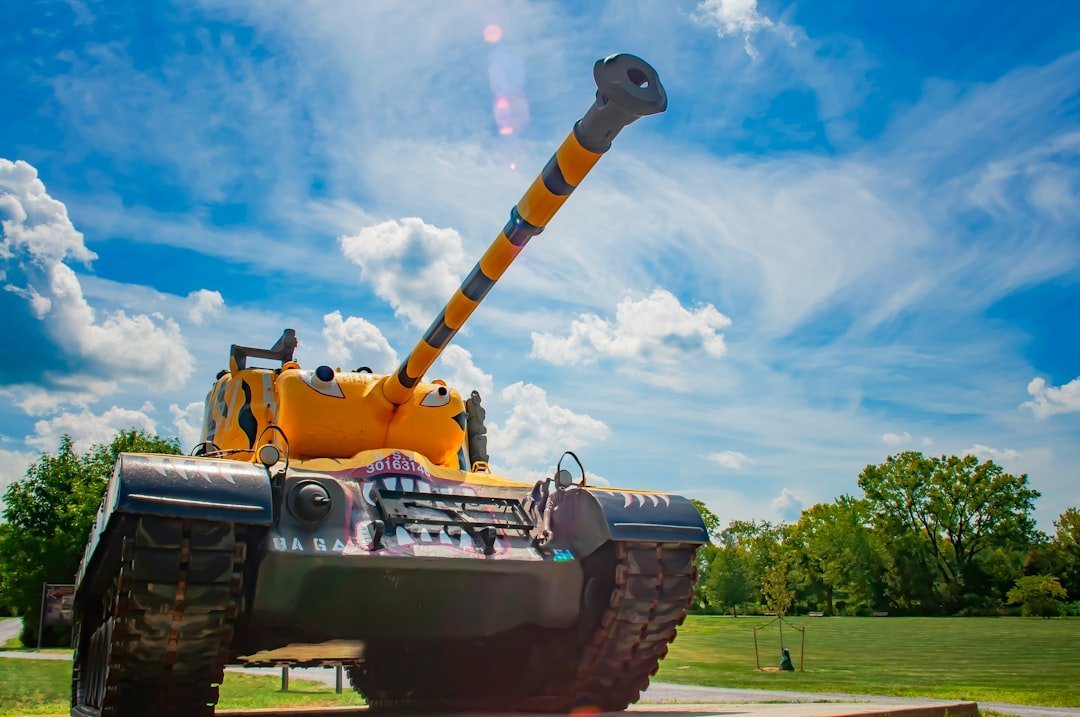
The visual deception arm of the Ghost Army was the 603rd Camouflage Engineers. It was equipped with inflatable tanks, cannons, jeeps, trucks, and airplanes that the men would inflate with air compressors and then camouflage imperfectly so that enemy aerial reconnaissance could see them. They could create dummy airfields, troop bivouacs, motor pools, artillery batteries, and tank formations in a few hours.
An inflatable M4 Sherman tank decoy weighed just 93 pounds. From the air, these were indistinguishable from 30-ton real tanks. The deception required precision beyond just placing rubber shapes in a field. An inflatable tank might look real enough on the ground from a distance, but aerial reconnaissance could reveal a conspicuous lack of tank tracks, so a bulldozer was used to make fake tracks around the fake tanks. Every detail mattered. There was one cardinal rule about working with inflatables: never carry one across a road or in any other place where you could be seen. Obviously, two men carrying a 40-ton tank would be a dead giveaway.
The Sound Engineers: Battlefield Audio That Carried 15 Miles
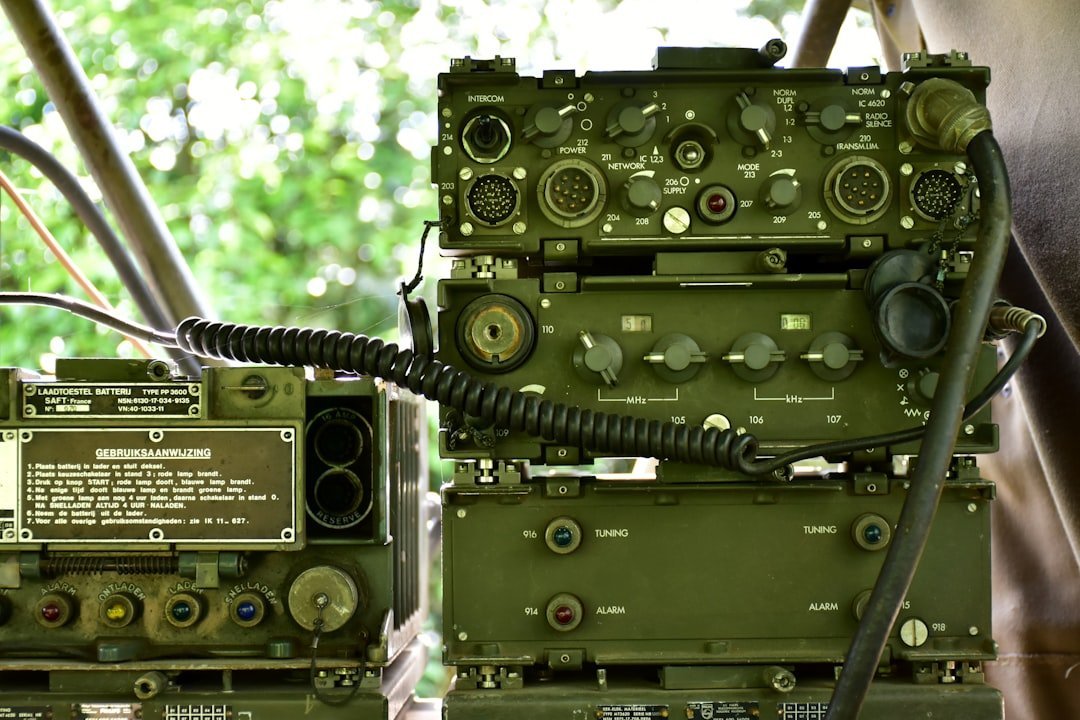
The 3132 Signal Service Company Special handled sonic deception. Aided by engineers from Bell Labs, a team from the 3132 went to Fort Knox to record sounds of armored and infantry units onto a series of sound effects records that they brought to Europe. For each deception, sounds could be “mixed” to match the scenario they wanted the enemy to believe.
This program was recorded on state-of-the-art wire recorders, the predecessor to the tape recorder, and then played back with powerful amplifiers and speakers mounted on halftracks. These sounds were audible 15 miles away. The effect was disorienting and completely convincing in darkness. Soldiers would project the sound of tanks on the nights that they moved through villages in France, Belgium and Germany, and local civilians genuinely believed they had witnessed armored columns passing through. It was theater without a stage.
Fake Radio Traffic and the Art of the Morse Code “Fingerprint”

A signal company concocted fake radio traffic; the radio operators were so skilled that they could mimic the Morse code “fist,” the sending style of operators in specific army units, to make fake dispatches sound authentic. Every radio operator had a recognizable personal rhythm in how they tapped out Morse code, almost like a signature. Matching that rhythm required intense study and practice.
Per the declassified official unit history held at the National Archives, the 23rd employed four distinct types of deception, layered on top of each other so that no matter how the Germans gathered intelligence, whether through aerial reconnaissance, radio intercepts, front-line observation, or reports from local civilians, they encountered the same consistent fiction. The layering was the key. Each individual element could potentially be detected as fake. Layered together, visual, sonic, radio, and human, they created a deception so consistent across every intelligence channel that questioning any single element meant questioning all of them. The fiction became self-reinforcing.
On the Ground in Europe: Impersonators Behind Enemy Lines
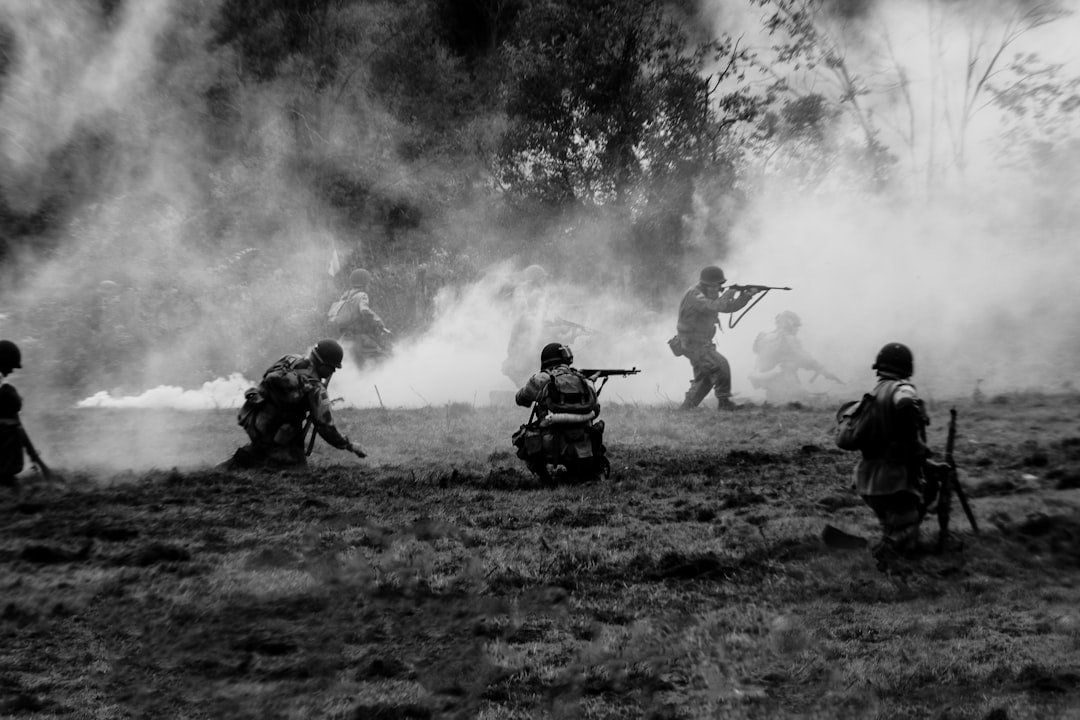
Each deception required that the Ghost Army impersonate a different and vastly larger U.S. unit. Like actors in a repertory theater, they would mount an ever-changing multimedia show tailored to each operation. The men immersed themselves in their roles, even hanging out at local cafes and spinning their counterfeit stories for spies who might lurk in the shadows.
A fourth layer of deception was supplied by the unit’s combat engineer company, which would don the insignias of other military units to confuse the Germans or to mislead potential spies in nearby towns. The risk here was very real. If the Nazis found out that members of the Ghost Army were playing them for fools, they were likely to retaliate brutally. Operating this close to the front, often with almost no firepower to speak of, the men carried out their performances knowing exactly what discovery would mean.
Operation Viersen: Their Greatest Performance
Per the Army’s official history, the 23rd’s “last deceptive effort of the war was fortunately its best.” Dubbed Operation Viersen, the March 1945 mission found the Ghost Army impersonating two entire divisions, around 40,000 soldiers, in an attempt to convince the enemy the U.S. Ninth Army would cross the Rhine River ten miles south of its actual crossing point.
The men inflated more than 600 dummy vehicles, transmitted false radio dispatches and blared simulated sounds of soldiers building pontoon boats, enabling the Ninth to enter Germany with little resistance. The operation was a complete success. The Germans moved the bulk of their defenses across the river from the suspected location of the two divisions, shelling an army that didn’t exist. When the Nazis were busy chasing shadows, they weren’t engaging the real Allied combat divisions. It was the Ghost Army’s masterpiece.
The Human Cost: Danger Was Never Far Away
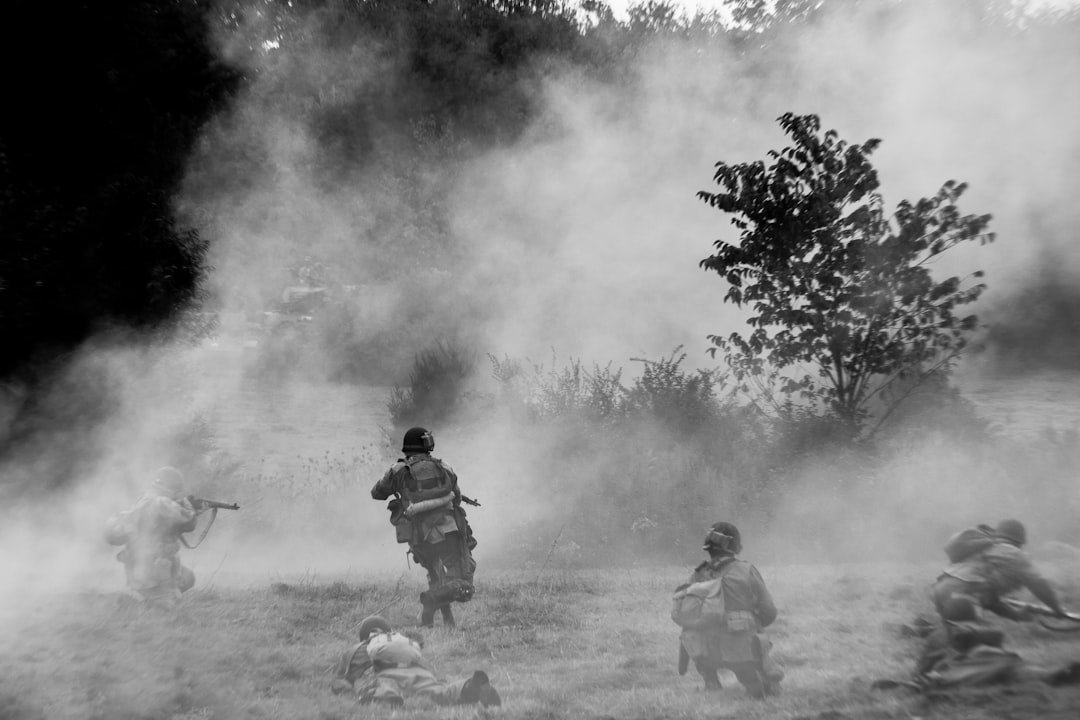
The 23rd Headquarters Special Troops staged more than 20 deception operations in France, Belgium, Luxembourg and Germany, often operating dangerously close to the front lines. Despite having almost no heavy weapons, the men were regularly placed in exposed positions where a German breakthrough would have meant catastrophe. Three Ghost Army soldiers were killed and dozens wounded carrying out their missions.
Consisting of an authorized strength of 82 officers and 1,023 men under the command of Colonel Harry L. Reeder, this unique and top-secret unit was capable of simulating two whole divisions, approximately 30,000 men. The ratio of risk to actual firepower was extraordinary. Armed with nothing heavier than .50-caliber machine guns, the 23rd took part in 22 large-scale deceptions in Europe from Normandy to the Rhine River. Small numbers, enormous stakes.
Decades of Silence: A Secret Kept for Over Fifty Years
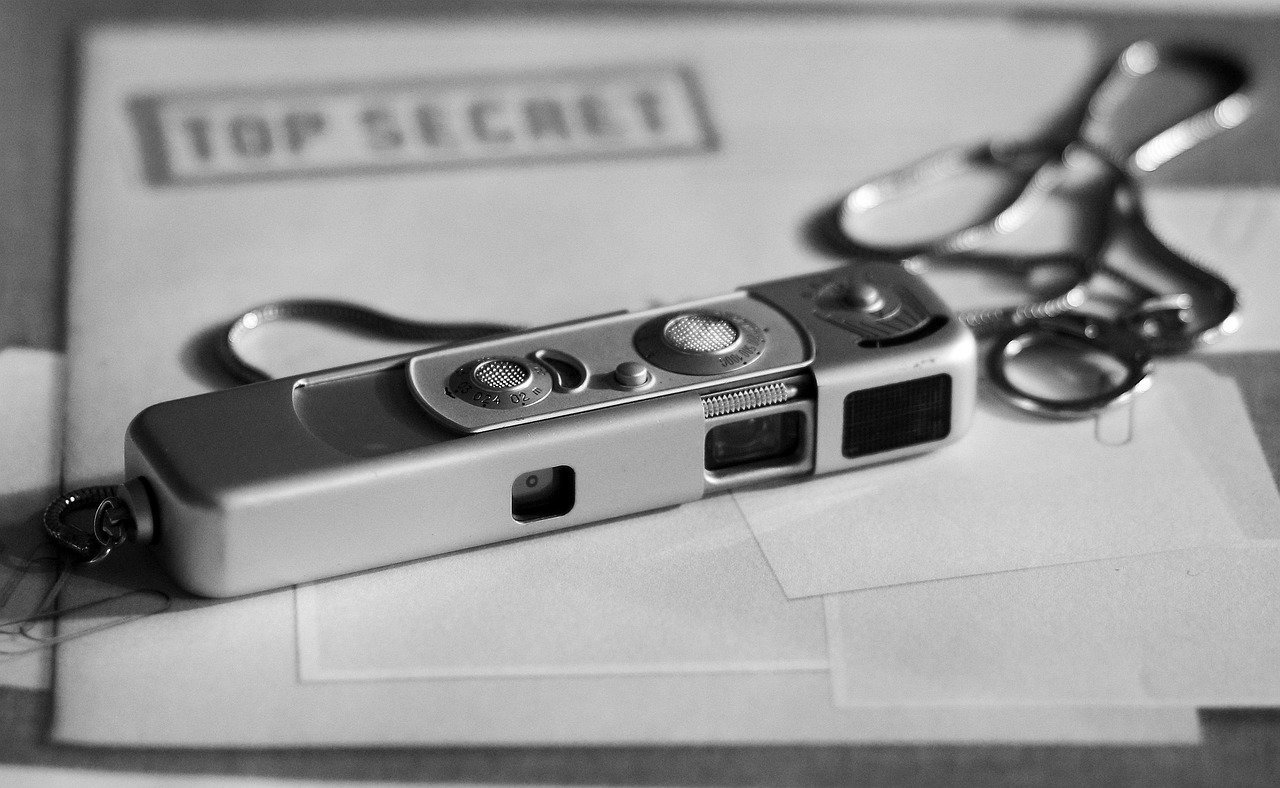
Their story was kept a secret for more than 50 years after the war, until it was declassified in 1996. For most veterans, that meant carrying the weight of their wartime service without ever being able to explain what they had actually done. Their contributions remained classified for decades, with many veterans taking the secret to their graves.
Following the war, the unit’s soldiers were sworn to secrecy, records were classified, and equipment packed away. Except for a newspaper article right after the war, no one spoke publicly about the deceivers until a 1985 Smithsonian article. Families were left in the dark for generations. The story of the Ghost Army was kept secret for more than fifty years after World War II. Since their exploits were kept under wraps, accounts of actions they took part in often erase their role entirely.
Recognition at Last: The Congressional Gold Medal and a Living Legacy
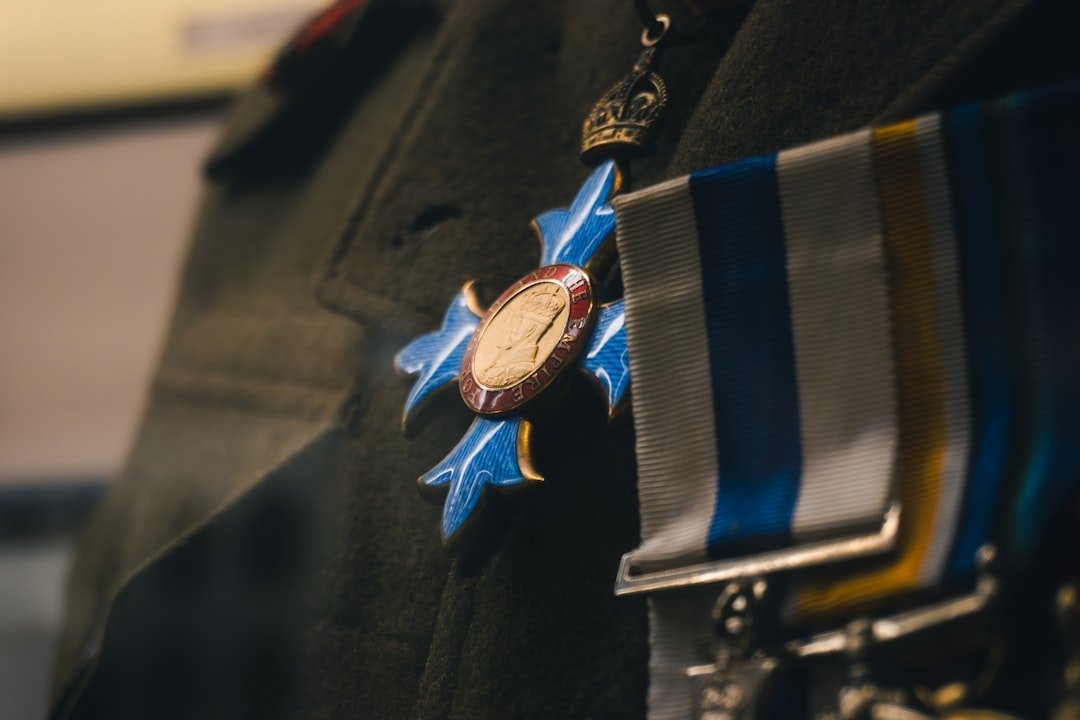
In February 2022, President Biden signed legislation awarding the Congressional Gold Medal, the highest civilian honor Congress can bestow, to the soldiers of the Ghost Army. The actual ceremony took place on March 21, 2024, at the U.S. Capitol. It had taken nearly eighty years for the unit to receive formal public recognition. In a ceremony at the U.S. Capitol in March of 2024, three of the last surviving members of the Ghost Army received the Congressional Gold Medal. Among them were 100-year-old Bernard Bluestein from Illinois and 100-year-old Seymour Nussenbaum from New Jersey. Both men were part of the 23rd Headquarters Special Troops, a secretive World War II unit known for its creative use of deception to mislead German forces.
In total, the 23rd saved the lives of an estimated 15,000 to 30,000 American servicemen. That figure comes from U.S. military estimates and reflects the cumulative effect of more than two dozen battlefield deceptions carried out over the final year of the war in Europe. U.S. Secretary of the Army Christine Wormuth said that traces of the Ghost Army’s approach can still be found in military deception operations today. “Even though technology has changed quite a bit since 1944, our modern techniques build on a lot of what the Ghost Army did, and we are still learning from your legacy,” she said.
There’s something quietly remarkable about the fact that a thousand artists, architects, and sound engineers may have done more to protect Allied soldiers than many conventional combat units many times their size. They were armed with rubber, imagination, and nerve. They won no pitched battles and fired no artillery. What they did instead was understand a fundamental truth about warfare: the most powerful weapon is often what the enemy believes to be true, rather than what actually exists.