


Deep in the Amazon basin, where rivers split and the canopy closes overhead for hundreds of unbroken miles, something in the human genetic record simply doesn’t add up. Researchers examining the DNA of certain Amazonian peoples have encountered a signal they can’t fully explain – a strand of ancestry that points toward the other side of the planet, toward island populations of the Pacific, with no obvious migration route connecting the two. It is one of the most puzzling findings in modern genetic anthropology.
This isn’t fringe science or speculation. Peer-reviewed studies published in journals including Nature and Science have confirmed the anomaly. The more scientists look, the more questions appear. What follows is what we actually know.
The Discovery That Changed the Genetic Map
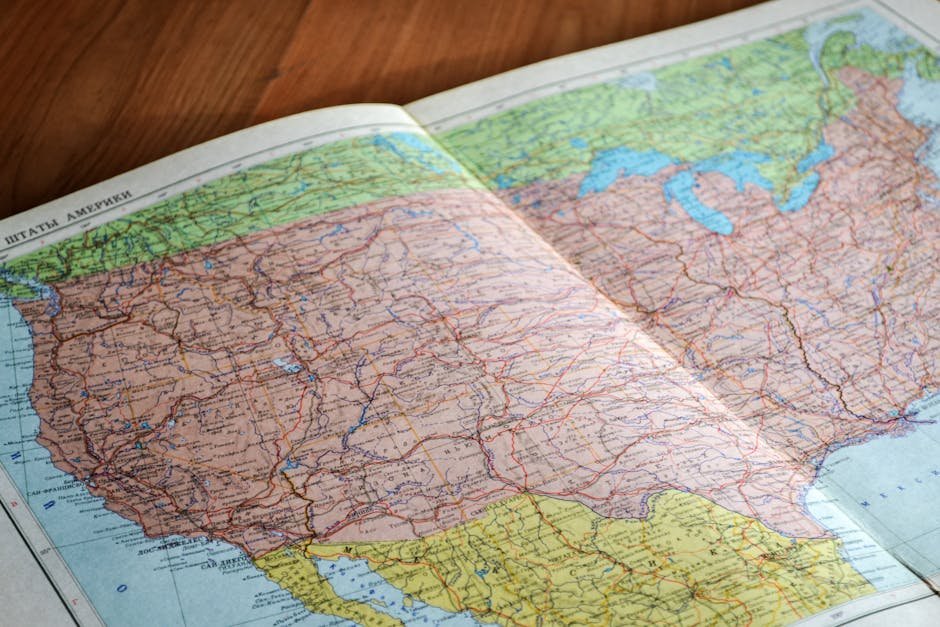
Scientists have discovered a previously unknown source of ancestry for some native peoples in Brazil, suggesting a new wrinkle in the story of the settlement of the Americas. The finding came out of a lab at Harvard Medical School, where researcher Pontus Skoglund was sorting through genomic data from Central and South American tribes.
While sifting through genomes from cultures in Central and South America, Skoglund noticed that the Suruí and Karitiana people of the Amazon had stronger ties to indigenous groups in Australasia – Australians, New Guineans and Andaman Islanders – than to Eurasians. No one expected that. These are communities separated by entire oceans and continents.
The finding does not change the broad outlines of what scientists believe: that the Americas were settled by people who crossed a now-submerged land bridge from Siberia to North America more than 15,000 years ago, then made their way south. What it does is complicate that story in a way that has yet to be fully resolved.
Who Are the Suruí and Karitiana?

The Tupí-speaking Suruí and Karitiana and the Ge-speaking Xavante of the Amazon had a genetic ancestor more closely related to indigenous Australasians than to any other present-day population. These are real, living indigenous communities in Brazil, not theoretical populations reconstructed from ancient bones alone.
The genetic origins of the secluded Amazon tribe, the Xavante, present a mysterious narrative that challenges conventional understanding. Academic discourse surrounding the settlement of the Americas persists, with questions lingering about the identities and migration patterns of early settlers.
The genetic makeup of the Xavante suggests a South American settlement predating 18,000 years ago, coinciding with significant climatic shifts during the Younger Dryas period. That would place their origins at one of the most turbulent climate moments in late prehistoric human history.
The Ghost Population Known Only as “Population Y”

This second group, dubbed “Population Y,” had its roots in an Asian population that no longer exists, but which also left a genetic fingerprint in modern native peoples of Australia and New Guinea, said David Reich of Harvard Medical School. The name itself carries a kind of quiet mystery.
The researchers named this hypothetical second group “Population Y” for ypykuéra, or “ancestor” in Tupi, a language spoken by the Suruí and Karitiana. That word choice matters. The communities carrying this DNA already had a name for ancestral origins long before geneticists arrived.
This signal, also dubbed as “Population Y,” has been more recently linked to a deep East Asian population, which can be associated with the Tianyuan man, and which is ancestral to modern East Asians. The deep Tianyuan and East Asian lineages form a sister branch to Andamanese and Australasian populations, with all of them being branches of Ancient East Eurasians.
A Signal Unlike Any Other in the Americas
This ancestor doesn’t appear to have left measurable traces in other Native American groups in South, Central or North America. The genetic markers from this ancestor don’t match any population known to have contributed ancestry to Native Americans. That’s what makes this finding so difficult to slot into existing models.
The research also discovered clues of a puzzling Australasian genetic signal in the 10,400-year-old Lagoa Santa remains from Brazil, revealing a previously unknown group of early South Americans – but the Australasian link left no genetic trace in North America. The signal appears, geographically, as if it arrived directly – bypassing the entire northern continent.
Researchers are unable to explain the origin of this Australasian DNA or how it ended up in only a few of the Lagoa Santa people. “The fact that the genomic signature of Australasia has been present for 10,400 years in Brazil but is absent in all the genomes tested to date, which are as old or older, and found farther north, is a challenge,” they said.
How Much of This Ancestry Actually Remains?

About 2 percent of the ancestry of Amazonians today comes from this Australasian lineage that’s not present in the same way elsewhere in the Americas, said Reich. That number sounds small, but in genetics, even a few percentage points of shared ancestry from a distinct lineage represents a significant migration event.
If Population Y were 100 percent Australasian, that would indeed mean they contributed 2 percent of the DNA of today’s Amazonians. But if Population Y mixed with other groups such as the First Americans before they reached the Americas, the amount of DNA they contributed to today’s Amazonians could be much higher – up to 85 percent.
To answer that question, researchers would need to sample DNA from the remains of a person who belonged to Population Y. Such DNA hasn’t been obtained yet. That gap remains open as of 2026.
What the Bones Revealed Before the Genetics Did

Comparative morphological studies of the earliest human skeletons of the New World have shown that, whereas late prehistoric, recent, and present Native Americans tend to exhibit a cranial morphology similar to late and modern Northern Asians, the earliest South Americans tend to be more similar to present Australians, Melanesians, and Sub-Saharan Africans. Physical anthropologists had spotted this disconnect decades before genome sequencing was possible.
The largest sample of early American skulls ever studied – 81 skulls of the Lagoa Santa region – was compared with worldwide datasets representing global morphological variation in humans, through three different multivariate analyses. The results kept pointing in an unexpected direction.
Among the 15 individuals whose DNA was analyzed, three of the Lagoa Santa five were found to have some genetic material from Australasia. The researchers are unable to explain the origin of this Australasian DNA or how it ended up in only a few of the Lagoa Santa people. The bones asked the question. The genes couldn’t fully answer it.
The Pacific Coastal Route Theory
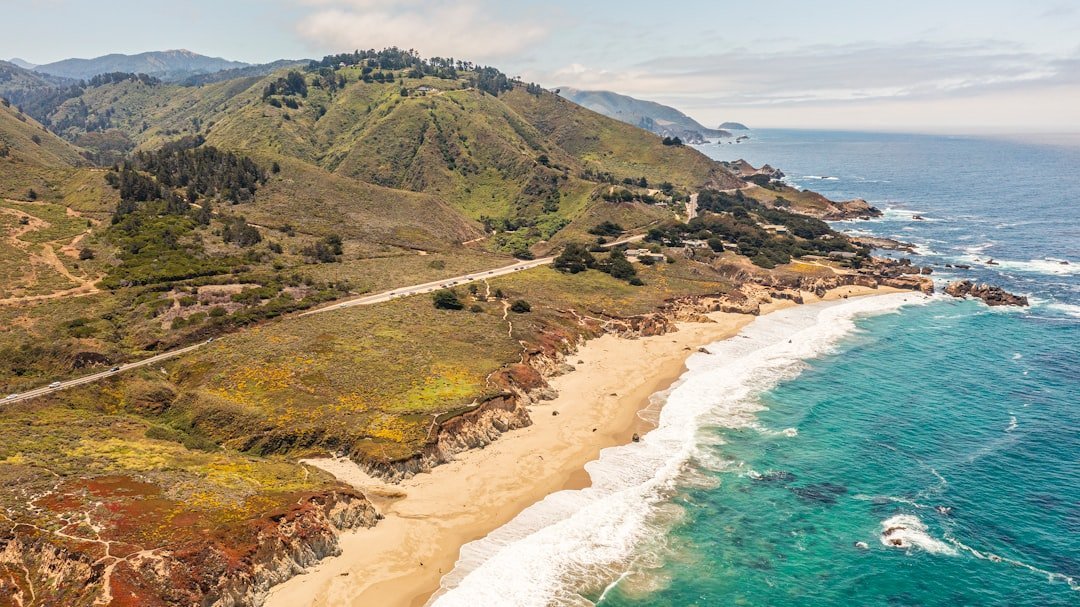
Researchers demonstrated that the Australasian genetic signal is present in the Pacific coast region, indicating a more widespread signal distribution within South America and implicating an ancient contact between Pacific and Amazonian dwellers. The Australasian population contribution was introduced in South America through the Pacific coastal route before the formation of the Amazonian branch, likely in the ancient coastal Pacific/Amazonian population.
According to a 2021 study, indigenous Pacific Coast and Amazonian populations share an ancestral component known as “Y ancestry,” which is believed to be related to ancestral East Asians or Australasians. This ancestry existed prior to the separation of the Pacific and Amazonian branches and likely arrived through the Pacific coastal route.
These findings suggest that the Y-population contribution was introduced before the formation of the Amazonian branch, likely in the ancestors of Pacific coastal/Amazonian populations. In other words, this lineage didn’t enter the Amazon by chance. It shaped what the Amazon became.
The Uncontacted Tribes Still Living in the Amazon Today

In 2025, Survival International published the first comprehensive report on uncontacted peoples worldwide. It found robust evidence of 196 uncontacted peoples living in ten countries across South America, Asia and the Pacific. A majority of uncontacted peoples live in South America, particularly Brazil, where Survival has found evidence of 124 groups.
Google Earth and other high-flying technologies allow us to view the deepest reaches of the Amazon River Basin, an area that remains home to indigenous people who live as their ancestors have for thousands of years. They hunt, gather and grow their own food in the severe terrain at the Amazon headwaters. Some of these communities may carry genetic lineages that science hasn’t yet sampled.
Survival International predicted in their 2025 report that almost half of the world’s 196 uncontacted peoples could be wiped out within 10 years. The report states that the threats mostly come from extractive industries, such as logging, mining, and oil and gas extraction. Whatever genetic information remains locked in these isolated communities may disappear before it can ever be studied.
What Makes Genetic Sampling So Difficult
Other analyses haven’t looked at Amazonian populations in depth, and genetic samples are hard to come by. This is not simply a logistical problem. It’s an ethical one. Indigenous communities have every right to refuse participation in genetic studies, and many do.
Because the tribes are so isolated, contact with the outside world can be deadly. When missionaries contacted the Zo’e tribe in 1987, 45 Indians died of common diseases that they had never encountered and thus had no tolerance for, including the flu. The risk of contact isn’t abstract – it’s historically documented and devastating.
Isolated indigenous societies who actively avoid sustained peaceful contact with the outside world are critically endangered. “Tanaru,” the lone surviving man of his tribe for at least 35 years, died in Southwest Amazonia, marking the latest cultural extinction event in a long history of massacres, enslavement, and epidemics. Every such loss is permanent.
What Remains Unresolved – and Why It Matters
In the 2018 paper that reported the DNA from Lagoa Santa, Victor Moreno-Mayar and coworkers suggested that 3 percent of the ancestry of these groups came from an “Australasian-like” population related to Andaman Island peoples. Multiple independent studies now confirm the signal is real. The debate is only about its origin and route.
Because the groups have about as much in common with Australians as they do with New Guineans, the researchers think that they all share a common ancestor that lived tens of thousands of years ago in Asia but that doesn’t otherwise persist today. That vanished population is the true “bloodline zero” – a branch of humanity that left its mark in the Amazon and then apparently disappeared from the record everywhere else.
One trope of ancient DNA research is the “previously-unknown lineage,” and there continue to be new ones identified. The Amazon’s contribution to that conversation is among the most geographically startling. A people on one edge of the world carrying the genomic echo of another edge, separated by no known bridge, and yet connected at some point in deep time that we can barely reach.
The Amazon has always been understood as a cradle of biological diversity. What the genetics are now suggesting is that it may also be one of the most unexpected archives of human migratory history on earth. The mystery of Population Y isn’t solved. It’s barely begun.