

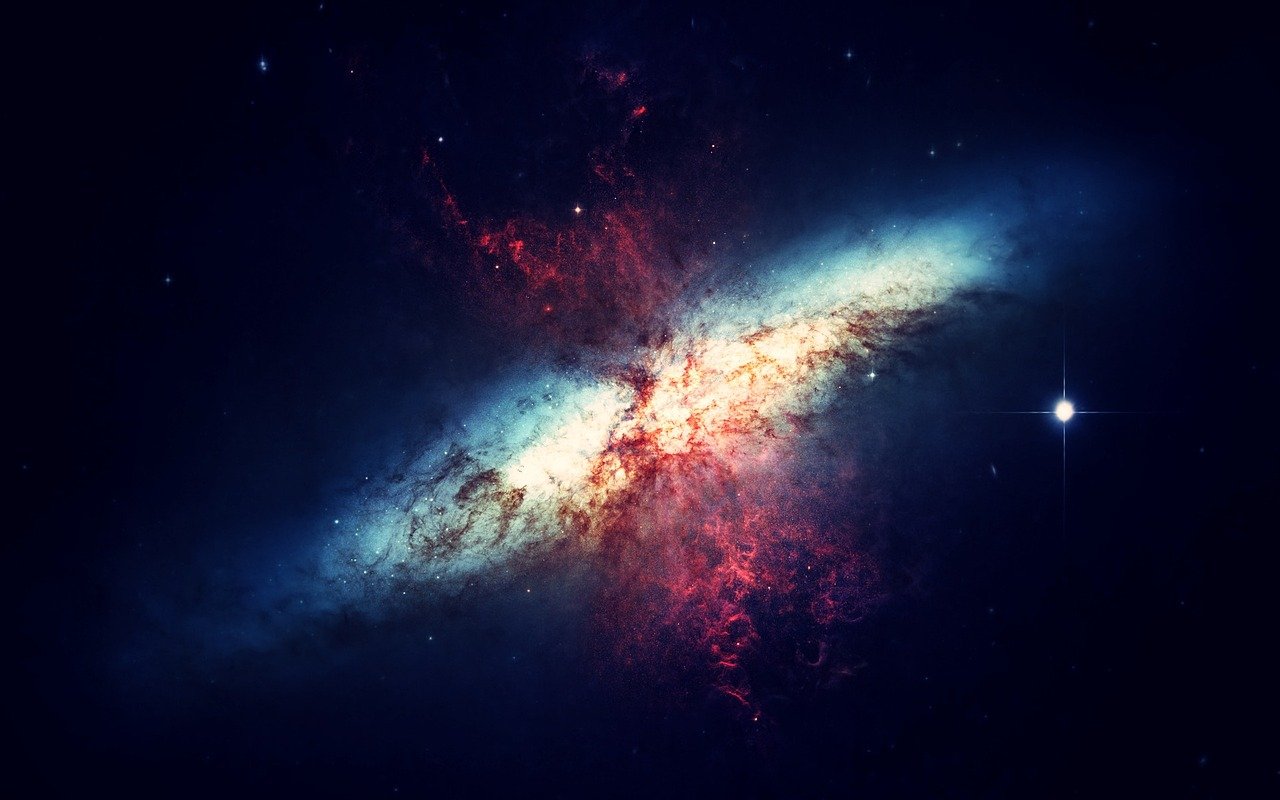
A Sleeping Giant Stirs to Life (Image Credits: Pixabay)
Astronomers witnessed a supermassive black hole in the distant galaxy J1007+3540 spring back to life after nearly a century of cosmic silence.[1][2] The event unleashed powerful jets of magnetized plasma that stretched across almost one million light-years, reshaping the surrounding space in a display researchers compared to a massive volcanic eruption. This rare observation highlighted the intermittent nature of black hole activity in giant radio galaxies.
A Sleeping Giant Stirs to Life
Researchers detected the black hole’s revival through detailed radio observations that revealed a compact, bright inner jet emerging from its core. This marked the end of a dormancy period lasting about 100 million years. The sudden outburst surprised the team, as it signaled the restart of powerful emissions long absent from the galaxy’s spectrum.[1]
Lead researcher Shobha Kumari of Midnapore City College in India captured the spectacle’s scale. “It’s like watching a cosmic volcano erupt again after ages of calm – except this one is big enough to carve out structures stretching nearly a million light-years across space,” she stated. The discovery relied on data from the Low Frequency Array in the Netherlands and India’s upgraded Giant Metrewave Radio Telescope. These instruments uncovered layers of activity hidden in the radio signals.
Cluster Pressure Shapes the Eruption
J1007+3540 resides in a massive galaxy cluster filled with scorching hot gas that exerts immense external pressure. This environment bent and compressed the newly launched jets, creating distorted lobes and trails of plasma. The northern lobe appeared squeezed, with a curved backflow indicating plasma shoved sideways by the relentless force.[2]
Co-researcher Dr. Sabyasachi Pal from the same institution emphasized the interaction’s clarity. “J1007+3540 is one of the clearest and most spectacular examples of episodic AGN with jet-cluster interaction, where the surrounding hot gas bends, compresses, and distorts the jets,” he noted. Ultra-steep radio spectra in compressed regions pointed to ancient particles that had aged and lost energy under the cluster’s influence. A faint, elongated tail extended southwest, tracing plasma dragged through the cluster over millions of years.
Signs of Cyclical Cosmic Outbursts
The galaxy displayed clear evidence of multiple eruption cycles, with faded outer lobes encasing the fresh inner jet. Older plasma cocoons surrounded the new activity, testifying to the black hole’s history of switching between frenzy and quiet. This layering confirmed the episodic behavior of the active galactic nucleus at the core.[1]
Shobha Kumari further explained the pattern. “This dramatic layering of young jets inside older, exhausted lobes is the signature of an episodic AGN – a galaxy whose central engine keeps turning on and off over cosmic timescales.” The system’s structure offered a snapshot of how black holes cycle through phases, influenced by gas inflows and environmental feedback.
- Compact bright inner jet: Indicates recent reactivation.
- Faded plasma lobes: Remnants of prior eruptions, distorted by cluster gas.
- Diffuse emission tail: Millions of years old, showing plasma transport.
- Ultra-steep spectra: Evidence of aged, energy-depleted particles.
- Bent and compressed structures: Results of high-pressure cluster environment.
Probing the Mysteries of Galaxy Growth
The findings illuminated the tug-of-war between black hole outbursts and cluster dynamics in shaping radio galaxies. Observations like these revealed how jets evolve over millions of years and interact with hot intracluster medium. They also shed light on the duty cycles of active galactic nuclei, showing how frequently these engines flicker on and off.[2]
The international team, including Dr. Surajit Paul from Manipal Centre for Natural Sciences and Dr. Marek Jamrozy from Jagiellonian University, published their work in Monthly Notices of the Royal Astronomical Society. Future high-resolution studies promised deeper views into the jets’ propagation. Such events underscored the role of episodic activity in galaxy evolution and feedback processes.
- J1007+3540 exemplifies episodic black hole activity with multiple eruption cycles.
- Cluster pressure dramatically sculpts jet morphology and plasma distribution.
- New radio data from LOFAR and uGMRT provide unprecedented clarity on AGN restarts.
This cosmic revival in J1007+3540 reminded scientists of the universe’s dynamic undercurrents, where ancient giants can awaken to alter their realms profoundly. The interplay of power and pressure continues to drive galaxy formation across vast timescales. What do you think about this black hole’s comeback? Tell us in the comments.