

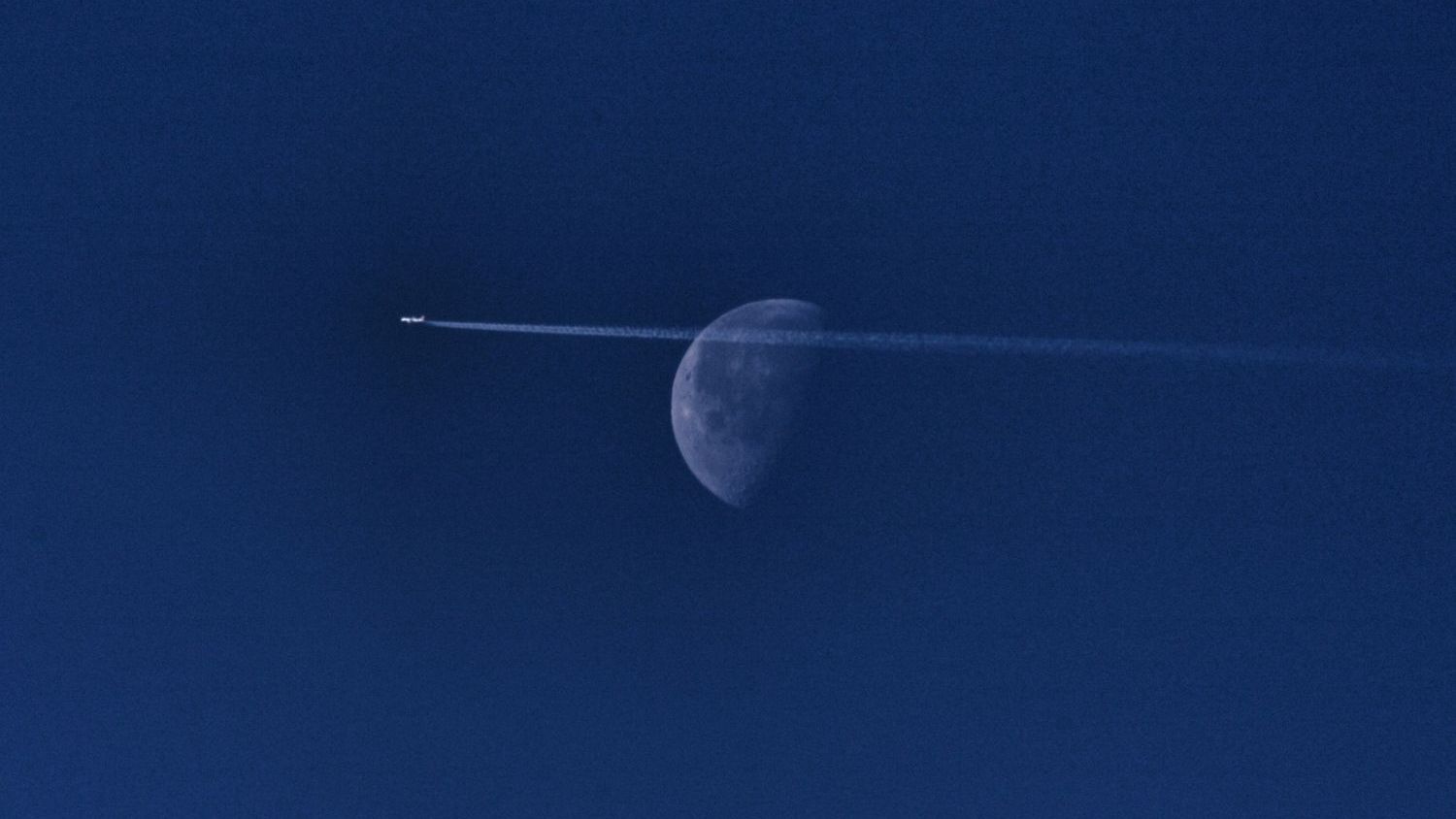
A Backyard Tracker’s Breakthrough (Image Credits: Unsplash)
A forgotten remnant from a SpaceX mission now poses an unintended reminder of the growing clutter in space, as it barrels toward the lunar surface. Amateur astronomer Bill Gray has calculated that the upper stage of a Falcon 9 rocket will strike the Moon on August 5, prompting questions about how launch providers manage their hardware in an era of renewed lunar exploration.[1][2] This event underscores the human stakes involved when orbital leftovers intersect with humanity’s expanding footprint beyond Earth.
A Backyard Tracker’s Breakthrough
Bill Gray, developer of the Project Pluto software used to monitor near-Earth objects, first identified the wayward rocket stage through meticulous observations. He accumulated over 1,000 data points by late February, confirming its trajectory with high confidence.[2] Working from his home setup, Gray published detailed orbital predictions that pinpointed the impending lunar encounter.
Gray noted the object’s path had involved several close approaches to both Earth and the Moon without prior collision. His tools, designed for asteroid and comet tracking, proved equally adept at following this human-made interloper. The discovery highlights how citizen scientists continue to fill gaps in professional surveillance of space traffic.[1]
Tracing the Booster’s Journey
The Falcon 9 upper stage, cataloged as 2025-010D, originated from a January 15, 2025, launch out of NASA’s Kennedy Space Center in Florida. That mission deployed two private lunar landers: Firefly Aerospace’s Blue Ghost Mission 1, dubbed Ghost Riders in the Sky, and Japan’s ispace HAKUTO-R M2 Resilience lander.[1] While Blue Ghost achieved a successful touchdown, Resilience ultimately failed during its descent.
Measuring 13.8 meters tall and 3.7 meters in diameter, the stage separated after payload delivery and entered a high Earth orbit. Unlike the mission’s fairing, which reentered Earth’s atmosphere, this booster lingered, gradually perturbed by gravitational influences until its path aligned with the Moon.[2] Continuous tracking since launch eliminated doubts about its identity.
Impact Details and Viewing Prospects
The collision is forecast for 2:44 a.m. ET on August 5, striking the Moon’s near side near the Einstein Crater at roughly 2.43 kilometers per second – about 5,400 mph, or seven times the speed of sound.[2] Without an atmosphere to slow it, the intact stage will excavate a small crater, though its exact size remains uncertain.
Observers in the eastern U.S., Canada, and parts of South America may glimpse the site, as the Moon will appear slightly more than half-illuminated. However, Gray cautioned that the flash would likely prove too faint for ground-based telescopes, even in sunlight on the lunar surface. Past attempts to spot similar events, like NASA’s 2009 LCROSS impact, yielded no visible effects from Earth.[1]
| Key Impact Parameters | Details |
|---|---|
| Date and Time | August 5, 2026, 2:44 a.m. ET |
| Location | Near Einstein Crater, near side |
| Speed | 2.43 km/s (5,400 mph) |
| Visibility | Low; faint flash expected |
Space Debris in the Lunar Age
Though this strike carries no immediate risks – distant from active landers or rovers – Gray emphasized its revelation of disposal shortcomings. “It doesn’t present any danger to anyone, though it does highlight a certain carelessness about how leftover space hardware is disposed of,” he observed.[1] With lunar traffic set to surge via NASA’s Artemis program and China’s outposts, such uncontrolled reentries could complicate operations.
Launch operators like SpaceX already prioritize first-stage recoveries, but upper stages bound for high orbits demand better planning. Options include expending extra fuel for solar disposal trajectories, avoiding Earth-Moon intersections for decades. Gray suggested this practice become standard as lunar bases near the south pole multiply.[2]
- Increased launches could amplify debris risks tenfold.
- Orbit adjustments for nearby craft remain precautionary.
- Scientific value lies in studying fresh crater formation.
As the August impact approaches, it serves as a timely caution for the space community. With more missions crowding cislunar space, the line between progress and litter grows thinner, urging operators to refine their end-of-life strategies before minor incidents escalate.