

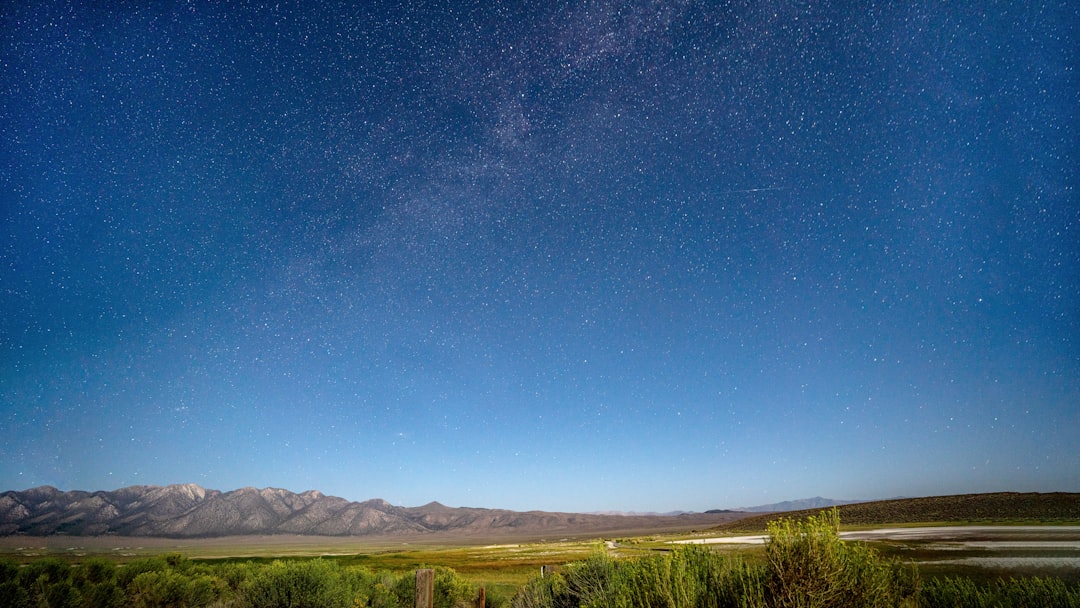
Ancient Lyrids Deliver Fiery Displays (Image Credits: Unsplash)
Mid-April brings clear opportunities for stargazers as the Lyrid meteor shower fills the sky with swift streaks of light. Bright planets dot the evening and pre-dawn horizons, creating striking alignments visible to the naked eye. This month offers a mix of reliable favorites like Venus and Jupiter alongside fleeting events such as lunar conjunctions.[1][2]
Ancient Lyrids Deliver Fiery Displays
One of the oldest recorded meteor showers graces the night sky right now, with activity ramping up through late April. The Lyrids, spawned by dust from Comet Thatcher, trace their history back over 2,700 years to ancient Chinese astronomers who described them as falling like rain.[3]
The shower runs from April 15 to 29, peaking late on April 22 into the early morning of April 23. Observers under dark skies can expect 10 to 20 meteors per hour, though occasional surges have pushed rates higher in past years. Bright fireballs and glowing trains add drama to the show. The radiant lies near brilliant Vega in Lyra, rising in the northeast after 9 or 10 p.m. local time.[2][4]
A waxing crescent moon sets early during the peak, leaving skies dark for optimal viewing. Northern Hemisphere locations enjoy the best rates as the radiant climbs high by dawn.
Venus and Jupiter Command the Evening West
Superb evening views of two of the sky’s brightest wanderers draw eyes westward as twilight fades. Venus, at magnitude -3.9, gleams low in Aries early in the month before sliding into Taurus. It remains prominent until about 9 p.m., hovering 13 degrees above the horizon 30 minutes after sunset.[1]
Jupiter shines steadily at magnitude -2.1 high in Gemini, visible through much of the night early in April and setting earlier as the month progresses. Telescopes reveal its oblate disk, dark belts, and the Great Red Spot on select nights. A waxing crescent moon passes 2.7 degrees north of Jupiter on April 22, framing a picturesque pairing.[5][4]
Venus joins faint Uranus on April 23, separated by just 45 arcminutes low in the west. Binoculars uncover the ice giant’s bluish hue alongside the sparkling Pleiades cluster overhead.
Dawn Reveals a Tight Planet Cluster
Pre-dawn eastern skies host a compact gathering of worlds from April 16 to 23, challenging observers with their low altitude. Mercury, Mars, Saturn, and distant Neptune huddle within a few degrees above the horizon an hour before sunrise. Mercury reaches peak visibility on April 3 at greatest western elongation, shining at magnitude -0.2.[6]
Mars glows reddish at magnitude 1.2, Saturn yellowish at 0.9, both rising higher by month’s end. The trio peaks in tightness around April 20, though horizon haze often dims the view. Clear, flat eastern vistas favor success, especially for Southern Hemisphere watchers on April 20.[1]
Saturn climbs to 3.5 degrees by late April, easing naked-eye detection 45 minutes before dawn.
Moon Phases and Timely Pairings
The moon adds dynamic motion to April’s tableau. It appeared full on April 2, known as the Pink Moon for spring wildflowers, though atmospheric effects lent it orange hues near the horizon.[2] A new moon on April 17 ushers in earthshine – Earth’s glow softly illuminating the lunar dark side – visible around April 13-14 mornings and 20-21 evenings.
Key meetups include the thin crescent moon near Venus on April 18 or 19, with Pleiades above. The same moon phase hugs Jupiter two days later on April 22, coinciding with prime Lyrid hours.
Essential Tips for April Stargazing
Maximize your sessions with these strategies tailored to the month’s events.
- Seek Bortle class 2 or darker skies, far from city lights, for Lyrids and faint planets.
- Allow 20-30 minutes for eyes to dark-adapt; avoid flashlights or screens.
- Face east after midnight for Lyrids, watching the whole sky as meteors fly outward from Lyra.
- Use apps or charts for precise rise times; binoculars enhance planets and clusters.
- Observe pre-dawn planets from unobstructed horizons; steady air helps low-altitude views.
- Check local weather for clear nights around April 22; combine events like moon-Jupiter with meteors.
Southern observers note fewer Lyrids but better dawn planet views.
Key Takeaways
- Lyrids peak April 22 morning: 10-20 meteors/hour under dark skies.
- Evening: Venus west, Jupiter high; morning: Mercury-Mars-Saturn east.
- Watch moon pairings April 18-22 for easy highlights.
April 2026 blends enduring sky treasures with timely spectacles, reminding us of the cosmos’s reliable rhythm. Step outside soon to catch the Lyrids before they fade – what catches your eye this month? Share in the comments.[3]