

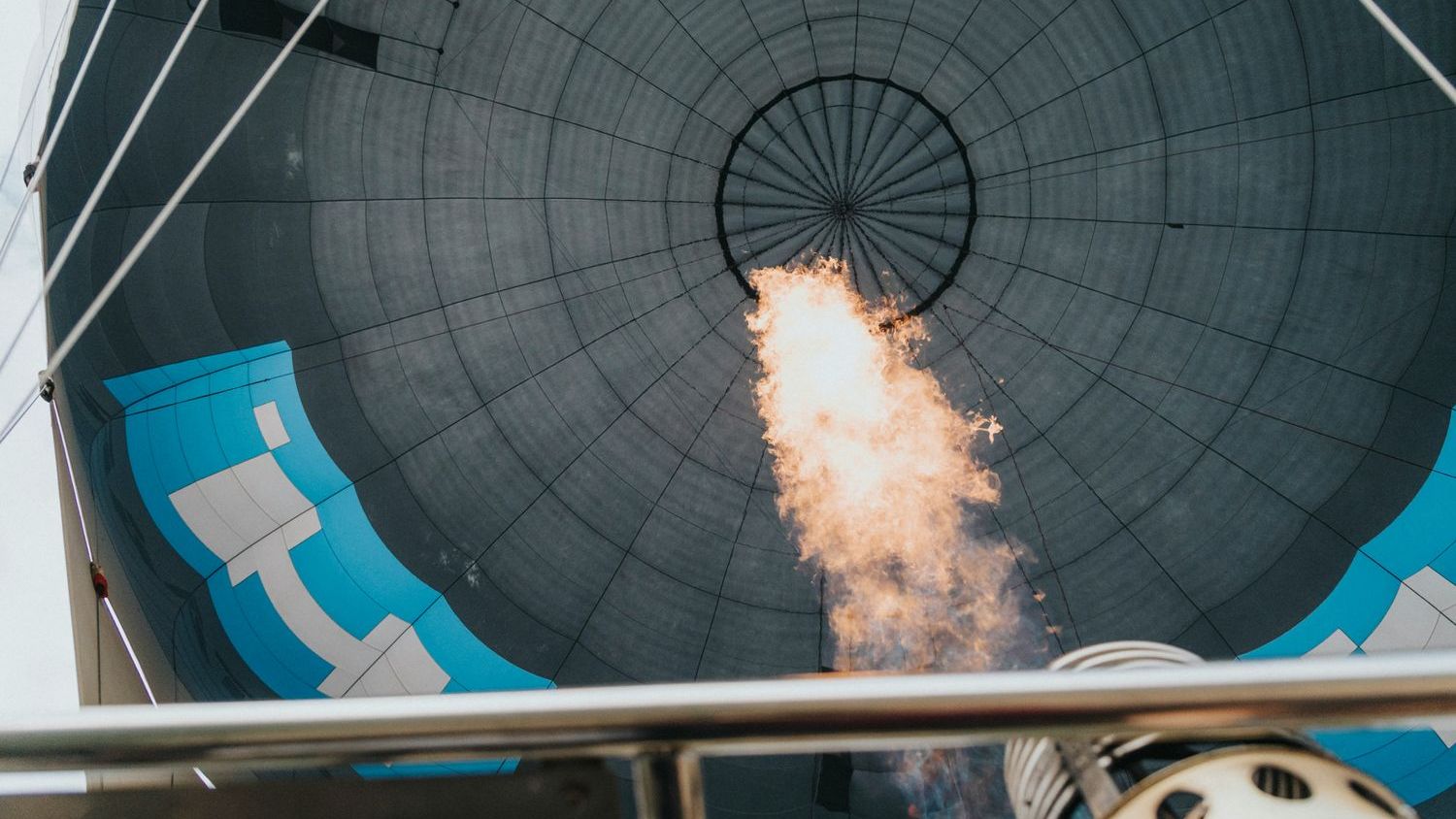
Unlocking the Promise of Rotating Detonation Engines (Image Credits: Unsplash)
Huntsville, Alabama – Astrobotic completed a groundbreaking 300-second continuous hot fire test of its Chakram rotating detonation rocket engine prototype at NASA’s Marshall Space Flight Center. The Pittsburgh company accumulated more than 470 seconds of total firing time across two units, each generating over 4,000 pounds of thrust. This milestone highlights a pivotal advance in propulsion technology long confined to experimental settings.
Unlocking the Promise of Rotating Detonation Engines
Rotating detonation rocket engines, or RDREs, operate by maintaining a supersonic detonation wave that circles continuously within a ring-shaped combustion chamber. Engineers have pursued this design for decades because it offers potential efficiency gains of 10 to 15 percent over traditional rockets, along with lighter weight. Those advantages could prove transformative for missions demanding precise propellant management.
Historical challenges centered on stability. The violent nature of detonations made it difficult to sustain the wave in a controlled, throttleable manner suitable for spacecraft. While short bursts demonstrated the concept, prolonged operation eluded researchers, leaving RDREs as largely theoretical pursuits.
The Chakram Test Breaks New Ground
Astrobotic’s 300-second burn stands out sharply against prior efforts, where most RDRE tests lasted mere seconds or low double digits. This duration allowed the engine to reach thermal steady state, a critical indicator of endurance under mission-like conditions. Post-test inspections revealed no visible damage, underscoring the design’s robustness.
Principal investigator Bryant Avalos described the result as a crowning achievement that exceeded program expectations. Across the two prototypes, the sustained performance suggested viability beyond one-off demonstrations. Multiple ignitions without degradation further bolstered confidence in repeatability.
Key Test Highlights:
- 300 seconds continuous hot fire on single unit
- Over 470 seconds total across two prototypes
- More than 4,000 pounds thrust per engine
- No damage after firing; thermal steady state achieved
A Lean Approach Fuels Rapid Progress
The achievement stemmed from modest resources: two NASA Small Business Innovation Research contracts and a Space Act Agreement with Marshall, totaling low single-digit millions in funding. A small team leveraged additive manufacturing to fabricate the annular combustion chamber, simplifying construction compared to conventional engines. This approach avoided the complexities of large injectors and intricate cooling channels.
Such efficiency marks a shift in propulsion development. Two decades ago, similar efforts required massive budgets from major contractors. Today, a 50-person firm like Astrobotic delivers hot fires on targeted grants, accelerating innovation in commercial space.
Pathways to Flight and Broader Competition
Astrobotic eyes Chakram for diverse applications. On future Griffin lunar landers, higher specific impulse would boost payload capacity for cislunar trips. Reusable suborbital vehicles, bolstered by acquired Masten assets and recent NASA-military contracts, would benefit from superior thrust-to-weight ratios for round-trip operations. Orbital transfer vehicles represent the boldest prospect, where efficiency gains amplify economics for high-delta-v maneuvers like LEO-to-lunar pushes.
Competitors abound. Venus Aerospace achieved the first U.S. RDRE flight test last year, though thrust details vary across programs. Astrobotic’s output ranks high among disclosed figures, but challenges like regenerative cooling, throttling, and mass reduction remain. No one has yet demonstrated stable wave control during throttling.
The company views Chakram as developmental, without a firm flight timeline. Still, the test confirms RDREs can operate sustained and repeatably, elevating them from research curiosities to engineering realities. For lunar logistics, this could redefine the next generation of landers beyond initial CLPS models like Peregrine or Nova-C.
Success now hinges on refining stability amid cooling and throttling demands. Bridging ground tests to qualified flight hardware will determine if Chakram powers the propulsion business Astrobotic envisions.