

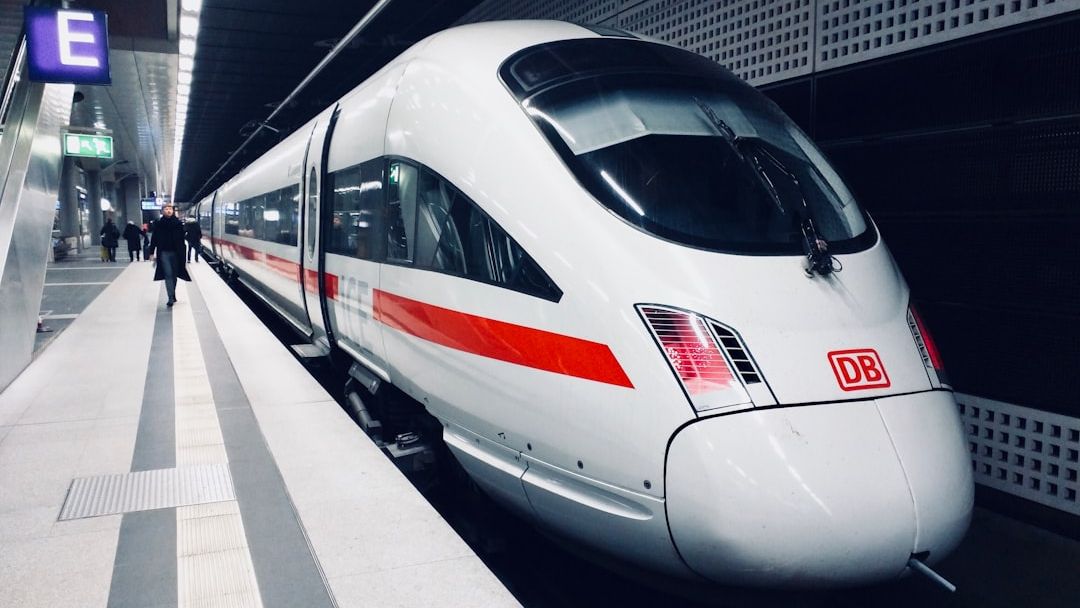
California’s Bullet Train: From $30 Billion Promise To $250 Billion Boondoggle – Image for illustrative purposes only (Image credits: Unsplash)
Sacramento – Lawmakers clashed this week over the California High-Speed Rail Authority’s latest business plan, which projects costs as high as $231 billion for the long-delayed bullet train initiative.[1][2] Critics from both parties labeled the proposal opaque and potentially in violation of state law, prompting a delay in legislative approval. The uproar underscores persistent challenges for a project voters endorsed nearly two decades ago amid hopes of revolutionizing West Coast travel.
A Timeline of Promises and Delays
Voters approved Proposition 1A in 2008, authorizing $9.5 billion in bonds for high-speed rail connecting San Francisco to Los Angeles. Officials pitched the full Phase 1 system at $33 billion to $45 billion, with service potentially operational by 2020.[3] Construction broke ground in Fresno in 2015, focusing initially on the 171-mile Initial Operating Segment between Merced and Bakersfield.
Progress has been uneven. By early 2026, about 80 miles of guideway stood ready for track-laying in the Central Valley, with key viaducts like the Fresno River structure advancing.[3] The authority has spent roughly $14 billion to date, drawing from state bonds, cap-and-trade funds, and prior federal grants. Yet the original full-route vision narrowed in 2019 under Gov. Gavin Newsom, who prioritized the Central Valley amid funding shortfalls.
The 2026 Business Plan Under Fire
The High-Speed Rail Authority released its draft 2026 business plan in February, outlining next steps for the Merced-Bakersfield line and broader ambitions. Senate Transportation Committee members reviewed it this week, hearing from CEO Ian Choudri on construction milestones and private investment prospects.[2] Lawmakers postponed a vote, citing insufficient details and public input.
Central to the debate: proposed station relocations to the edges of Merced and Bakersfield, potentially trimming nine miles and saving $14 billion. The nonpartisan Legislative Analyst’s Office noted the plan glossed over these shifts, failing to meet transparency mandates under state law.[2] Inspector general reports echoed concerns about incomplete funding projections and oversight gaps.
Cost Escalations in Sharp Focus
Estimates have swelled dramatically since 2008. The draft plan pegs the Central Valley segment at $36 billion, with completion eyed for 2032 or 2033. Full Phase 1 – from San Francisco to Anaheim – ranges from a base $126 billion to $231 billion in a worst-case scenario without reforms.[1][4]
| Year | Scope | Estimated Cost |
|---|---|---|
| 2008 (Prop 1A) | SF to LA | $33-45 billion |
| 2026 Draft | Merced-Bakersfield | $35-36 billion |
| 2026 Draft | Full Phase 1 (base) | $126 billion |
| 2026 Draft (worst-case) | Full Phase 1 | $231 billion |
Federal support eroded further last year when the Trump administration withdrew $4 billion, deeming the project uncooperative. California dropped a related lawsuit, leaving private capital as a key hope – though skeptics question its feasibility given the overruns.[1]
Legislators Voice Frustration Across the Aisle
Republican Sen. Tony Strickland, vice chair of the Senate Transportation Committee, demanded the project end. “This is a project that will never be built,” he said, calling it the “most wasteful government project in probably world history.”[1] He highlighted California’s deficits and urged the next governor to scrap it.
Democrats joined the critique. Sen. Catherine Blakespear declared, “This is a disaster,” while urging clearer accounting on station moves. Sen. Kelly Seyarto pressed officials to own the changes outright. Board members acknowledged past oversight lapses with change orders, even as they backed CEO Choudri’s vision.[2][5]
- Lack of transparency on route tweaks
- Inadequate funding paths
- Historical delays and overruns
- Potential legal noncompliance
Uncertain Tracks Ahead
Authority leaders insist momentum builds, with track-laying imminent and private partners circling major stations. Reforms could cap the higher-end estimates, and polls show steady public backing around 56 percent.[3] Still, the plan must return to lawmakers soon, armed with revisions.
As California grapples with budget pressures, the high-speed rail debate reflects broader tensions over ambitious infrastructure. Completion of even the starter segment would mark a milestone, but at what ultimate price remains the pivotal question.