

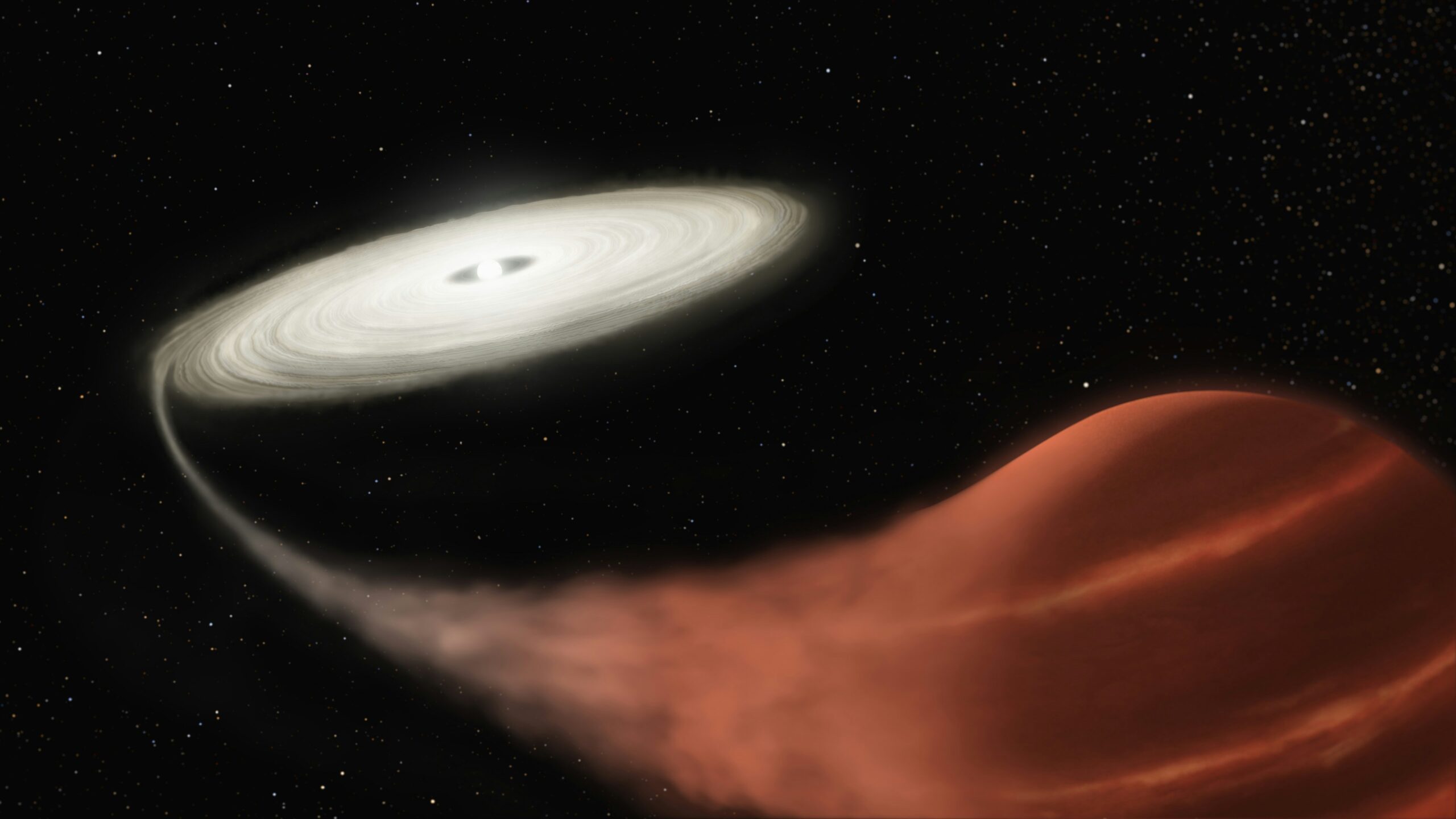
NASA Volunteers Double Known Population of Brown Dwarfs – Image for illustrative purposes only (Image credits: Unsplash)
In the vast infrared skies captured by NASA’s retired space telescopes, a dedicated group of volunteers has quietly transformed our view of the cosmos. Over the past decade, these everyday participants in the Backyard Worlds: Planet 9 project identified more than 3,000 previously unknown brown dwarfs, effectively doubling the tally of these enigmatic objects. Their efforts, detailed in a recent Astronomical Journal paper, highlight how collective human insight can unlock celestial secrets that eluded professional observatories alone.
A Decade of Hidden Gems Unearthed
The Backyard Worlds: Planet 9 initiative launched ten years ago, inviting volunteers worldwide to scour data from NASA’s Wide-field Infrared Survey Explorer (WISE) and its reactivation mission, NEOWISE-R. Participants sifted through images spanning 16 years, blinking frames to spot slow-moving objects against the starry backdrop. This painstaking work yielded over 3,000 brown dwarfs, objects that straddle the line between planets and stars.
Brown dwarfs resemble Jupiter in size but lack the mass to ignite sustained fusion like true stars. Near our Sun, they outnumber stars by a ratio of about one to three or four, yet their faint glow makes them notoriously difficult to detect. The surge in known examples now equips astronomers with a richer dataset for probing these cosmic in-betweens.
The Mechanics of Volunteer-Powered Astronomy
The project relied on the Zooniverse platform, where roughly 200,000 volunteers contributed their time and skills. They not only classified potential candidates but also developed custom search tools and analysis software to refine the hunt. A paper summarizing the findings lists 75 authors, with 61 being volunteers and two others who transitioned from participants to professional astronomers.
Astronomer Adam Schneider from the U.S. Naval Observatory led the effort, crediting the community’s persistence for the breakthrough. This collaboration turned raw telescope data into a comprehensive catalog, revealing patterns in our galactic neighborhood that ground-based surveys missed. The scale of involvement underscores a shift in how major astronomical discoveries emerge.
Revealing Rarities and Galactic Insights
Among the haul, volunteers pinpointed extreme T subdwarfs, a novel class of brown dwarfs, alongside ultra-cool specimens and one exhibiting aurora-like activity. These oddities expand the known diversity of substellar objects and challenge existing models of their formation and evolution. The expanded list also aids in mapping mass distribution across the Milky Way, offering a clearer inventory of our stellar surroundings.
Previously scarce data limited such analyses, but the doubled population provides statistical heft. Astronomers can now trace how brown dwarfs cluster and drift, refining estimates of the galaxy’s overall makeup. This work bridges gaps in our understanding of objects too dim for optical telescopes but vivid in infrared.
Further scrutiny of these finds promises refinements to theories on planetary system formation, as brown dwarfs may host their own worlds or influence nearby star systems. The discoveries arrived at a pivotal moment, as ongoing missions continue to feed fresh data into the project.
Voices from the Front Lines
Volunteers expressed profound gratitude for their roles in the publication. Walter Ruben Robledo, an amateur astronomer from Cordoba, Argentina, stated, “I truly appreciate the recognition for all of us who collaborated, in some way, on this effort.”
Mayahuel Torres Guerrero from Mexico City shared similar elation: “When I received the news about the co-authorship, I thought: Yes, dreams do come true.” Their words capture the personal triumph woven into scientific progress, where backyard enthusiasts co-author papers alongside experts.
The Search Continues
With more than 2 billion sources still awaiting review from WISE and NEOWISE-R, the project beckons new contributors. Anyone with a smartphone or laptop can join at backyardworlds.org to hunt for additional brown dwarfs, rogue planets, or nearby stars. This ongoing endeavor proves that the next big find lies within reach of curious minds everywhere.
As the catalog grows, it not only doubles our knowledge but redefines who shapes it. The Backyard Worlds success story stands as a testament to distributed discovery, ensuring astronomy remains an open frontier for all.