

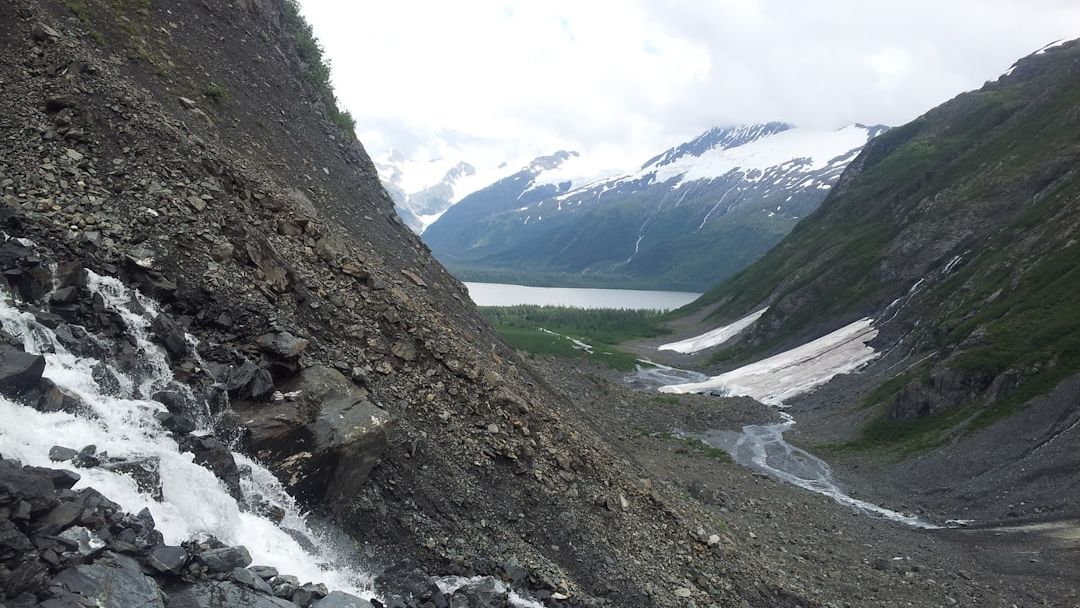
The 10 August 2025 landslide and tsunami at Tracy Arm fjord in Alaska – Image for illustrative purposes only (Image credits: Unsplash)
Tracy Arm fjord has long drawn visitors with its sheer cliffs and tidewater glaciers, yet the events of August 2025 revealed how quickly that appeal can turn into a serious operational challenge. A massive landslide that month sent a wave surging hundreds of meters up the opposite shore, forcing cruise lines to reassess long-standing itineraries in one of Alaska’s most popular scenic corridors. The episode has placed tourism operators, regulators, and local economies at the center of a difficult conversation about safety margins in a warming climate.
The Scale of the August 2025 Event
On 10 August 2025, more than 63 million cubic meters of rock detached from the north wall of Tracy Arm and plunged into the water. The resulting displacement wave reached a run-up height of 481 meters, a figure documented in the peer-reviewed analysis published the following year. No vessels or people were in the direct path, so the outcome remained non-fatal, yet the numbers alone underscored the narrow margin that had existed.
The landslide itself originated more than 1,000 meters above the fjord surface. Its timing in midsummer coincided with peak visitor season, a pattern researchers note is becoming more common as permafrost and glacial support weaken. The absence of casualties was largely a matter of timing rather than design.
Industry Adjustments and Stakeholder Pressures
Cruise companies responded within weeks by altering schedules and, in several cases, removing Tracy Arm from itineraries that had featured the fjord for years. Small-boat excursions, often conducted in rigid-hull inflatable craft, were identified as especially vulnerable because passengers would have little time to reach higher ground. Operators now weigh the cost of rerouting against the reputational risk of another close call.
Local communities and port authorities face parallel concerns. Reduced vessel calls translate directly into lost revenue for pilots, tenders, and shore-side services that depend on seasonal traffic. At the same time, the same communities recognize that an incident involving hundreds of passengers would trigger prolonged regulatory scrutiny and possible liability claims. The tension between economic reliance and hazard exposure has become a recurring topic in regional planning meetings.
Regulators are examining whether existing permitting processes adequately capture the evolving landslide risk. Current guidelines focus primarily on vessel traffic and wildlife, yet the Tracy Arm case demonstrated that slope stability can change on timescales shorter than a single cruise season. Discussions now include calls for updated hazard mapping and seasonal restrictions tied to monitoring data.
Early-Warning Prospects and Remaining Limits
The 2025 landslide was preceded by detectable seismic signals, raising the possibility that future failures might be identified hours or days in advance. Researchers emphasize, however, that such precursors are not universal and that earthquake-triggered slides would still occur without warning. Any operational alert system would therefore need to combine real-time monitoring with conservative decision thresholds that could still disrupt schedules.
Similar settings elsewhere illustrate the broader policy dilemma. In New Zealand’s Milford Sound, for example, tourism infrastructure sits in a fjord environment where large landslides remain possible. Officials there have weighed the same trade-offs between visitor access and public safety, often concluding that outright closure carries its own economic and political costs. Alaska’s experience is now feeding into those parallel debates.
What matters now
- Cruise lines have already removed or shortened Tracy Arm visits on multiple 2026 itineraries.
- Seismic monitoring offers partial early-warning potential but cannot cover all triggers.
- Local economies depend on the same tourism that creates exposure to the hazard.
- Updated risk assessments are under discussion but have not yet produced new regulatory standards.
The Tracy Arm episode has not ended tourism in Alaska fjords, nor has it produced a single prescriptive solution. Instead it has clarified the practical choices facing operators, regulators, and communities that must manage both the benefits and the liabilities of operating in dynamic mountain landscapes. Those choices will continue to shape decisions long after the immediate schedule changes fade from view.