

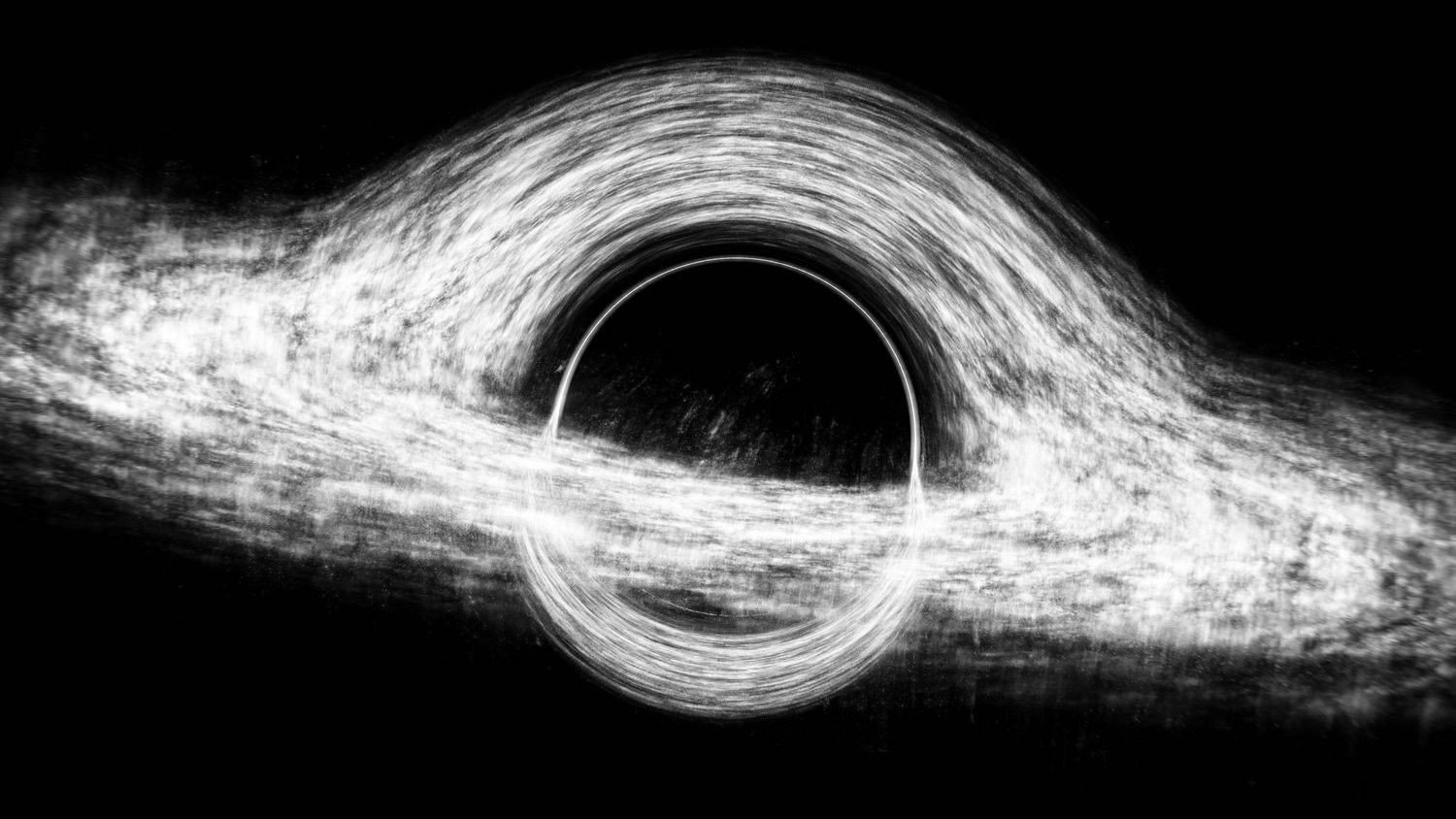
JWST’s Surprising Early Discoveries (Image Credits: Unsplash)
Recent observations from NASA’s James Webb Space Telescope have uncovered supermassive black holes in the early universe that grew far larger than models predicted, challenging cosmologists to rethink black hole origins.[1][2] These cosmic giants, some reaching a billion solar masses less than a billion years after the Big Bang, demand an explanation for their rapid formation.[1] A new study proposes that decaying dark matter provided the crucial energy boost to seed these behemoths through direct collapse.[3]
JWST’s Surprising Early Discoveries
The James Webb Space Telescope has detected unusually massive black holes at high redshifts, existing when the universe was just a fraction of its current age.[1] Standard theory holds that black holes form from the remnants of massive stars, which then accrete material over time. However, the timescales involved do not align with these observations. The black holes appear too large too soon, suggesting alternative formation pathways.
Astronomers previously considered direct collapse scenarios rare, requiring precise conditions like nearby ultraviolet radiation to heat gas clouds and prevent star formation.[2] JWST data has intensified this puzzle by revealing more such objects, prompting researchers to explore mechanisms that could make direct collapse more common.[3] This development matters now because it ties ongoing telescope observations to fundamental questions about dark matter’s role in cosmic evolution.
The Proposal: Dark Matter as a Cosmic Catalyst
Dark matter constitutes about 85 percent of the universe’s matter and influences galaxy formation, yet its particle nature remains elusive.[3] A team led by University of California, Riverside graduate student Yash Aggarwal suggests that if dark matter consists of axion-like particles, their decay could inject just enough energy into primordial gas clouds.[1] Published in the Journal of Cosmology and Astroparticle Physics, the research models how this decay alters early galaxy chemistry.[2]
The study identifies specific axion mass ranges – between 24.5 and 26.5 electronvolts – that enable this process.[2] Collaborators including Flip Tanedo of UCR, James B. Dent of Sam Houston State University, and Tao Xu of the University of Oklahoma used simulations to track gas evolution.[1] “Our study suggests that decaying dark matter could profoundly reshape the evolution of the first stars and galaxies,” Aggarwal noted.[1]
How the Mechanism Works
In the early universe, the first galaxies formed as dense balls of pristine hydrogen gas. Normally, molecular hydrogen cools this gas, leading to fragmentation into stars. Decaying dark matter releases photons with energies between 1 and 13.6 electronvolts, suppressing molecular hydrogen formation.[2] This keeps the gas hot and atomic, fostering atomic cooling halos prone to direct collapse into black hole seeds of 10,000 to a million solar masses.
Each decay event contributes minuscule energy – equivalent to a billion trillionth that of an AA battery – but collectively disrupts the delicate chemistry.[1] The researchers employed a single-zone gas core model and semi-analytic chemo-thermal evolution to confirm conditions for these halos. Tanedo explained, “The first galaxies are essentially balls of pristine hydrogen gas whose chemistry is incredibly sensitive to atomic-scale energy injection.”[1] These seeds then grow rapidly, matching JWST’s high-redshift supermassive black holes.
What Matters Now:
- Axion masses: 24.5–26.5 eV with couplings as low as 4 × 10-12 GeV-1
- Photon energy: 1–13.6 eV suppresses H2
- Seeds: Heavy black holes via direct collapse, explaining super-Eddington growth
- Dark matter fraction: 85% of universe’s matter
Bridging Theory, Observation, and Future Prospects
This mechanism addresses the “gap between theory and observation” highlighted by JWST findings.[1] It posits that dark matter decay not only seeds black holes but also influences the broader star formation history. The model’s parameters align with testable dark matter properties, offering a pathway to verify or refute the idea through future data.
Cosmologists now weigh this against other proposals, such as primordial black holes or rapid accretion. Interdisciplinary efforts, as in this study, underscore how particle physics intersects with astrophysics. Tanedo added that the right dark matter environment makes direct collapse “much more likely.”[3] As JWST continues surveying the cosmic dawn, refined models will clarify dark matter’s enduring legacy in structure formation.
The proposal reframes dark matter not just as gravitational scaffolding but as an active player in the universe’s infancy. Ongoing observations and simulations promise to illuminate whether decaying particles indeed ignited the first supermassive black holes, reshaping our cosmic timeline.