

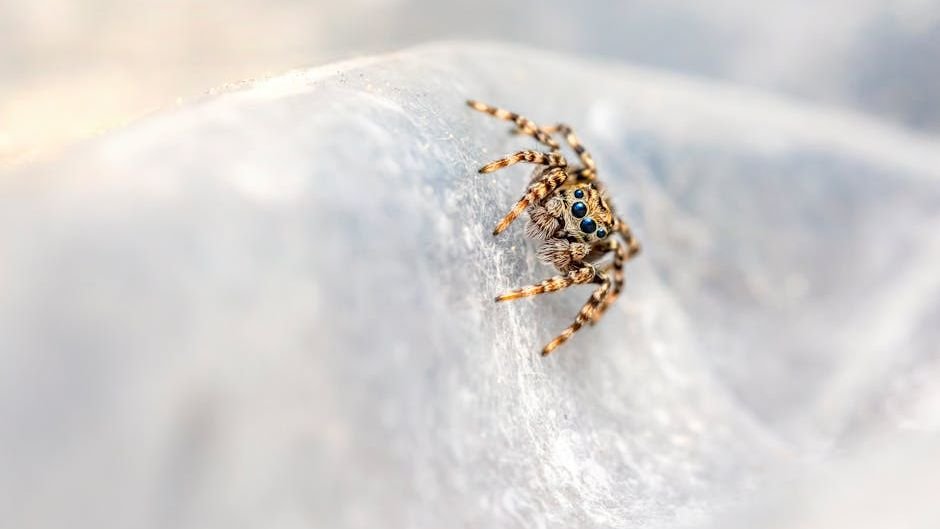
Why Early Sex Identification Matters for Spiders (Image Credits: Pexels)
Researchers have devised a precise way to identify the sex of wolf spider babies mere days after hatching. By measuring nuclear DNA content through flow cytometry, scientists distinguished males from females in the species Allocosa marindia, known for its sandy coastal habitats in southern South America. This approach addresses a key hurdle in spider biology, where physical traits reveal sex only in adults.
Why Early Sex Identification Matters for Spiders
Spiders like Allocosa marindia emerge from eggs with their sex already set, typically following an X1X20 chromosome system. Yet phenotypic differences – visible body features – do not appear until near adulthood. This delay complicates field and lab studies on population dynamics.
Understanding sex ratios in offspring proves crucial for evolutionary research. Biases toward one sex can signal adaptive strategies or environmental pressures. In A. marindia, laboratory observations and field data pointed to a strong female skew, prompting deeper investigation into its causes.
Sex role reversal adds intrigue to this species. Females often take the lead in courtship and aggression, flipping traditional arachnid norms. Early sexing tools enable researchers to track these patterns from the start.
Flow Cytometry: Peering Inside Spider Cells
Flow cytometry analyzes individual cells as they pass through a laser beam, quantifying DNA amounts with high accuracy. Teams applied this to adult A. marindia first, establishing baseline differences. Females averaged 4.96 picograms of 2C nuclear DNA, plus or minus 0.036, while males clocked in at 4.72 picograms, plus or minus 0.020.
These gaps proved reliable enough for classification. The method’s speed and non-destructive nature suited delicate spiderlings. Freezing samples extended its practicality, decoupling fieldwork from lab analysis.
Testing on 59 frozen hatchlings from four mothers yielded clear results. Variability increased with preservation, yet scientists sexed 54 individuals successfully: 43 females and 11 males. This success rate highlights the technique’s robustness.
Proven Results in a Female-Dominated Species
The study confirmed DNA content as a sex marker across samples. Adult benchmarks held firm, with statistical separation between sexes. Spiderlings mirrored these patterns, despite minor storage effects.
A. marindia‘s female bias emerged starkly in the hatchling data. Of the identified offspring, most were female, aligning with prior evidence. Larger-scale trials now aim to pinpoint reasons, from genetic mechanisms to ecological factors.
Key Findings:
- Female 2C DNA: 4.96 ± 0.036 pg
- Male 2C DNA: 4.72 ± 0.020 pg
- 54/59 frozen spiderlings sexed accurately
- 43 females, 11 males identified
Opening Doors for Arthropod Research
This flow cytometry method extends beyond A. marindia to diplodiploid arthropods – those with paired chromosomes in both sexes. It bypasses morphological waits, accelerating sex ratio analyses worldwide.
Future work will scale up, incorporating more mothers to dissect female biases. Such insights could reshape views on spider evolution, mating systems, and conservation. The technique stands ready for broader application in labs tackling similar challenges.