

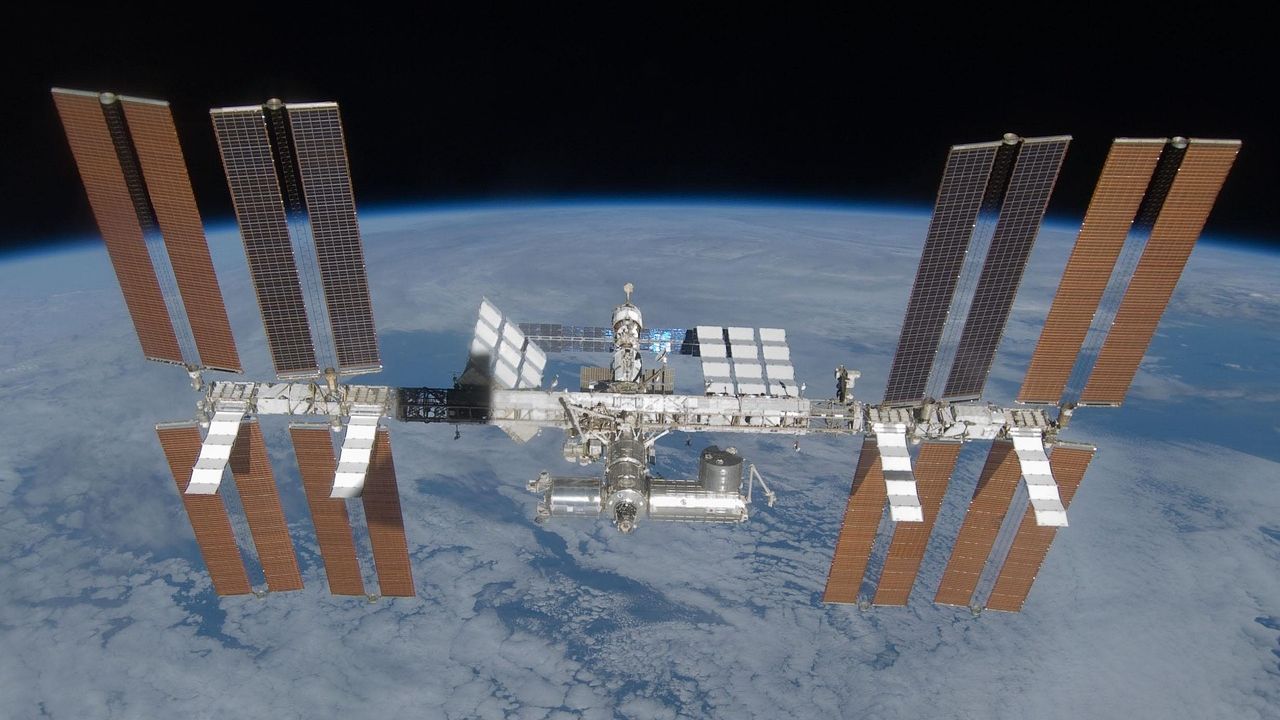
‘It was quite a light show!’ NASA astronaut spies dramatic fireball from the International Space Station (photos) – Image for illustrative purposes only (Image credits: Pixabay)
NASA astronaut Chris Williams provided a breathtaking perspective on a fleeting cosmic event last week, photographing a vivid fireball racing through Earth’s upper atmosphere directly below the International Space Station. The sighting occurred on April 27, 2026, as the ISS passed over West Africa, underscoring the unique vantage point astronauts hold over planetary phenomena.[1][2] Williams captured the moment amid routine station duties, turning a routine sky scan into a display of natural drama visible only from space.
A Serendipitous Sky Watch
Williams found himself in the ISS Cupola module around 10:40 p.m. GMT, peering out in anticipation of the Progress MS-34 cargo spacecraft’s approach. The Russian resupply vehicle, launched two days earlier on April 25, carried three tons of food, equipment, and experiments essential for the station’s operations.[1] As the orbital lab glided over West Africa, a bright object caught his eye, streaking through the mesosphere far below.
The object developed a lengthening tail before fragmenting into a cascade of smaller pieces, creating a luminous trail against the dark backdrop of night. Williams quickly documented the scene with photographs, later sharing them alongside a detailed account. “Just as we were passing over West Africa, I saw a bright object directly below us, streaking through the upper atmosphere. I saw its tail grow and then split apart into a shower of smaller pieces,” he recounted.[2]
Chris Williams: Bringing Fresh Eyes to the Station
On his first spaceflight, Williams serves as a flight engineer for Expedition 74, having arrived at the ISS last November aboard the Soyuz MS-28 spacecraft alongside Russian cosmonauts Sergey Kud-Sverchkov and Sergei Mikaev.[1] The mission, planned for about eight months, overlaps with NASA’s Crew-12 astronauts Jessica Meir and Jack Hathaway, European Space Agency astronaut Sophie Adenot, and cosmonaut Andrey Fedyaev.
A former medical physicist and astronomer by training, Williams contributes to a diverse crew focused on scientific research, maintenance, and international collaboration. His keen observation skills proved valuable during this unplanned spectacle, reminding observers of the blend of routine and wonder in long-duration spaceflight. The Progress MS-34 docked successfully shortly after, bolstering supplies for the multinational team.[1]
Tracing the Fireball’s Likely Source
Williams speculated that the fireball stemmed from orbital debris or a satellite disintegrating during reentry. Such events occur regularly as defunct objects succumb to atmospheric drag, heating up to thousands of degrees and glowing brightly as they descend.[1] Timing and location aligned closely with the recent Progress MS-34 launch, raising the possibility that the Soyuz rocket’s upper stage had begun its controlled reentry.
Experts note that rocket stages often produce similar fireballs upon deorbit, fragmenting in a shower of superheated material that mostly burns up before reaching the surface. No definitive identification emerged immediately, but the characteristics matched typical uncontrolled reentries. Williams captured the progression from a single streak to multiple fragments, offering valuable real-time documentation from an unprecedented angle.[1]
“I think it must have been some piece of orbital debris or a satellite breaking up as it entered the atmosphere. It was quite a light show!”
— NASA astronaut Chris Williams
Space Debris: A Persistent Challenge
Incidents like this highlight the growing issue of space junk orbiting Earth, with thousands of tracked objects posing risks to satellites and crewed missions. The ISS crew routinely monitors nearby debris, adjusting orbit when necessary to avoid collisions. Williams’ footage adds to a body of evidence illustrating reentry dynamics, which inform models for safer space traffic management.
While most fragments vaporize high in the atmosphere, larger pieces occasionally survive, prompting calls for better debris mitigation. International guidelines urge operators to deorbit upper stages within five years, yet enforcement remains inconsistent. This event, viewed from above rather than below, flips the familiar meteor-watching experience and emphasizes humanity’s expanding footprint in orbit.[1]
What Matters Now
- Rare top-down imagery aids scientists studying reentry patterns and material behavior.
- Progress MS-34’s arrival ensures continued research aboard the ISS through late 2026.
- Williams’ account underscores the educational value of astronaut social media shares.
As Expedition 74 progresses, such observations remind us that space remains a dynamic frontier, where the boundary between human endeavor and natural forces blurs. Williams’ “light show” serves as a vivid testament to the awe-inspiring realities encountered 250 miles above Earth, fueling public fascination with ongoing human presence in orbit.