

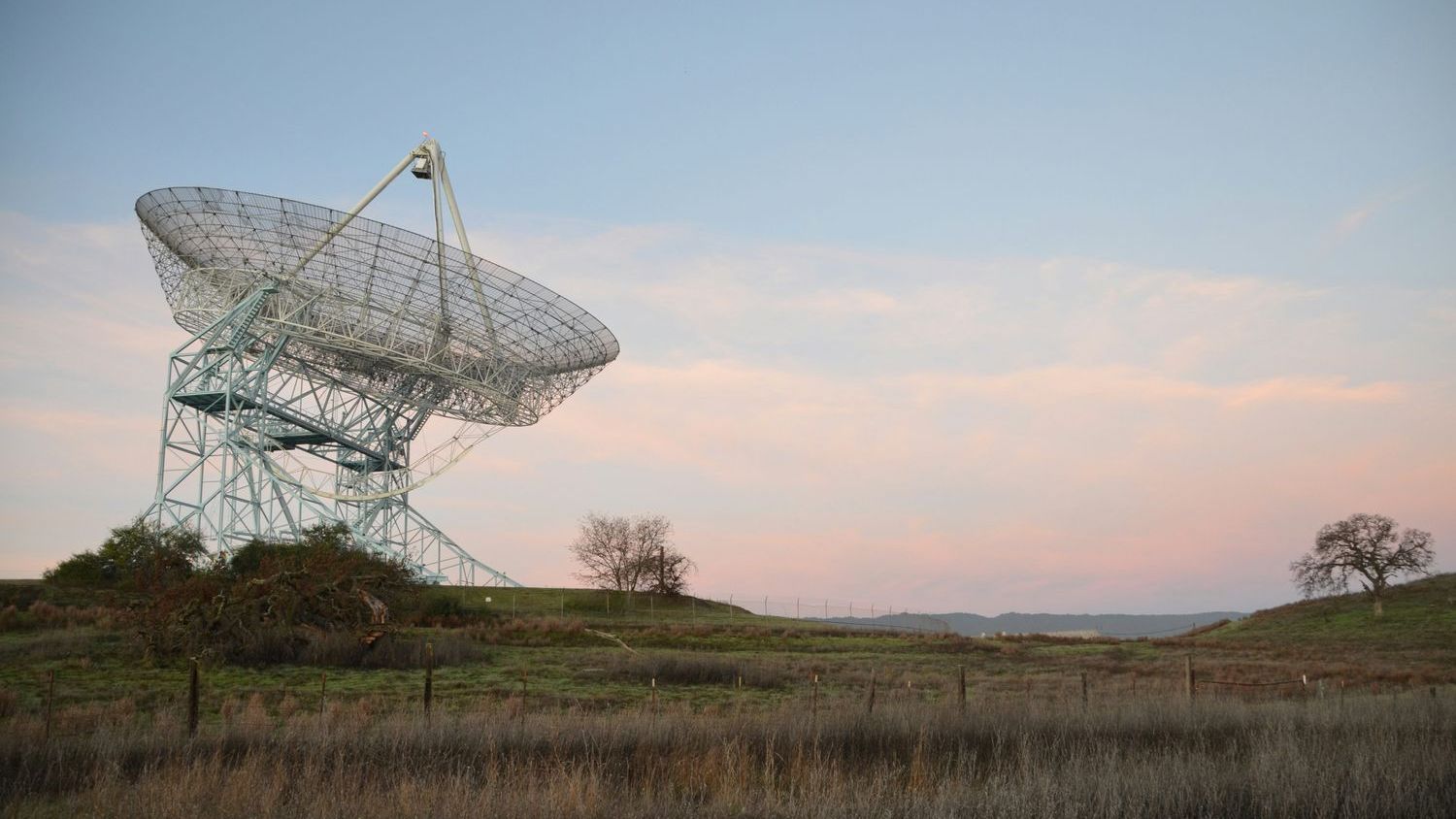
Four People in a Pixel – Image for illustrative purposes only (Image credits: Unsplash)
The four astronauts on NASA’s Artemis II mission appeared as nothing more than a single point of light when the Green Bank Telescope in West Virginia locked onto their Orion capsule. The observation took place while the spacecraft circled the Moon at a distance of 213,000 miles. That level of detection from such a vast range underscores how radio astronomy is shifting from pure research into a practical tool for crewed spaceflight.
The Scale of Detection at Lunar Distance
At 213,000 miles, the Orion capsule occupied a tiny fraction of the telescope’s field of view. The instrument still registered the spacecraft clearly enough to track its path in real time. This performance stands out because most ground-based systems lose resolution long before reaching lunar distances. The result shows that even modest radio signals from a human-rated vehicle can be isolated against the background of space.
Engineers had prepared the telescope for this exact scenario months in advance. They adjusted its pointing software and receiver settings to handle the capsule’s specific transmission frequencies. The successful lock demonstrated that existing infrastructure can support missions without requiring entirely new hardware.
How the Green Bank Telescope Contributed
The Green Bank Telescope is the world’s largest fully steerable radio dish, located in a radio-quiet valley that minimizes interference. During the Artemis II flyby, operators used it to monitor the spacecraft’s position and velocity with high accuracy. The data complemented the capsule’s own navigation systems and provided an independent check on its trajectory.
Radio telescopes like this one receive signals across a wide range of frequencies. In this case, the telescope focused on the narrow band used by the Orion capsule for communication. The resulting measurement confirmed the spacecraft’s location to within a few kilometers, a level of precision that surprised some mission planners.
Why This Matters for Future Missions
Human spaceflight beyond low Earth orbit will depend on reliable tracking from the ground. The Artemis II test showed that large radio telescopes can fill gaps when optical methods are limited by distance or lighting conditions. Agencies are now examining how similar facilities could support longer-duration lunar orbits and eventual Mars voyages.
The single-pixel detection also revealed limits. The telescope could not resolve individual features on the capsule or separate the four crew members. Those constraints are expected to remain until even larger or more sensitive instruments come online. Still, the basic capability to maintain contact at lunar range has been proven.
Looking Ahead to Expanded Capabilities
Researchers are already exploring upgrades that could improve resolution for future Artemis flights. These include faster data processing and better coordination between multiple telescopes. Such advances would allow ground teams to gather more detailed information without adding weight or power demands to the spacecraft itself.
The Artemis II observation serves as a benchmark. It illustrates both what current technology can achieve and where further development is needed. As missions grow more ambitious, the role of sensitive ground-based instruments is likely to increase rather than diminish.