

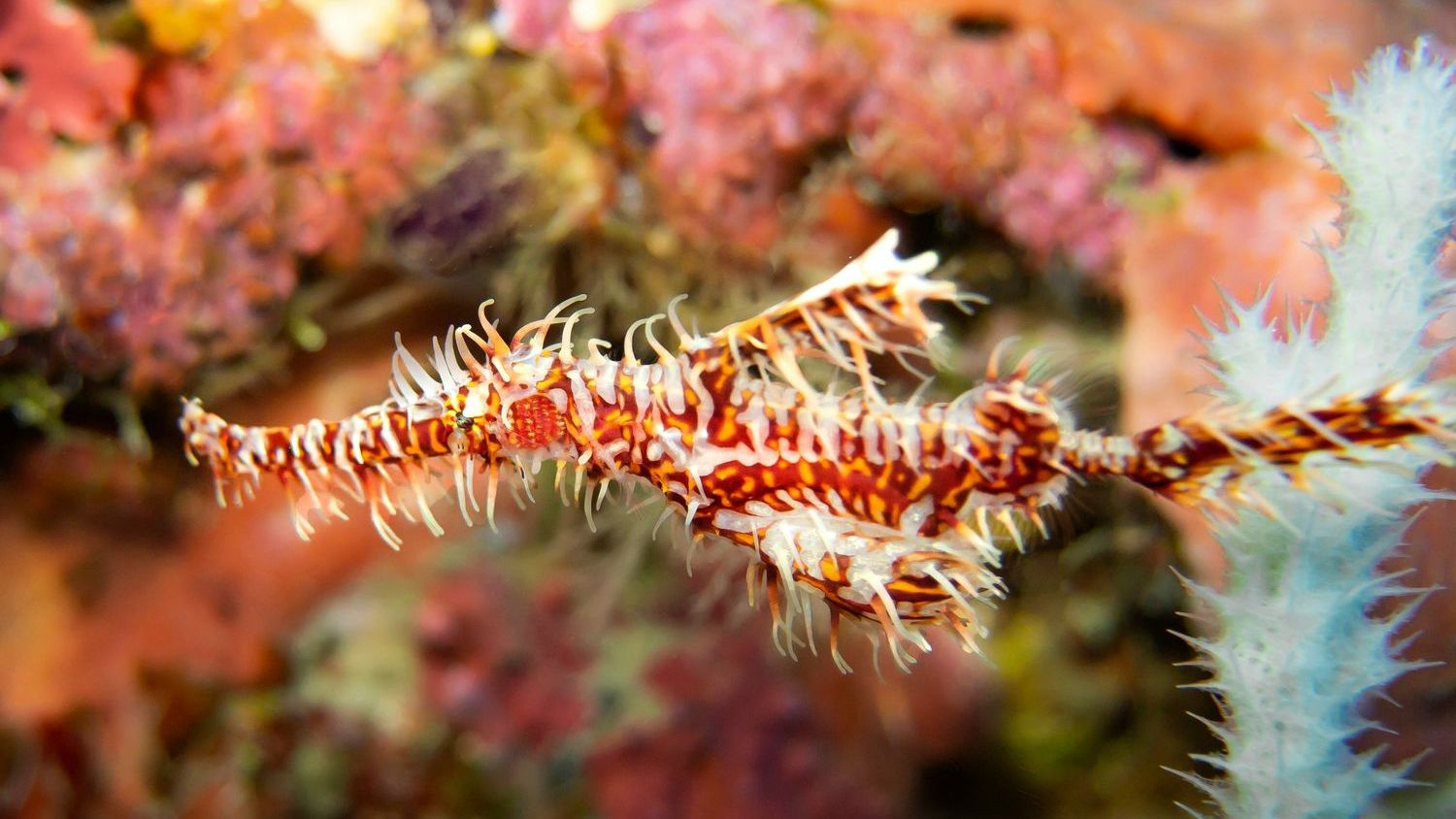
Hairy new fish species discovered in the Great Barrier Reef – Image for illustrative purposes only (Image credits: Unsplash)
Among the coral gardens of the Great Barrier Reef, a bright orange-red fish with a long snout and a coat of fine hairs has been identified as a species previously unknown to science. For years it blended into the reef environment, often mistaken for similar ghost pipefish that share the same waters. Its resemblance to the shaggy character Mr. Snuffleupagus from Sesame Street has drawn immediate attention from researchers and marine enthusiasts alike.
A Subtle Presence on the Reef
The fish moves slowly through the corals, its elongated body and hairy texture helping it merge with the surrounding structures. Observers note that its coloration stands out against the typical reef palette, yet the overall shape and movement allow it to remain inconspicuous to casual divers. This combination of visibility and camouflage explains why the species escaped formal description until now.
Researchers working in the area first noticed consistent differences in snout length and body covering that set certain individuals apart from known ghost pipefish. Repeated sightings confirmed the traits were stable across multiple locations, prompting closer examination and eventual recognition as a distinct species.
Key Physical Traits
The most striking feature is the dense covering of fine hairs along the body, which gives the fish a textured, almost furry appearance. Combined with its vivid orange-red hue and extended snout, these characteristics create a profile unlike any other documented ghost pipefish in the region.
Its body shape remains slender and pipe-like, typical of the group, yet the added hair-like filaments alter how light reflects off its surface. This subtle modification appears to aid in blending with algae and soft coral growths that share the same habitat.
Swimming patterns are deliberate and unhurried, allowing the fish to drift among the corals without drawing attention. The long snout further contributes to its distinctive silhouette, setting it apart even when viewed from a distance.
Why Recognition Took Time
Ghost pipefish in general are masters of disguise, and this new species shares enough basic anatomy with its relatives to have been overlooked during routine surveys. Earlier records likely grouped it with more common forms, delaying the realization that a separate lineage existed in the same reefs.
Only after targeted comparisons of color, texture, and snout proportions did the differences become clear. The process highlights how even well-studied ecosystems can still harbor surprises when observers focus on small but consistent variations.
What the Find Means for Reef Studies
Documenting this species adds another layer to understanding biodiversity within the Great Barrier Reef. Each new identification refines knowledge of how marine life adapts to specific niches and underscores the value of continued observation in familiar waters.
Future surveys may now include checks for the hairy texture and snout length, potentially revealing more about the fish’s range and behavior. The discovery also serves as a reminder that distinctive traits can remain hidden in plain sight until someone looks closely enough to notice them.