

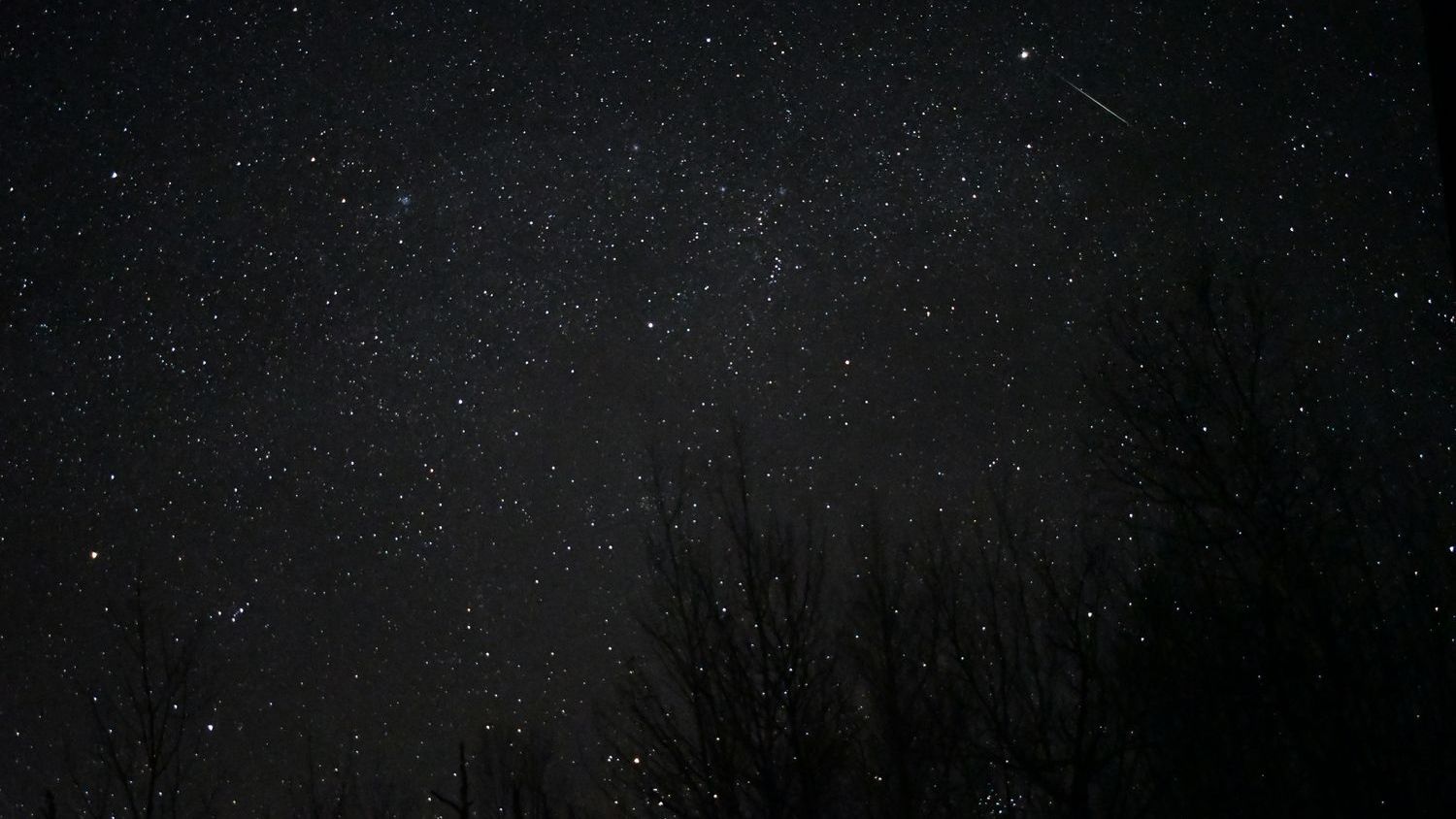
The Eta Aquariid meteor shower peaks this week: How to see ‘shooting stars’ dropped by Halley’s Comet – Image for illustrative purposes only (Image credits: Unsplash)
Stargazers this week face a celestial treat laced with a challenge. Fragments from Halley’s Comet will ignite as the Eta Aquariid meteor shower reaches its annual peak on the night of May 5-6, 2026.[1][2] These swift shooting stars promise glowing trails, though a bright waning gibbous moon threatens to dim the fainter ones. Observers who plan ahead still stand to witness a display tied to one of astronomy’s most storied visitors.
Tracing Back to Halley’s Famous Orbit
Halley’s Comet, known formally as 1P/Halley, carved its place in history through periodic returns every 76 years. The last close approach came in 1986, with the next not until 2061.[1] Earth crosses its dusty trail twice yearly, spawning the Eta Aquariids in May and the Orionids in October. This connection elevates the shower beyond typical meteor events.
Debris particles, no larger than sand grains, vaporize high in the atmosphere at speeds of 66 kilometers per second. The resulting streaks often leave persistent trains of ionized air that linger for seconds.[2] Named for the radiant point near Eta Aquarii in the constellation Aquarius, these meteors appear to radiate from that spot as Earth plows through the comet’s wake.
Peak Timing Aligns with Spring Nights
The shower activates from April 19 through May 28, building toward maximum activity overnight between May 5 and 6.[1] Rates climb after 2 a.m. local time, peaking before dawn when the radiant rises highest in the eastern sky.[3] Under perfect conditions, the zenithal hourly rate reaches 50 to 60 meteors.
Southern Hemisphere viewers typically spot up to 50 per hour, while those north of the equator might see 10 to 30.[1] The shower favors lower latitudes, where Aquarius climbs overhead more readily. Even so, dedicated northern observers often report rewarding sessions.
Moonlight Poses the Biggest Obstacle
A waning gibbous moon at 84% illumination coincides with the peak, washing out dimmer meteors and slashing visible rates – potentially to under 10 per hour in affected skies.[2][4] This lunar phase follows a full moon on May 1 and precedes last quarter on May 9, leaving post-midnight skies brighter than ideal.[3]
Strategic positioning helps counter the glare. Seek spots where hills or structures block the moon’s light, focusing instead on darker eastern patches. Patience pays off as brighter, train-bearing meteors punch through the glow.
Moon interference halves typical rates, but swift Eta Aquariids with trains remain visible. Southern viewers gain an edge; northerners should prioritize dark sites predawn May 5-6.
Practical Steps for Clear Views
Success hinges on preparation. Head to rural areas far from city lights, where light pollution fades. Lie back or use a reclining chair to scan broad sky swaths – no telescopes or binoculars needed, as they narrow the field.[5]
Allow 30 minutes for eyes to dark-adapt, avoiding white lights or screens. Red flashlights preserve vision. Dress warmly, bring blankets, and sip hot drinks during the chilliest hours.
- Target 2 a.m. to dawn on May 5 or 6.
- Face east but watch all directions – Meteors streak everywhere.
- Track via apps like those from the American Meteor Society for real-time reports.
- Patience yields rewards; bursts can surprise even modest nights.
A Glimpse into Cosmic Cycles
The Eta Aquariids remind skywatchers of enduring solar system dynamics. Halley’s debris, shed over millennia, links ancient observations to modern views. Though moonlight tempers 2026’s show, the event underscores accessible wonders overhead.
Those who venture out contribute to a tradition spanning hemispheres. As dawn breaks on these peak mornings, the fleeting trails offer quiet reflection on our place amid the stars’ vast machinery.