

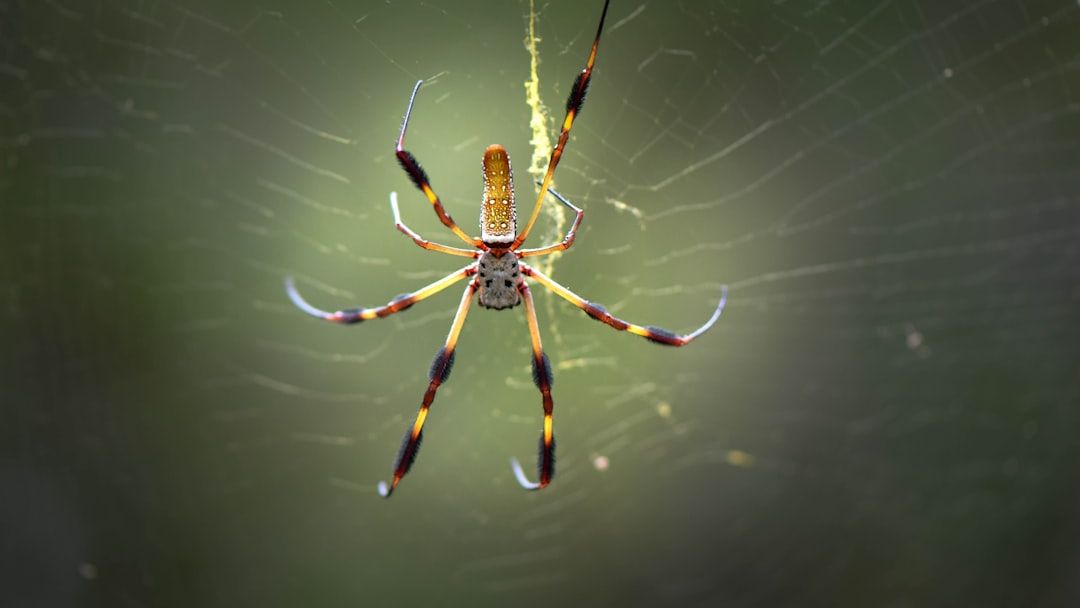
Elevated Temperatures Disrupt Wolbachia-Induced Feminisation and Reshape Microbial Community Dynamics Across Generations in a Spider Host – Image for illustrative purposes only (Image credits: Unsplash)
Researchers have uncovered how rising temperatures can quietly reshape the hidden microbial partnerships that influence spider reproduction. In the species Mermessus fradeorum, a bacterium called Wolbachia normally turns genetic males into functional females, which helps the microbe spread through populations. Yet this effect does not hold steady when heat enters the picture across multiple generations. The new findings highlight how environmental conditions can alter these long-term microbial dynamics in ways that are not immediately obvious.
Inside the Spider’s Microbial Network
Mermessus fradeorum carries up to five different endosymbionts at once. Among them, one Wolbachia strain stands out because it manipulates host development so that genetic males develop as phenotypic females. This feminization skews sex ratios toward females and gives the bacterium a transmission advantage through the maternal line. Despite this advantage, the same Wolbachia strain remains at only intermediate levels in natural populations, suggesting other factors limit its dominance.
Two additional microbes, Rickettsiella and Tisiphia, also live inside the spiders and interact with Wolbachia. These co-infections create a complex community whose balance can shift under stress. Scientists have long known that temperature influences many endosymbionts, but the multigenerational consequences for feminization had remained unclear until now.
Tracking Effects Through Successive Generations
The team exposed spiderlings already carrying Wolbachia to elevated temperatures for a single generation. They then tracked feminization rates, bacterial transmission success, and microbial abundance in the exposed offspring and in two subsequent generations raised at normal temperatures. Feminization stayed intact in the directly exposed generation. In the following two generations, however, the proportion of feminized individuals dropped noticeably.
This delayed decline coincided with measurable changes in the microbial community. Wolbachia transmission from mother to offspring became less reliable, while one co-infecting bacterium increased sharply in abundance. Another symbiont disappeared entirely from the tested lineages. The pattern indicates that heat exposure can leave a lasting imprint on the entire microbial assembly even after conditions return to normal.
Community Shifts and Their Consequences
The rise of Rickettsiella appeared linked to reduced feminization, while the loss of Tisiphia removed another potential player in the interaction network. These rearrangements suggest that temperature does not simply weaken Wolbachia directly. Instead, it rearranges competitive or cooperative relationships among all the microbes present. Such indirect effects can persist and even amplify across generations that never experience the heat themselves.
Because the study followed the spiders for only three generations, longer-term outcomes remain unknown. It is also unclear whether similar patterns would appear in other spider species or under different temperature regimes. Still, the results demonstrate that brief environmental stress can produce enduring changes in both phenotype and microbial composition.
Key observations from the study
- Feminization rate unchanged in the heat-exposed generation
- Clear decline in feminization in the next two generations
- Increased Rickettsiella abundance tied to lower feminization
- Reduced Wolbachia transmission and complete loss of Tisiphia
The work shows that microbial communities inside hosts are more sensitive to environmental history than previously appreciated. As temperatures continue to rise in many regions, similar disruptions could affect other species that rely on endosymbionts for reproduction or survival. Continued monitoring of these natural systems will help clarify how widespread such effects may become.