

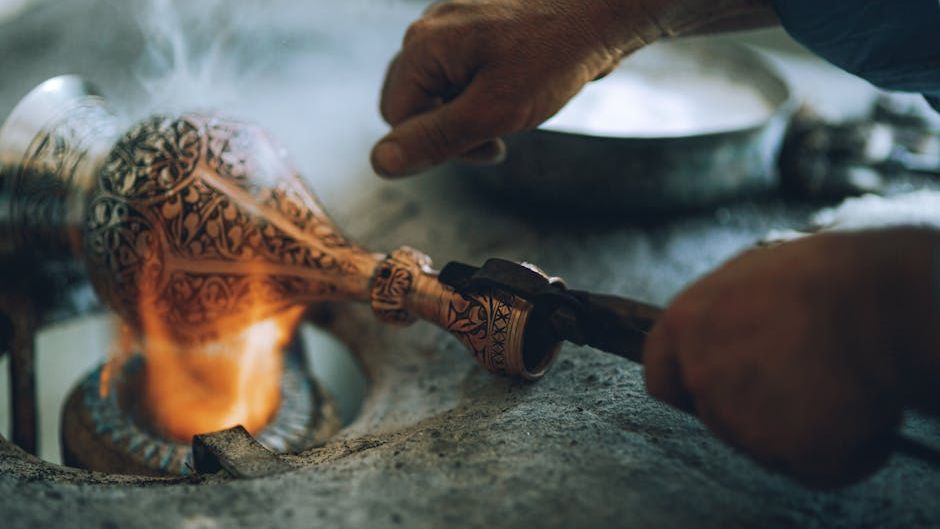
Mysterious green rocks in Pyrenees cave hint that prehistoric people were working copper there for 4,000 years – Image for illustrative purposes only (Image credits: Pexels)
Girona province, Spain — Archaeologists exploring a remote cave at over 7,300 feet above sea level stumbled upon fragments of vivid green rock that point to sustained copper processing by prehistoric communities. The site, tucked near the French border in the eastern Pyrenees, yielded nearly 200 such pieces alongside charcoal-rich fire pits, suggesting repeated visits over more than 4,000 years. This find illuminates how early metalworkers ventured into harsh mountain terrain to harness vital resources.[1]
A Site in the Clouds
Researchers first targeted Cave 338, located at 2,235 meters in the Freser Valley of Queralbs, during digs from 2021 to 2023. The entrance excavation spanned just 6 square meters but revealed layers of occupation dating back to between 5000 and 4300 B.C. Most activity peaked from 3600 to 2400 B.C., aligning with the Copper Age’s height in Europe.[1]
Broken ceramics, animal bones, and multiple combustion structures marked the cave as a hub of human endeavor. The absence of natural green minerals in the local geology underscored that these visitors transported the rocks from elsewhere. Generations transmitted knowledge of the spot, turning it into a fixture of seasonal routines.[1]
Unraveling the Green Fragments
The standout artifacts were close to 200 shards of bright green material, many showing signs of intense heat exposure. Unlike surrounding cave deposits, these pieces bore thermal alterations that hinted at purposeful manipulation. Study co-author Julia Montes-Landa, an archaeologist at the University of Granada, noted the selective scorching: “Many of these fragments are thermally altered, while other materials in the cave are not, which clearly suggests that fire played an important role in their processing and that there was a deliberate intention behind it. In other words, they weren’t burned by accident.”[1]
Preliminary analysis identifies the rock as malachite, a copper-carbonate ore prized in antiquity. Heating malachite drives off carbon dioxide, yielding black copper oxide, which charcoal then reduces to pure metal. Abundant charcoal throughout the cave reinforced this interpretation, painting a picture of on-site smelting experiments or production.[1]
Traces of Daily Life and Craft
Beyond the minerals, the cave preserved intimate glimpses into its users’ world. Two ornaments emerged from the densest layers: an elongated pendant crafted from a Glycymeris clamshell and a perforated tooth from a brown bear, suitable for necklace wear. These items evoked personal adornment amid rugged pursuits.[1]
Human traces included a child’s deciduous tooth and a finger bone, possibly indicating ritual deposition alongside practical tasks. Animal bones suggested provisioning for extended stays, while ceramics pointed to cooking or storage. The blend of industrial, domestic, and symbolic elements extended this section’s narrative, revealing a multifaceted outpost rather than a fleeting shelter. Dozens of fireplaces dotted the space, their arrangement implying organized workflows over casual campfires.[1]
Such high-elevation persistence marked a departure from prior assumptions about Pyrenean use. Lead researcher Carlos Tornero, from the Autonomous University of Barcelona and IPHES-CERCA, emphasized the breakthrough: “For the first time in the Pyrenees, high-mountain prehistoric occupations of significant intensity have been documented, characterized by repeated activities and the direct exploitation of mineral resources within the cave.”[1]
Context in the Copper Age
The Chalcolithic era, spanning roughly 5000 to 2000 B.C., saw copper transition from rarity to staple across Europe. Tools, axes, and jewelry proliferated, as seen with Ötzi the Iceman’s copper blade from around 3300 B.C. Yet evidence of extraction and initial processing remained sparse in mountainous zones like the Pyrenees.[1]
Cave 338 fills this gap, demonstrating deliberate mineral transport and on-site treatment. Tornero added that the locale “demonstrates that the Pyrenees were not a marginal territory for prehistoric communities, but a space fully integrated into their mobility strategies and territorial exploitation.”[1]
Future Insights from the Peaks
The team’s work appears in Frontiers in Environmental Archaeology, detailing the site’s layers and artifacts. Confirmatory tests on the green rocks loom large, potentially solidifying the copper narrative. Ongoing excavations promise deeper stratigraphic revelations and refined dating.[1]
This discovery reframes the Pyrenees as a core arena for innovation, where altitude posed no barrier to technological advance. As researchers probe further, the cave stands to reshape understandings of early metallurgy’s reach and resilience.